About Carya floridana Sarg.
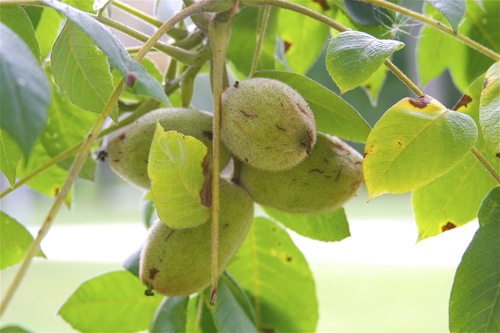
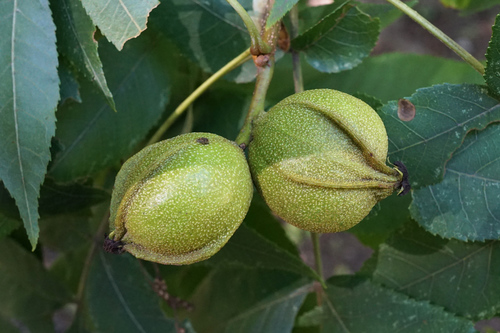
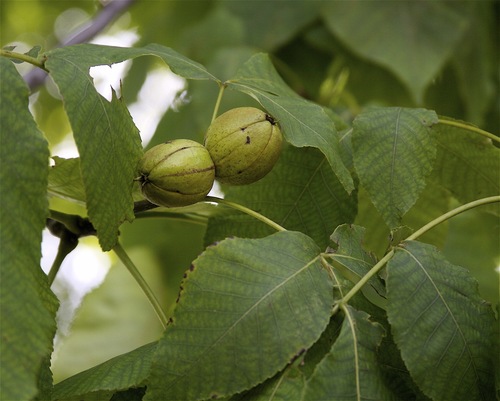
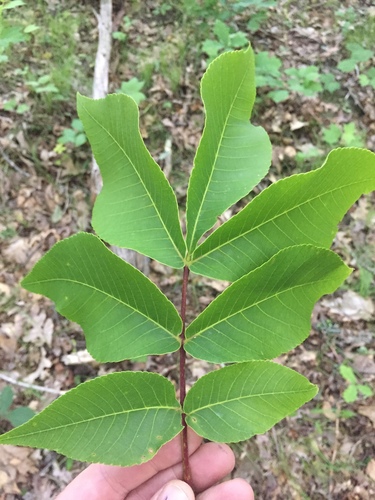
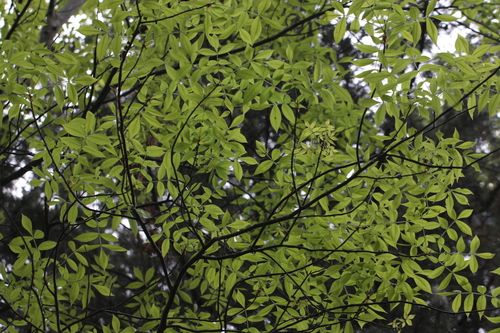
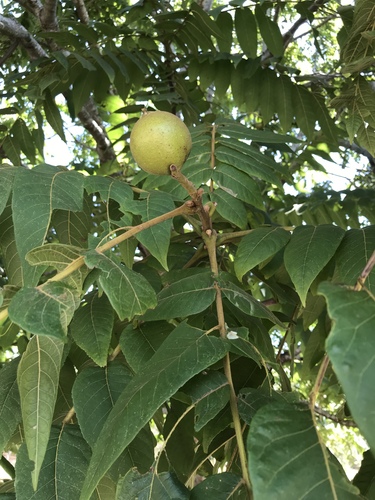
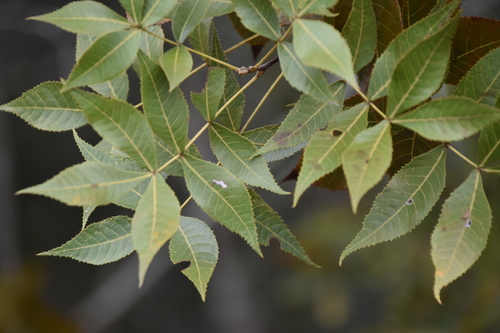
Carya floridana Sarg., commonly called scrub hickory, is a deciduous tree species. While it can grow up to 25 meters (80 feet) tall, most specimens are small shrubs 3 to 5 meters tall with multiple small trunks. The bark is light gray, with texture ranging from smooth to fissured. Branches are reddish-brown, and they may be scaly or glabrous. Its leaves are pinnately compound, 20–30 cm long, and are typically yellowish green. Most leaves have 3 to 5 leaflets, though some occasionally have 7. Leaflets are 4–10 cm long and 2–4 cm broad, with coarsely toothed margins. Older leaves develop a rusty tint on their undersides, and outer leaf buds are covered in rust-colored scales. Scrub hickory produces separate pistillate and staminate flowers. Staminate flowers form 3-branched catkins, while pistillate flowers grow in tight crowded clusters. Only one nut matures per flower cluster. The fruit is an oblong-oval nut 3–4 cm long and 2 to 2.5 cm in diameter, with a thick, hard shell that is difficult to crack. The seed inside is sweet and edible, with higher nutritional value than the co-occurring Carya and Quercus species it grows alongside. Seeds require stratification to germinate. This species can hybridize with pignut hickory, Carya glabra. Scrub hickory is native to Florida, with no confirmed records of it growing in other southeastern U.S. states. It has been recorded in De Soto, Orange, and Volusia counties, and may also occur around Pensacola Bay and on Jupiter Island. In its ecosystem, scrub hickory acts as a host plant for many organisms. It hosts burrowing wolf spiders (Geolycosa sp.), most commonly Archbold's burrowing wolf spider (G. xera archibaldi). It also hosts longhorn beetles (Cerambycidae), including the species Ancylocera bicolor. The sweet, protein- and fat-rich nuts are an important food source for many animals. Nuts also contain macronutrients and minerals including copper, zinc, and iron. Like most hickories, scrub hickory nuts are edible for humans, but they are not commonly consumed because they are hard to open. Birds that feed on the nuts include the Florida scrub jay, blue jay, red-bellied woodpecker, and red-headed woodpecker. Mammals reported to eat the nuts include bears, raccoons, foxes, mice, and feral hogs. It is unclear whether this species is used for lumber. A railroad station and local post office in Highlands County, Florida, was renamed from "Red Hills" to "Hicoria" after the scrub hickory.