About Carpocoris purpureipennis (DeGeer, 1773)
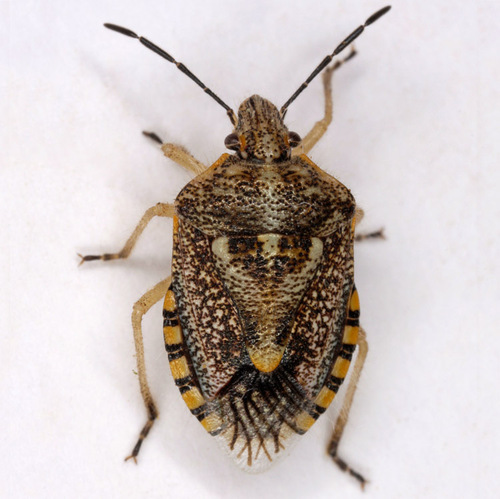
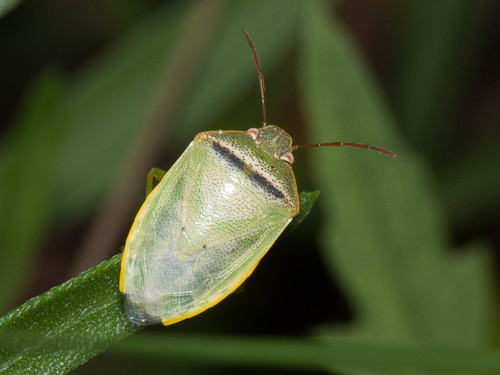
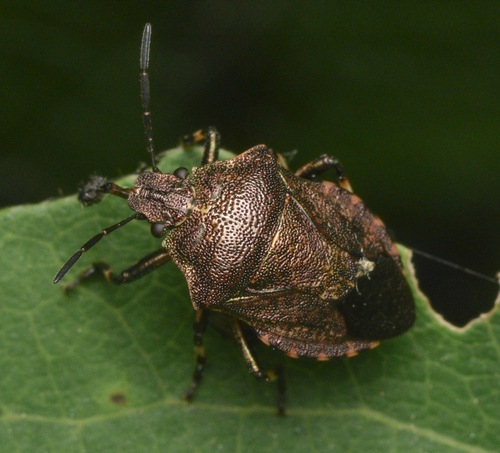
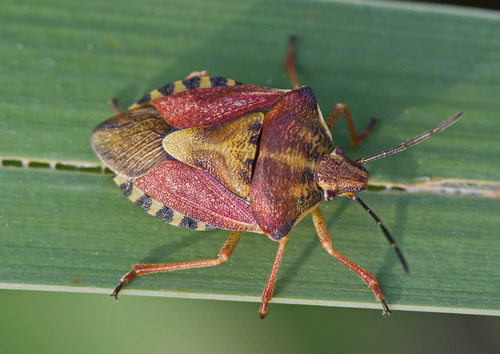
Carpocoris purpureipennis reaches a body length of 11–13 millimetres (0.43–0.51 in). Its pronotum is wide, features regular punctuation, and has almost straight, slightly pointed lateral margins that end in blunt tips. The lateral edges of its scutellum are nearly straight. Body color ranges from purple or reddish-brown to yellowish. The angles of the pronotum are black, and the pronotum usually has short longitudinal black stripes; the scutellum may have some contrasting black spots. This species has black antennae and orange legs. It is very similar to, and easily confused with, Carpocoris pudicus, C. fuscispinus, and C. mediterraneus. This species occurs across most of Europe and central Asia, and inhabits meadows, roadsides, forest edges, and gardens. Both adults and nymphs of this species are polyphagous. Adults primarily feed on the juices of Cirsium arvense and the nectar of Leucanthemum vulgare. Between late May and early June, these insects lay eggs on a variety of herbaceous plants from the families Poaceae (cereals), Fabaceae (legumes), Brassicaceae (crucifers), and Asteraceae (composites). This bug is classified as an agricultural pest, and can damage soybean, beans, cabbage, carrots, raspberries, strawberries, potatoes, radish, wheat, and apple trees.