About Carpiodes carpio (Rafinesque, 1820)
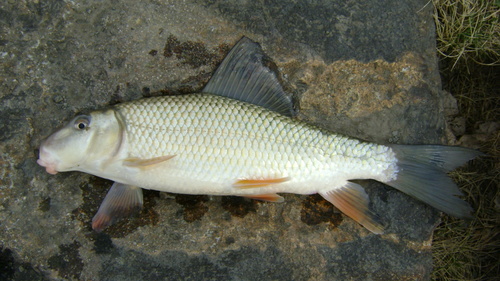
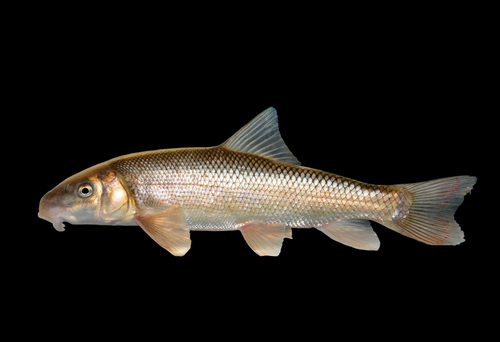
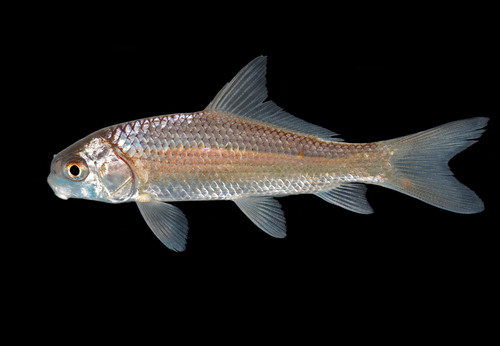
The river carpsucker (Carpiodes carpio) has a fairly distinctive physical appearance. It has a stout body with a somewhat compressed, arched back. The body is olive-brown around the dorsal fin, fading to silver across the sides, with a white belly. Fins of young river carpsuckers are usually opaque, while fins of older individuals are dark yellow. The midpoint of the lower lip projects outward in a nipple-like shape, and the entire body is covered in large scales. This species also has a distinctive count of 18 caudal fin rays. It is frequently confused with non-native species, including various Asian carp species.
Historically, the river carpsucker occupied the Mississippi River basin from Pennsylvania to Montana. Today it also occupies the Gulf Slope Drainage from the Calcasieu River to the Rio Grande, across Texas, Louisiana, and New Mexico. It was introduced to Lake Erie and the lower Maumee River, Ohio; the introduction is thought to have been deliberate, when the species was included in a shipment of buffalofish imported as a game species. River carpsuckers are currently used in sport fishing. The effects of this introduction have not been studied, so they are not well understood. However, the failure to find additional river carpsuckers in the lower Maumee River suggests the species never established a self-sustaining population in this area.
In spring, as water temperatures begin to rise, river carpsuckers migrate upstream to spawn, then move back downstream after spawning is complete. They have been recorded traveling distances of up to 10 kilometers (6.2 mi). The river carpsucker is a suction or filter feeder; it typically eats algae, small planktonic animals, and small planktonic plants, and gets additional nutrients from filtering silt and detritus. It is preyed on by larger carnivorous fish including northern pike, muskellunge, walleye, and largemouth bass, mostly when it is in the juvenile stage. Humans are the largest predator of the species, though some larger birds such as great blue herons have also been recorded eating river carpsuckers.
River carpsuckers live in large rivers and reservoirs with sand or silt bottoms and slow-moving currents. Young individuals are most often found in small streams or tributaries. The species is more abundant in areas with slow water velocity and moderate temperatures.