About Carpinus caroliniana Walter
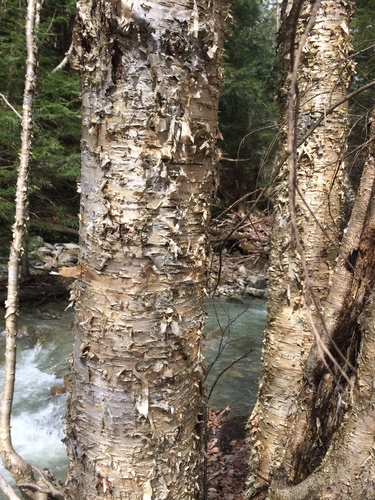
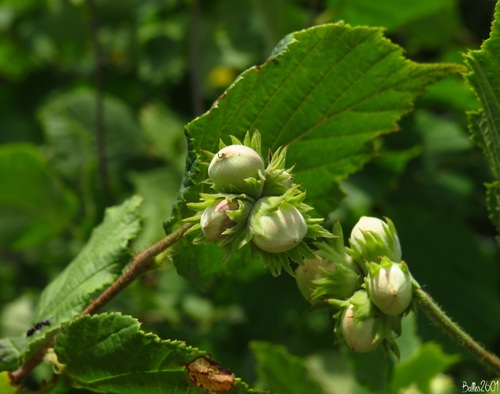
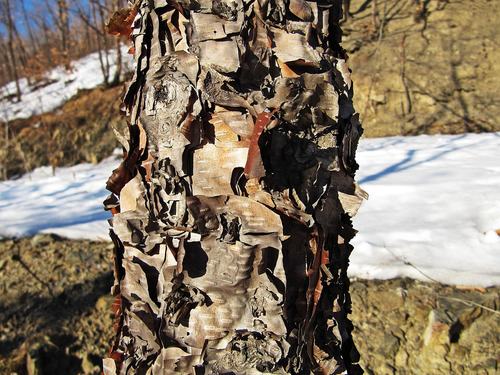
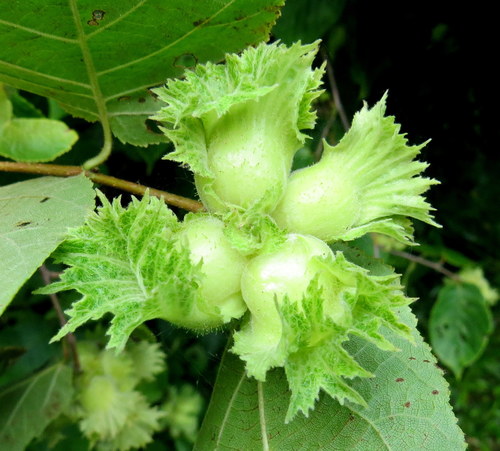
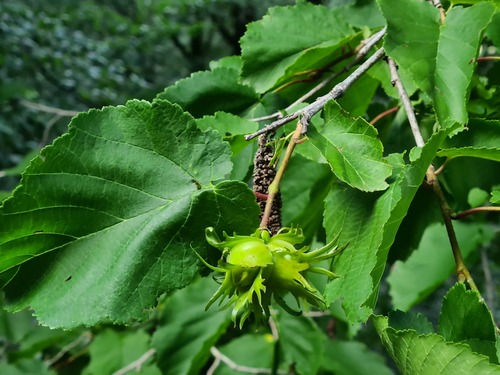
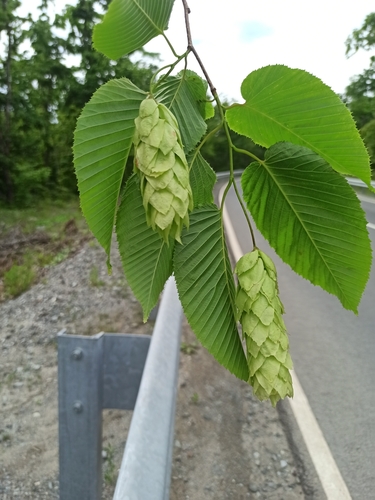
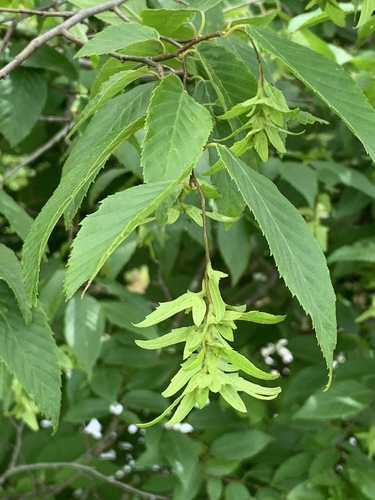
Carpinus caroliniana, commonly called American hornbeam, is a small tree that typically reaches 6–10 meters (20–35 ft) in height, and often grows a fluted, crooked trunk. Its bark is smooth and greenish-grey, becoming shallowly fissured across all old trees; on mature trees, bark is additionally furrowed near the base, while young trees and branches have smooth, dark bluish grey bark that may sometimes be furrowed with alternating light and dark grey sections. New branchlets start out pale green, shift to reddish brown, and ultimately turn dull grey. The species forms ovate, acute, chestnut brown winter buds that measure 1⁄8 inch (3 mm) long; inner bud scales enlarge when spring growth begins, and no terminal bud is produced. Its leaves are alternate, ranging from 3–12 centimeters (1+1⁄4–4+3⁄4 in, or 2 to 4 inches) in length. Leaves have a serrated margin, prominent veins that create a distinct corrugated texture, and are typically ovate-oblong in shape with a rounded, wedge-shaped, or rarely subcordate base that is often unequal. Leaf edges are sharply and doubly serrated, with leaf tips that are acute or acuminate. Newly emerged leaves are pale bronze green and hairy; once fully grown, leaves are dull deep green above, paler below, and have prominent feathered venation with a very distinct midrib and veins on the underside. In autumn, leaves turn bright red, deep scarlet, and orange. Leaf stalks (petioles) are short, slender, and hairy, and leaf stipules are shed early. American hornbeam is monoecious, with separate male and female flowers that bloom in April, before any petals form. Male (staminate) flowers grow in naked pendulous catkins (aments). Staminate catkin buds form in leaf axils during autumn, resemble leaf buds over winter but are twice the size, and begin lengthening very early in spring, reaching 1+1⁄2 inches (4 cm) long when fully developed. Each staminate flower holds 3 to 20 stamens crowded on a hairy torus, connected to the base of a broadly ovate, acute, boot-shaped scale that is green below the middle and bright red at the tip. Female (pistillate) catkins measure one-half to three-fourths of an inch long, and bear ovate, acute, hairy green scales with bright scarlet styles. Male and female catkins emerge in spring at the same time as new leaves. The fruit is a small nut 7–8 millimeters (9⁄32–5⁄16 inch) long, partially surrounded by a 2–3 centimeters (3⁄4–1+1⁄4 in) long leafy involucre with 3 to 7 points. Fruits mature in autumn, growing in clusters of involucres that hang from the tips of leafy branches. Each involucre is short-stalked, usually three-lobed (though one lobe is often absent), halberd-shaped, and either coarsely serrated on one margin or smooth-edged, slightly enclosing the small oval nut. Seeds often do not germinate until the spring of the second year after the fruit matures. The wood of American hornbeam is light brown with nearly white sapwood; it is heavy, hard, close-grained, and very strong, with a specific gravity of 0.7286 and density of 45.41 pounds per cubic foot (0.7274 g/cm3). This species is a shade-loving tree that prefers moderately fertile, moist soil, and grows with a shallow, wide-spreading root system. It is commonly found along stream banks and swamp borders, favoring deep, moist soil, and can range in growth form from a shrub to a small tree across its native range. It is distributed throughout the United States east of the Rocky Mountains. The leaves are eaten by caterpillars of several Lepidoptera species, including the Io moth (Automeris io). Deer browse the species' foliage and twigs, and game birds eat its small nutlets. Due to its heavy, hard wood, it is used to make tool handles, longbows, levers, walking sticks, canes, and golf clubs.