About Carphodactylus laevis Günther, 1897
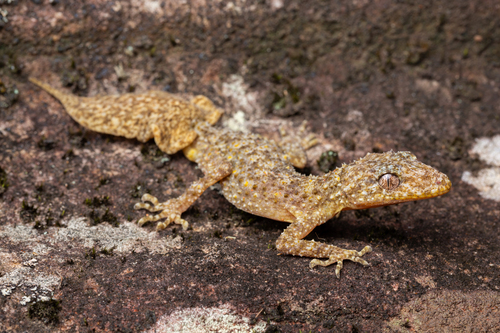
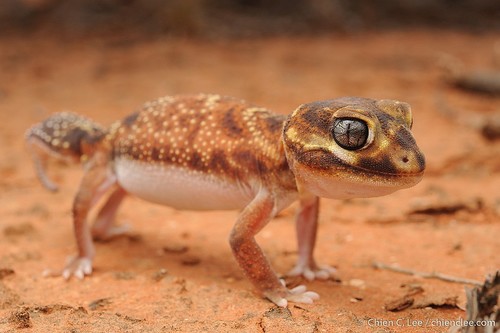
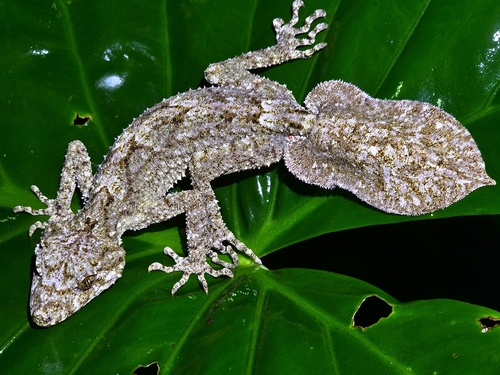
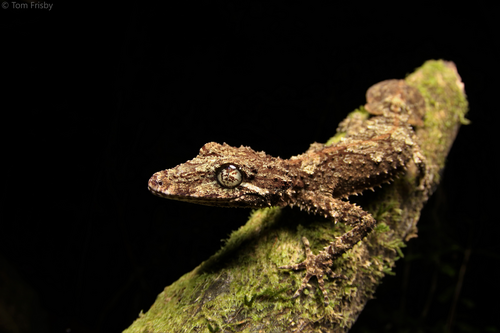
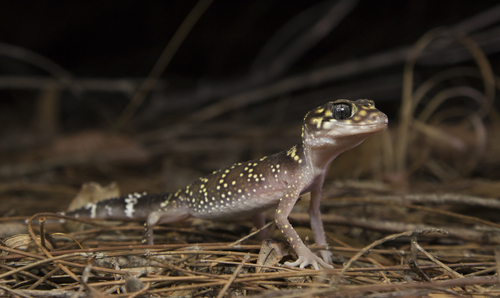
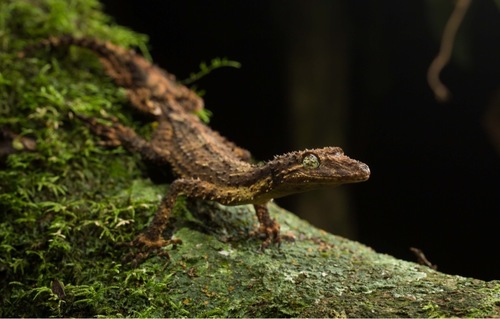
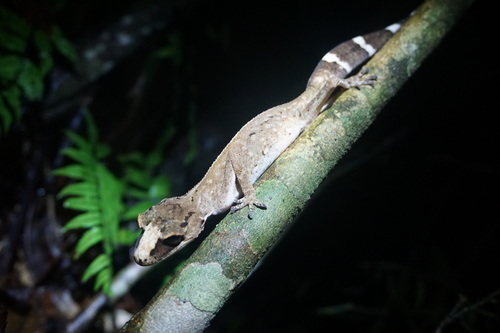
Carphodactylus laevis, commonly known as C. laevis, has an average snout-to-vent length (SVL) of 13 cm (5.1 in). Its head features large labial (lip) scales, relatively small postmental scales located behind the chin, and rounded rostral and mental shields at the tip of the snout. Both the body and tail are slender and mediolaterally compressed, meaning flattened from the side. A thin vertebral ridge runs from the nape down to the tapered tail. The limbs are long and thin. Its five-toed feet have thin, narrow digits that show an angular profile when viewed from the side, and each digit ends in a distinct claw. Five enlarged scales surround the base of each claw. The underside of each digit has a single row of small lamellae, each slightly widened sideways. Members of the Carphodactylus genus have preanal pores. In terms of coloration, C. laevis has a broad black streak running from the snout to the eye, plus a pair of narrower streaks—black on top and pale below—that extend toward the tympanum. The dorsal surfaces of the head and body are brown, speckled with small paler brown spots and black specks that are concentrated around the vertebral line. An original (unregenerated) tail is dark brown or black, marked with four to five complete whitish vertical crossbands. C. laevis is distributed in the cool rainforests of northeastern Queensland, occurring at altitudes between 400–1,400 m (1,300–4,600 ft). It is nocturnal, and forages on leaf litter or low shrubs during the night. This species is oviparous. Analyses of mitochondrial DNA suggest that different C. laevis populations experienced significant genetic isolation during dry Pleistocene periods, but this isolation did not produce significant phenotypic change between the populations.