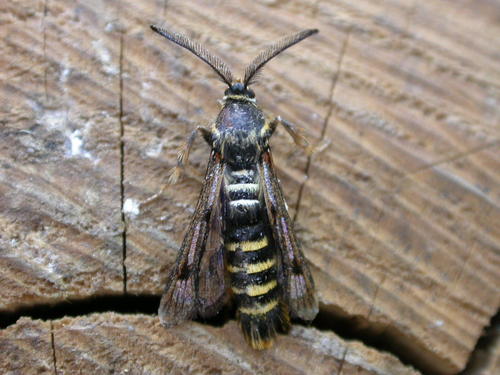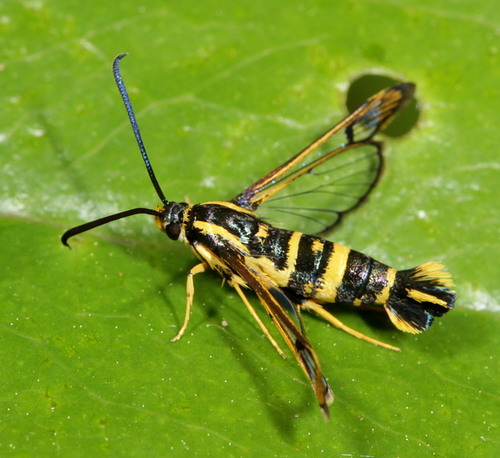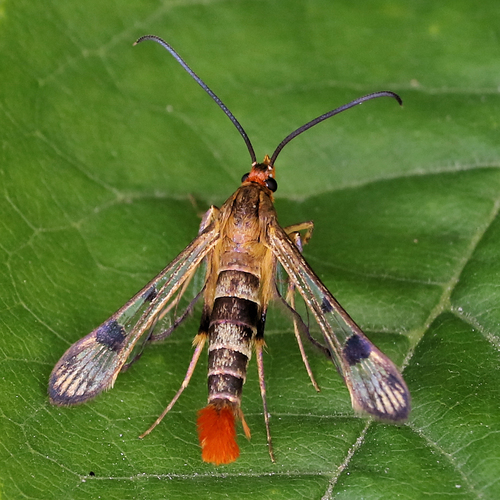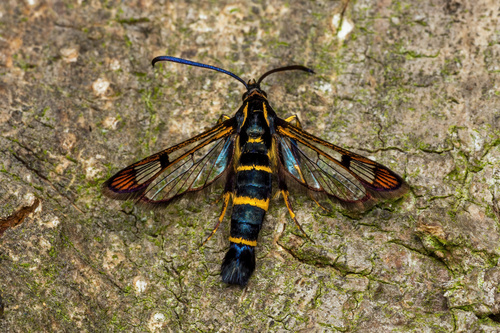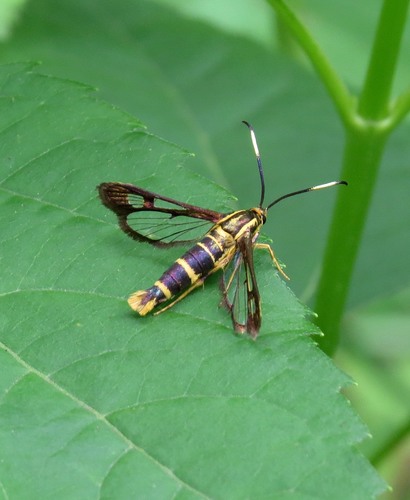
Carmenta bassiformis (Walker, 1856) is a animal in the Sesiidae family, order Lepidoptera, kingdom Animalia. Not known to be toxic.

Photo of Carmenta bassiformis (Walker, 1856) (Carmenta bassiformis (Walker, 1856))
🦋 Animalia

Carmenta bassiformis (Walker, 1856)

Carmenta bassiformis (Walker, 1856)

Carmenta bassiformis is a sesiid moth found in the US, whose larvae feed on ironweed and Joe-Pye weed roots.

Family
Genus
Carmenta
Order
Lepidoptera
Class
Insecta

About Carmenta bassiformis (Walker, 1856)

Carmenta bassiformis, commonly known as the eupatorium borer moth or ironweed clearwing moth, is a species of moth in the family Sesiidae. It was first described by Francis Walker in 1856. In the United States, this moth is found in an area ranging from Massachusetts to Florida in the east, extending west to Wisconsin, Kansas, and Texas. Adult moths have a wingspan between 18 and 26 millimeters. They are active as adults from late May through September. The larval stage of this moth feeds on the roots of two plant groups: ironweed and Joe-Pye weed.
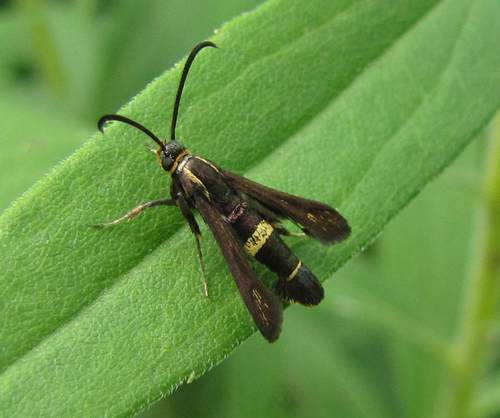
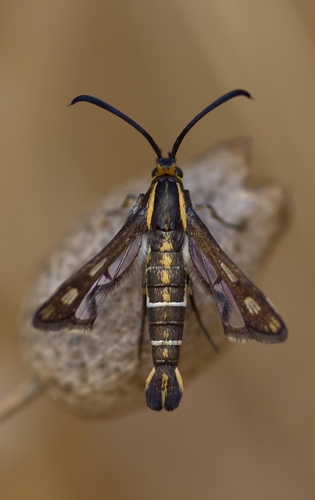
Photo: (c) John A. Gerwin, some rights reserved (CC BY), uploaded by John A. Gerwin · cc-by

Taxonomy

Animalia Arthropoda Insecta Lepidoptera Sesiidae Carmenta

More from Sesiidae

Sources: GBIF, iNaturalist, Wikipedia, NCBI Taxonomy · Disclaimer

Identify Carmenta bassiformis (Walker, 1856) instantly — even offline

iNature uses on-device AI to identify plants, animals, fungi and more. No internet needed.

Download iNature — Free

Start Exploring Nature Today

Download iNature for free. 10 identifications on us. No account needed. No credit card required.

Download Free on App Store