About Carissa haematocarpa (Eckl.) A.DC.
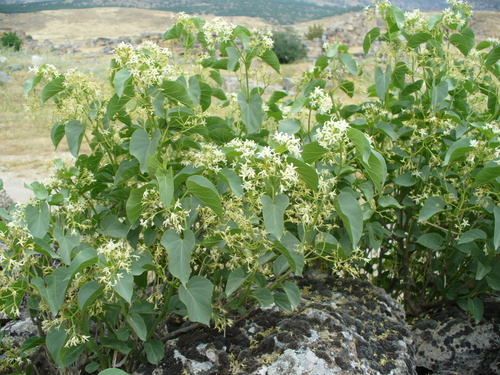
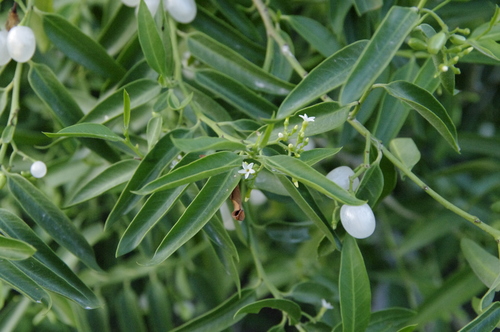
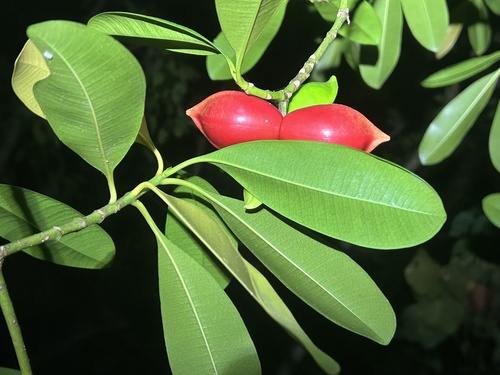
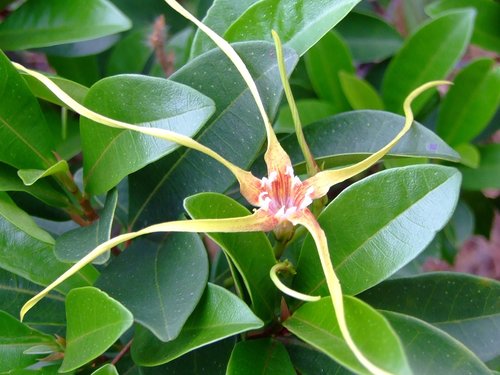
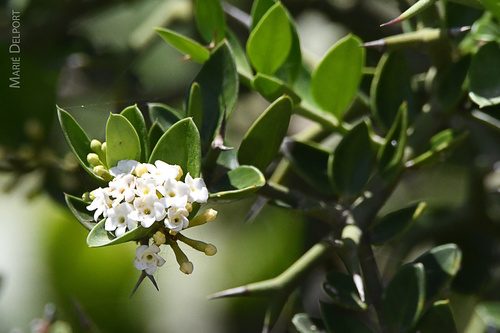
Carissa haematocarpa (Eckl.) A.DC. typically grows to around 3 meters tall, and can reach 4 meters when growing in optimal conditions. It is a densely branched plant with widely spreading branches, and bears strong spines that fork once or twice to form a Y-shape. These spines usually grow 2 to 5 cm long; they are green when young and turn woody brown as they age. Spines grow in pairs at shoot tips and persist long-term. Young stems are covered in trichomes, while older bark is greenish and wrinkled. All parts of the plant release white latex when damaged. This species is native to southern Africa, ranging from southern Namibia to the Western and Eastern Cape provinces of South Africa, including the arid Karoo and semi-Karoo regions. Its primary habitats are dry shrublands including Karoo shrubland and Nama-Karoo, semi-desert and arid areas, rocky slopes, sandy soils, and a variety of soil types with a pH between 6 and 8. Like other species in the genus Carissa, Carissa haematocarpa is highly tolerant of drought, strong winds, and nutrient-poor soils, making it well adapted to the extreme conditions of dry biomes. In its ecosystem, the plant’s fragrant flowers attract pollinating insects including bees, butterflies, and other insect species. Ripe fruits from the plant are an important food source for birds and small mammals, which also help disperse the plant’s seeds. Local communities eat the ripe fruits fresh, or process them into other food products, though the fruits may stain teeth. The plant is also used as an ornamental, as a living hedge, as a soil stabilizer in dry areas, and as a source of forage for wildlife during droughts.