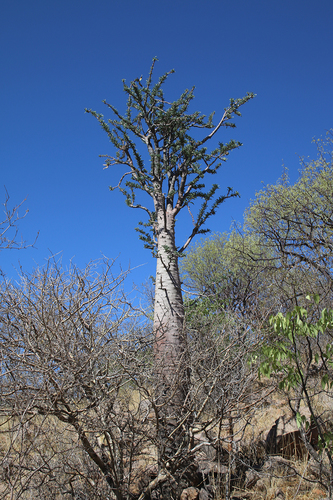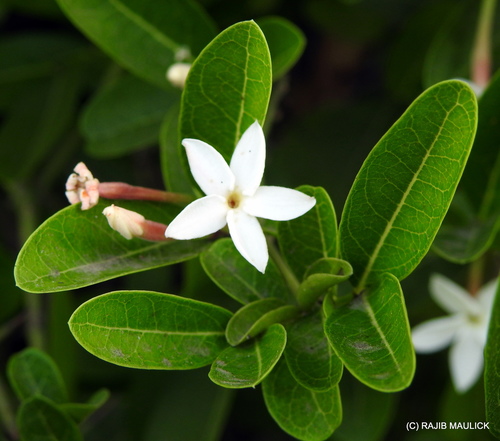
About Carissa carandas L.
Carissa carandas L. is a species of flowering shrub in the family Apocynaceae. It produces berry-sized fruits, which are commonly used as a condiment in Indian pickles and spices. The fruit is black, and its flavor can be sweet or sour depending on the individual plant. It is a hardy, drought-tolerant plant that grows well in a wide range of soils. Common English names for this species include Bengal currant, Christ's thorn, Carandas plum, Karonda, Karvanda and Kanna. The previously supposed varieties congesta and paucinervia actually refer to the related conkerberry, C. spinarum. This plant flourishes in regions with high temperatures, and is abundant in the Western Ghats of the Konkan region in India, particularly in the states of Maharashtra, Goa and Karnataka. It is also grown in the temperate conditions of the Himalayan Siwalik Hills of India and Nepal, at elevations of 30 to 1,800 metres (98 to 5,906 ft). In other parts of India, it is grown on a limited scale in Rajasthan, Gujarat, Bihar, West Bengal and Uttar Pradesh. It can also be found in other South Asian countries, including the lowland rain forests of Sri Lanka, as well as Pakistan, Nepal, Afghanistan, and Bangladesh. It is an introduced species in the Americas and other parts of Asia. Carissa carandas fruit is rich in iron, vitamin C, vitamin A, calcium and phosphorus. In the ancient Indian herbal medical system of Ayurveda, its fruit is used to treat acidity, indigestion, fresh and infected wounds, skin diseases, urinary disorders, diabetic ulcer, biliousness, stomach pain, constipation, anemia, skin conditions, anorexia and insanity. A decoction made from its leaves is used to treat fever, diarrhea, and earache. Its roots act as a stomachic and anthelmintic medicine for itches, and are also used as insect repellents. In India, mature fruit is harvested for use in Indian pickles. The fruit contains pectin, so it is a useful ingredient for chutney. When ripe fruits are cut from the branch, they exude a white latex. The most common use of this fruit is as a faux cherry in cakes, puddings and other prepared dishes. After processing like traditional candied murabba, it is easily available as pitted cherries in bottled form in markets. Colonial British in India also made jelly, jams and syrups from the fruit. The species was used in the Great Hedge of India (1803-1879 CE), because it is easy to grow, drought resistant, is a sturdy shrub that grows in a variety of soils, and is ideal for hedges as it grows rapidly and densely, and requires little attention.