About Caridina cantonensis Yü, 1938
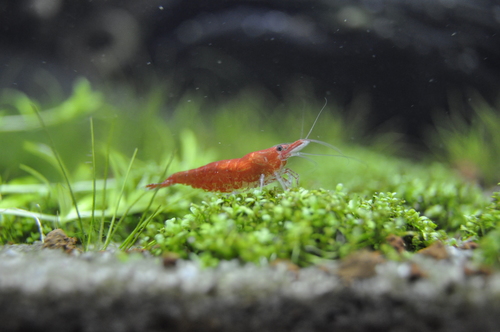
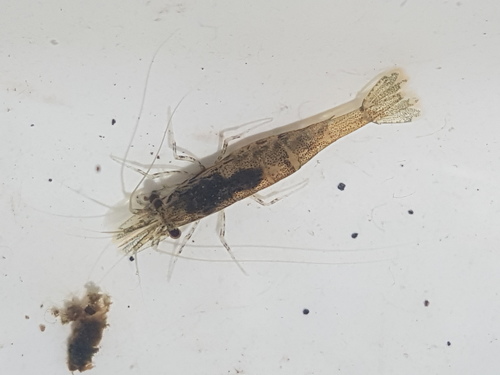
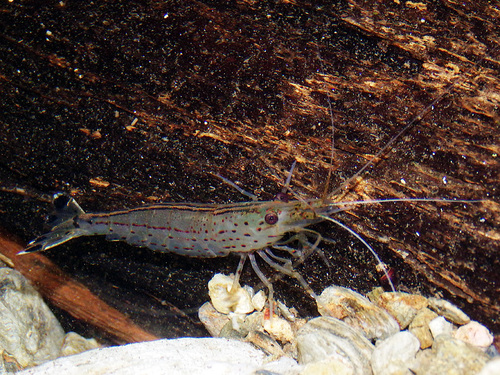
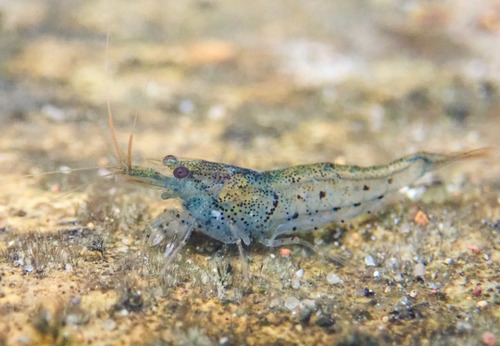
Caridina cantonensis Yü, 1938 is a species of small freshwater shrimp belonging to the family Atyidae. It is native to Taiwan. Also known as bee shrimp, these shrimp are scavengers that feed on small pieces of decayed vegetation and algae. Their typical lifespan is around 18 months, and they thrive in water temperatures between 70 to 78 °F, which is 21 to 26 °C. Many currently kept bee shrimp are selectively bred for specific traits, and the species is popular and in high demand as an aquarium pet. Shrimp farms have been established in Taiwan and other regions with suitable climates to meet this demand. However, bee shrimp are more difficult to farm than other types of shrimp, because their health depends on being raised in soft water that matches the pH of their native stream habitats.
For reproduction, female Caridina cantonensis can be distinguished from males by physical traits: females are larger than males and have a deeper abdomen. Females signal their readiness to mate by releasing pheromones into the water, which guide males to find them. Males will swim actively to search for receptive females during this period. Females carry their eggs underneath their abdomens, and use their pleopods to keep water circulating continuously around the eggs. The eggs hatch directly into tiny, fully formed juvenile shrimp that resemble adult shrimp. The length of time a female carries eggs before hatching is determined by water temperature. At 22 °C (72 °F), eggs hatch after an average of 28 days. When kept at 24 to 25 °C (75 to 77 °F), bee shrimp develop the most intense, strongest coloration. Sustained high water temperatures cause higher mortality rates for both juvenile and adult shrimp, and also reduce egg survival. Warmer water causes the shrimp to reach sexual maturity earlier, but they end up with a smaller adult body size than shrimp raised in colder water. A cold water environment slows sexual maturity, which gives the shrimp more time to grow, resulting in a larger body size when they reach sexual maturity compared to shrimp reared in warmer water.