About Careya arborea Roxb.
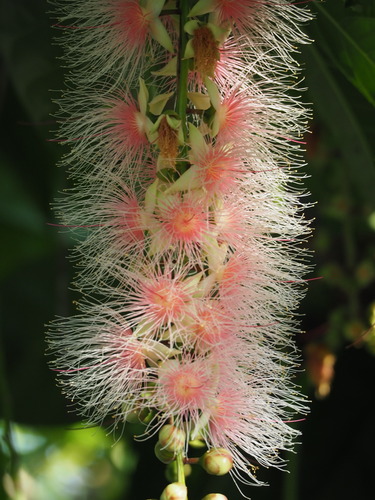
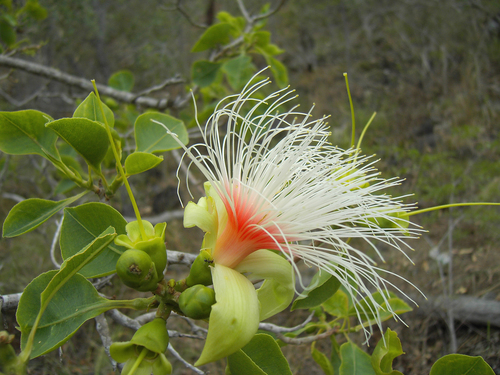
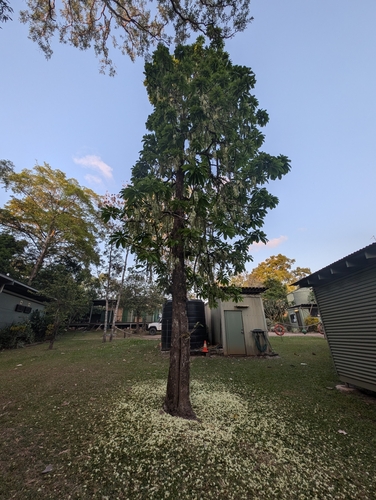
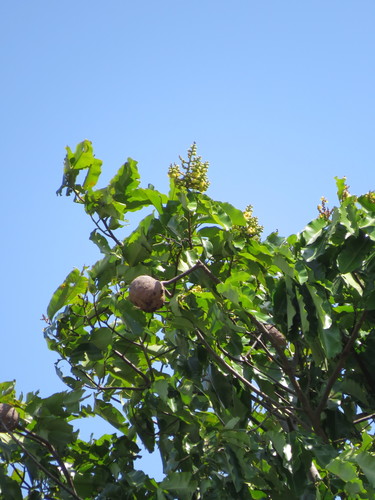
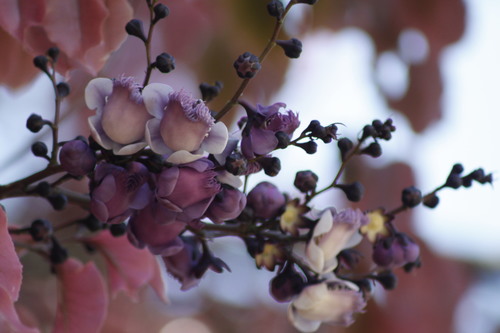
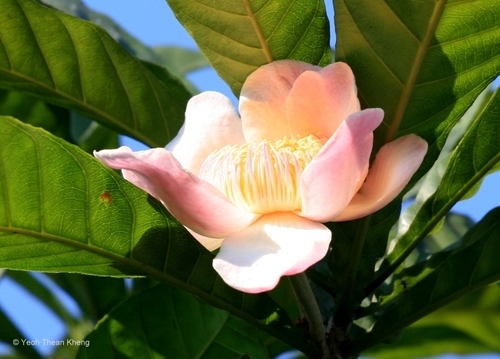
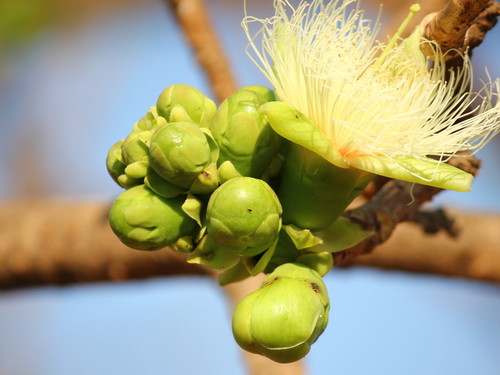
Careya arborea Roxb. is a tree species belonging to the Lecythidaceae family. It is native to the Indian subcontinent, Afghanistan, and Indochina. Its common English names are wild guava, Ceylon oak, and patana oak. This is a deciduous tree that can grow up to 15 metres (49 ft) tall. Its leaves turn red during the cold season. It produces yellow or white flowers that later develop into large green berries. The tree grows across India in both forests and grasslands. During the colonial era in India, the fibrous bark of this tree was discovered to be an ideal substitute for beech bark when making matches for matchlocks. In Myanmar (Burma), the leaves of Careya arborea are traditionally used to roll cheroots. The town of Pyay, formerly called Prome, is known for a local delicacy called taw laphet (တောလက်ဖက်, literally 'rural laphet') or Nibbinda laphet (နိဗ္ဗိန္ဒလက်ဖက်). This delicacy is tightly wrapped in Careya arborea leaves, arranged in a parcel shape, for fermentation and preservation. In Thailand, the flowers and young leaves of this tree are eaten as salad greens. Young fruit of Careya arborea is reported to be edible, while its seeds are slightly poisonous.