About Carex sylvatica Huds.
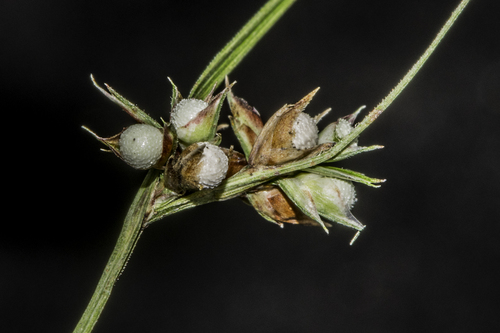
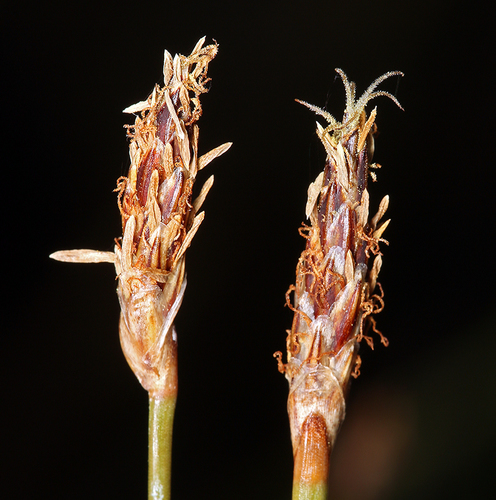
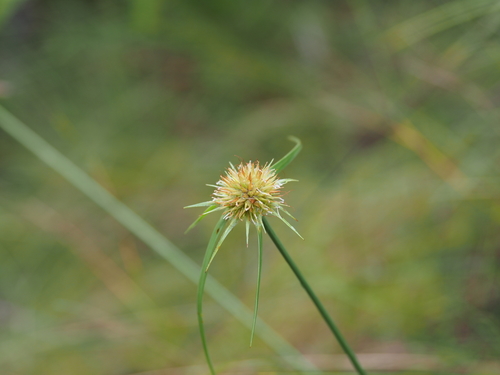
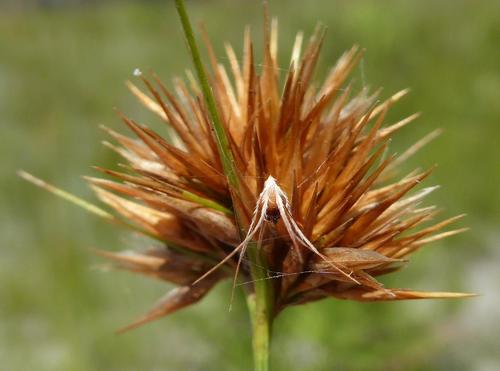
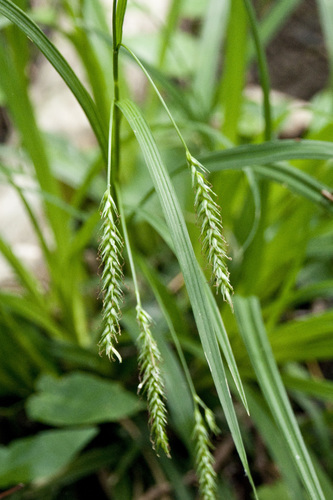
Carex sylvatica Huds. resembles a small Carex pendula. It typically grows 15 to 60 centimeters (6 to 24 inches) tall, and may reach up to 150 centimeters (5 feet) in exceptional cases. It has very short rhizomes, which gives the plant a dense, tufted (cespitose) growth form. Its leaves are 5–60 cm (2.0–23.6 in) long, 3–7 mm (0.12–0.28 in) wide, and 1.0–1.3 mm (0.04–0.05 in) thick, with 17–31 parallel veins. Leaves have a slight keel, or are gently folded into an M-shape when viewed in cross-section. The upper half to one third of the stem holds the inflorescence, which usually has 3–5 female spikes and a single male spike at the tip of the stem; this apical male spike may have a small number of female flowers at its base. Each female spike is 2.0–6.5 cm (0.8–2.6 in) long, and hangs from long, rough stalks (peduncles) that grow from within a long leaf sheath. The male spike is much narrower, measuring 1–4 cm (0.4–1.6 in) long. Carex sylvatica is distributed across Europe, extending into parts of Asia as far east as Iran. It has also been introduced to North America, where it grows in Ontario, New York, and North Carolina, and to New Zealand, where it was first recorded in 1969. Within its native range, this species grows in deciduous woodlands on heavy soils. It is sometimes found in areas without trees, but usually only occurs there as a remnant of ancient woodland. In North America, it is typically found in disturbed sites within deciduous woodland. This species can be used in gardens as ground cover under trees or shrubs. Carl Linnaeus documented that the Sami people used this plant as insulating wadding.