About Carex nebrascensis Dewey
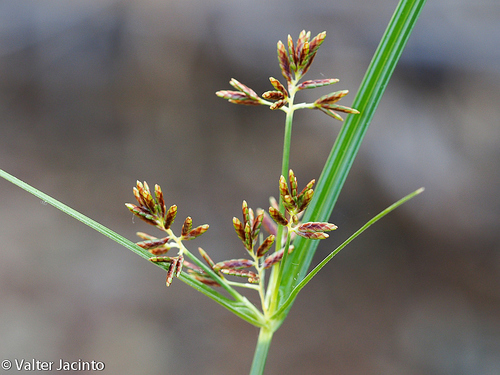
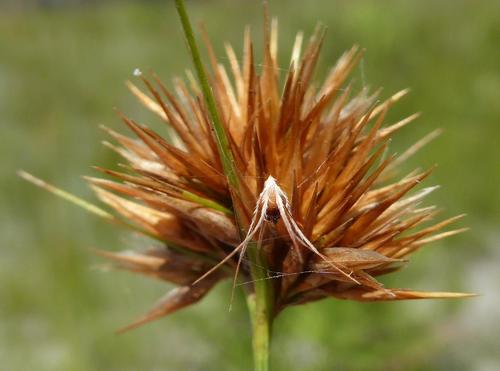
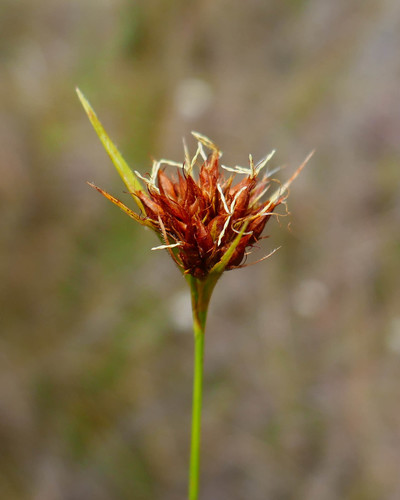
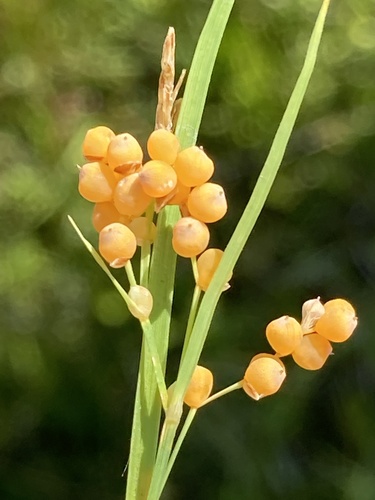
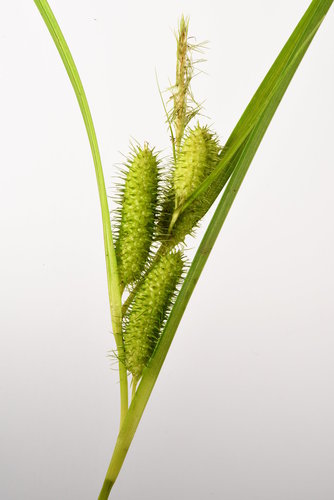
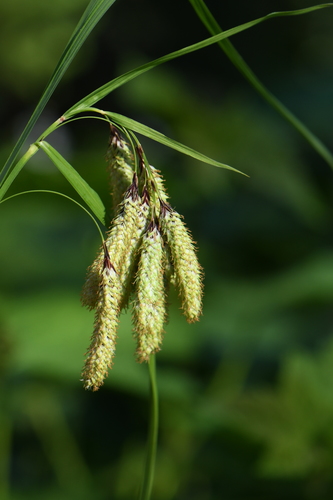
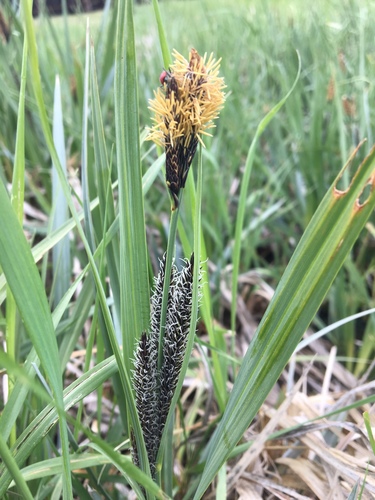
Carex nebrascensis Dewey produces upright, angled, spongy stems that grow up to around 90 centimeters tall. Its waxy, bluish leaves grow in tufts around the base of each stem. The root system of this species is a very dense network of rhizomes. Its inflorescence holds a few narrow staminate spikes positioned above some wider pistillate spikes that grow on short peduncles. The fruit of this sedge is covered by a tough, slightly inflated sac called a perigynium, which sometimes has a pattern of red spotting. This sedge is native to the central and western United States, and extends north into central Canada. It grows in wetlands at various elevations, including the Sierra Nevada and the sky islands of the Mojave Desert. Carex nebrascensis tolerates alkaline soils and long periods of submersion. Documented uses for Carex nebrascensis include providing forage for livestock and wildlife, being grown as an ornamental grass-like plant in natural gardens, native plant gardens, and habitat gardens, controlling erosion and remediating soil compaction, supporting multiple types of ecological restoration including riparian zone restoration, stream restoration, and wetland restoration, and serving in phytoremediation for wastewater treatment via bioremediation in both natural and constructed wetlands.