About Carex barbarae Dewey
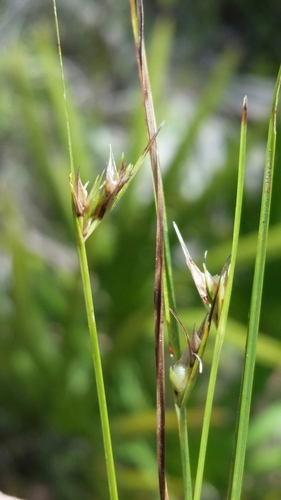
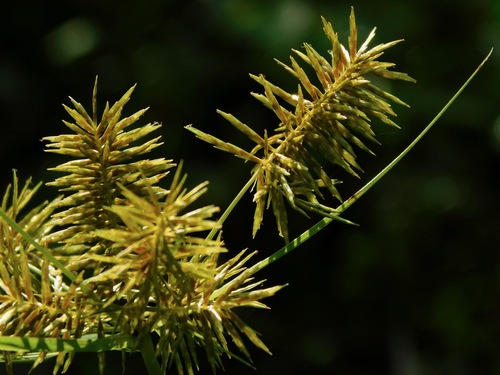
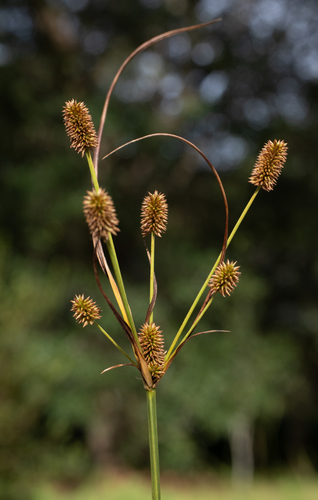
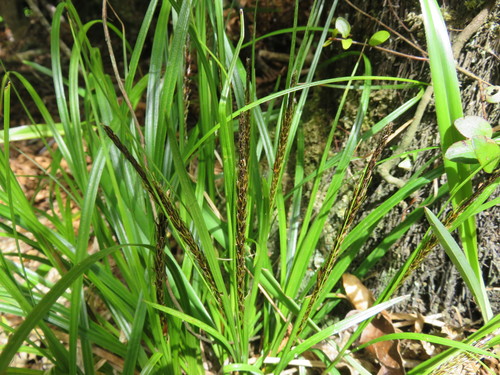
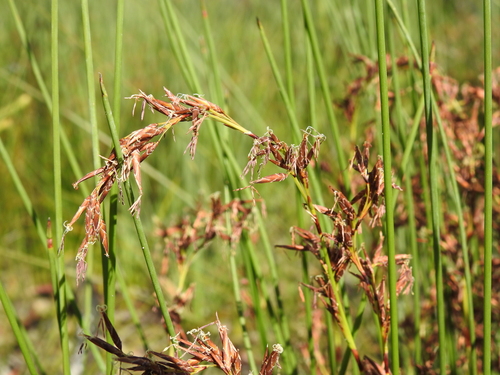
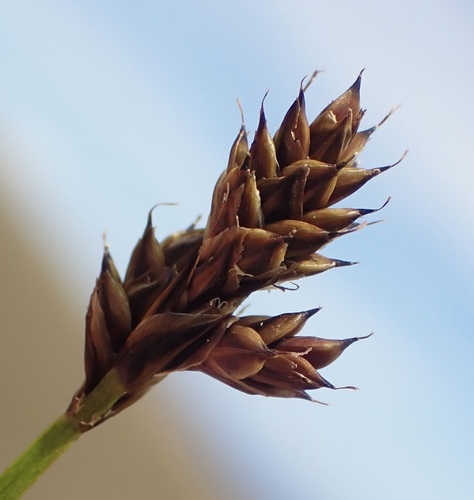
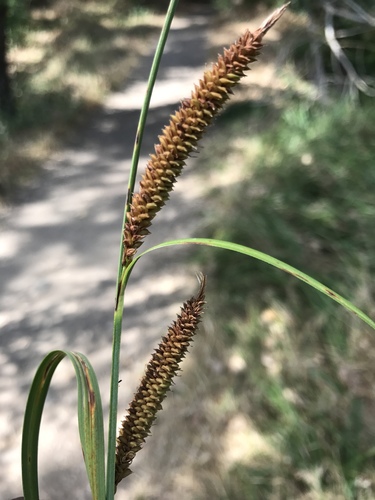
This sedge species, Carex barbarae, produces angled, hairless stems that can reach up to one meter in height or slightly taller, and it does not grow in clumps. Its tough, narrow leaves have basal sheaths that are red-spotted or purple and prone to shredding. The inflorescence produces both erect and drooping spikes, which can be up to around 8 centimeters long, along with a long associated bract that is longer than the spikes. Its fruits are wrapped in a sac called a perigynium; this structure ranges from light to dark brown, is sometimes red-spotted, leathery and tough, and may have a toothed, hairy tip. Most individuals of this species remain sterile, and the plant only rarely reaches a mature fruiting stage. Commonly called Santa Barbara sedge, it is native to the western United States, where it occurs in California and Oregon. It grows in wet and seasonally wet habitats, including meadows and riverbanks. California Native American groups such as the Maidu and Pomo used parts of this sedge for basketry and as sewing fiber.