About Cardisoma guanhumi Latreille, 1828
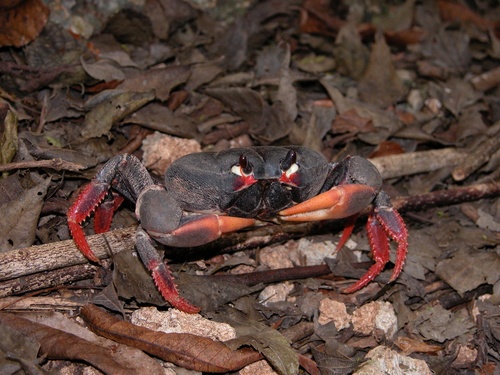
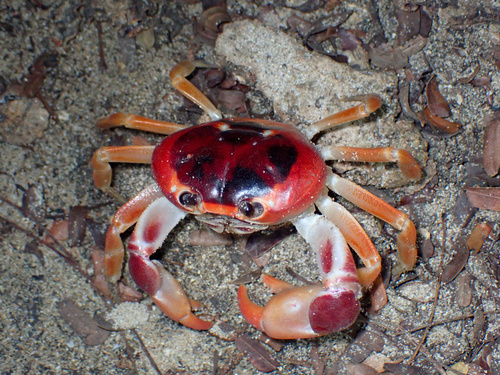
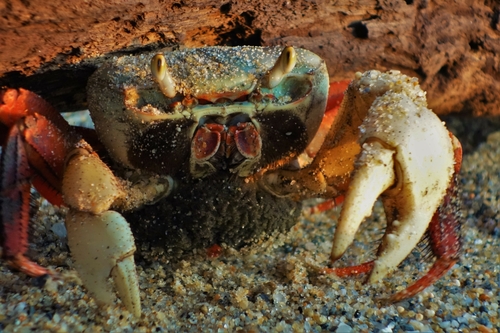
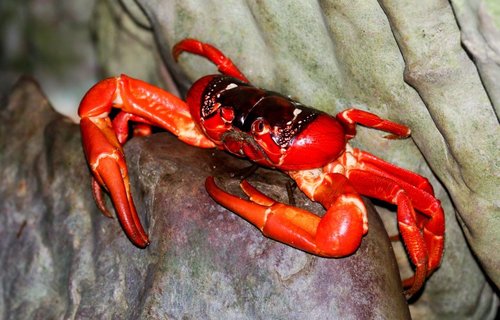
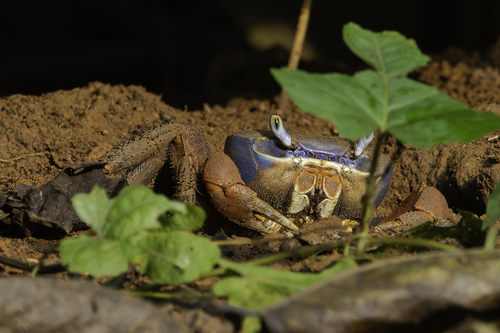
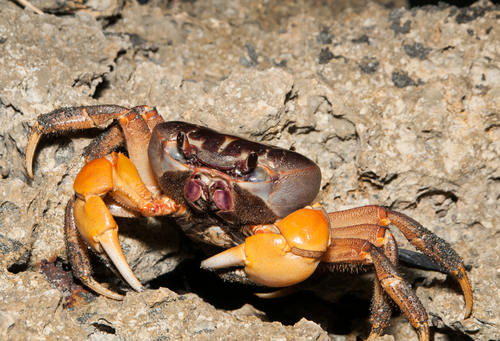
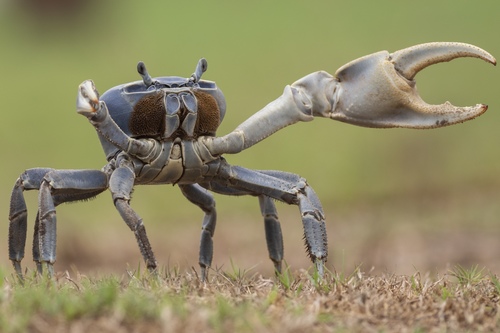
Cardisoma guanhumi, formally described by Latreille in 1828, has a carapace that can reach a maximum width of 15 centimeters (6 inches). Like many crab species, males have dimorphic claws, where the larger claw may grow longer than the width of the crab's carapace. This species has stalked eyes, and individuals display body color ranging from deep blue to pale grey. Juveniles typically have a brown carapace and orange legs. Females are most often light gray or white. The characteristic adult color pattern develops once individuals weigh between 80 grams (2.8 ounces) and 180 grams (6.3 ounces), and fully grown individuals of this species can weigh more than 500 grams (18 ounces).
This species is distributed across estuarine and coastal regions throughout the Caribbean, and along the Atlantic coast of Central and South America, extending south to Brazil. In the United States, it occurs in Gulf of Mexico coastal areas and in Florida, ranging north to Vero Beach. Relatively cold winter water, with temperatures below 20 °C (68 °F), reduces larval survival and prevents this species from spreading further north.
The reproductive cycle of Cardisoma guanhumi is closely tied to seasonal weather patterns and lunar phases. Heavy spring rains trigger breeding migrations. During the first few weeks of this migratory period, the crabs gain weight as they consume and gather more food. Males mate with mature females during this time, and fertilization is internal. Most females carry fertilized eggs externally through July and August. Eggs hatch after approximately two weeks, and newly hatched larvae must be released into saltwater to survive.
Multiple spawns can occur per year, and the timing of the spawning season varies across the species' range. In Florida, the spawning season runs from June to December, peaking in October and November. In the Bahamas, spawning occurs from July to September, while in Venezuela spawning lasts from July to November. When eggs hatch, they produce free-swimming larvae that go through five zoeal stages and one postlarval (megalopa) stage. Under laboratory conditions, development from hatching to the first crab stage typically takes 42 days, though this development time may be much shorter for wild individuals.
Cardisoma guanhumi grows more slowly than most other crab species. It needs more than 60 molts to reach full adult size, which is roughly three times the number of molts required by other crab species. To protect itself from predators during molting, the crab usually seals the exit of its burrow with mud 6 to 10 days before molting begins. After molting, crabs are more vulnerable to predators because their new shell has not yet hardened.