About Cardisoma crassum Smith, 1870
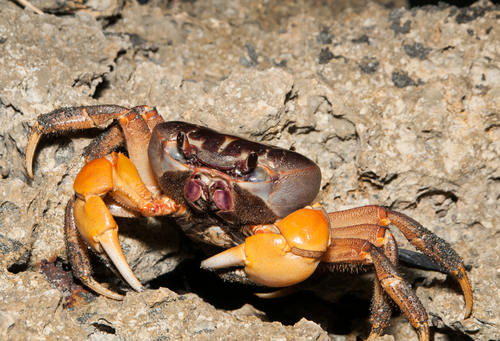
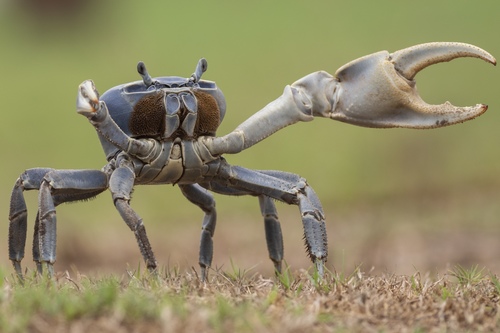
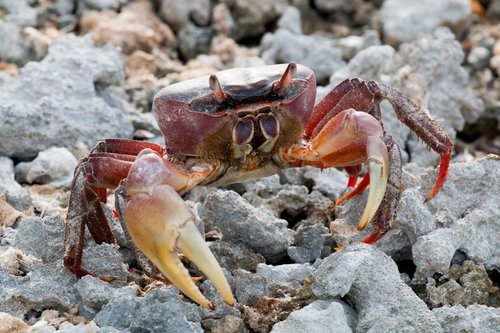
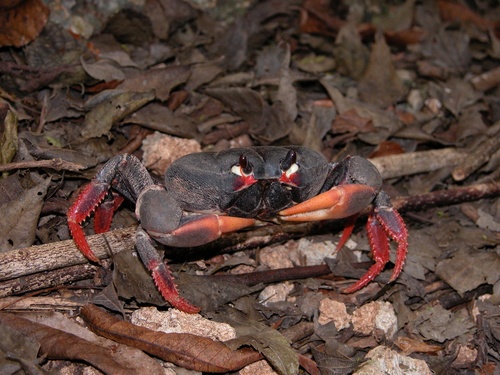
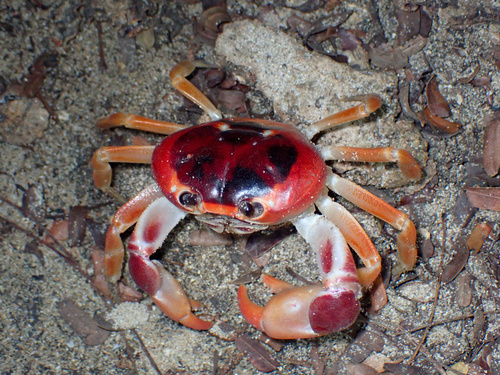
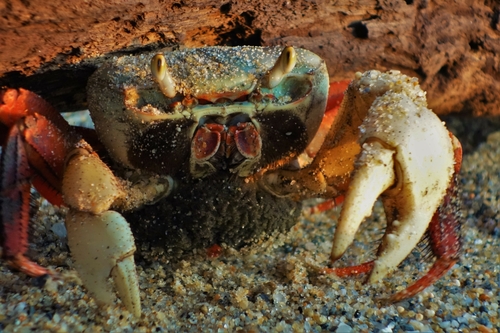
Cardisoma crassum Smith, 1870 is a fairly small species of crab, with a carapace that is broader than it is long. When Smith created the original description of this species, he measured three male specimens and one female specimen. The average male carapace measured 53.7 mm long by 65.4 mm wide, equal to 2.11 inches long by 2.57 inches wide. The single measured female had a carapace that measured 53 mm long by 64.5 mm wide, equal to 2.09 inches long by 2.54 inches wide. Cardisoma crassum, commonly called the mouthless crab, has distinct coloration. It has a dark blue carapace, red dactyl segments on its walking legs, and a large cheliped. The upper surface of this large cheliped ranges from pale yellowish to dirty white, and its underside is cream-colored. This species lives in the eastern Pacific region, and it is one of only three species of land crab found there. Its distribution ranges from Baja California and the adjacent Gulf of California southward to Peru, and individuals are sometimes found as far south as Chile. Cardisoma crassum is common around mangrove roots, where it builds its burrows. The burrows dug by this species are complex, and they are often more than 2 meters deep. These burrows are located in elevated areas of mangrove habitat, and hold a reservoir of water at their base. A new species of sand fly in the genus Culicoides was discovered living and breeding inside the burrows of these mouthless crabs. This sand fly was named Culicoides cancer, in reference to its association with the crab.