About Cardisoma armatum (Herklots, 1851)
Scientific name: Cardisoma armatum (Herklots, 1851)
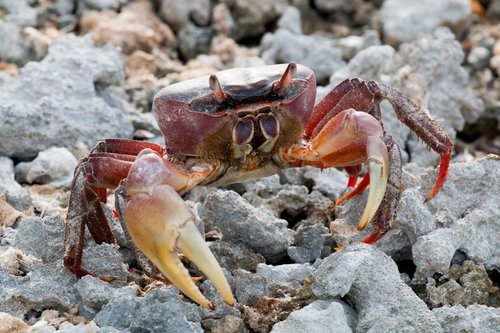
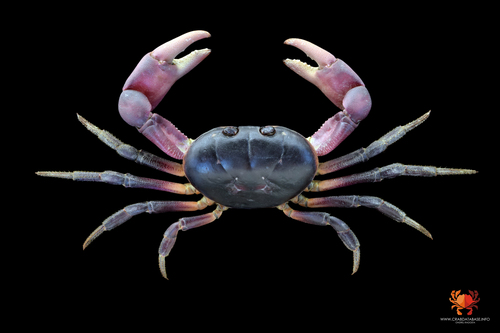
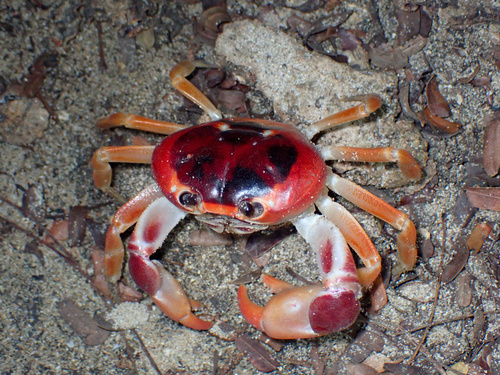
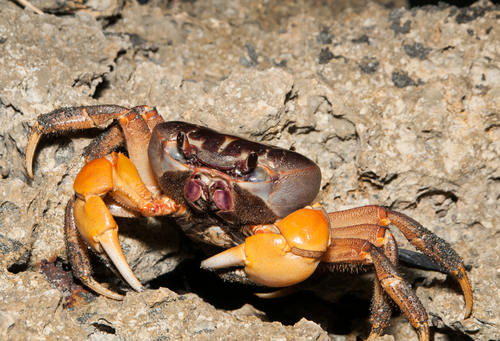
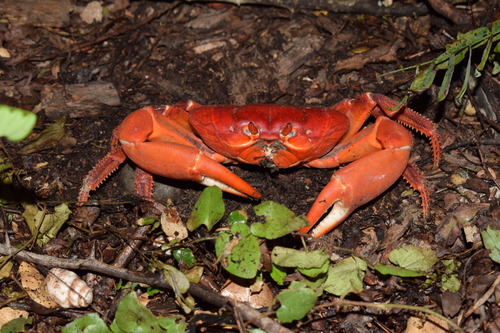
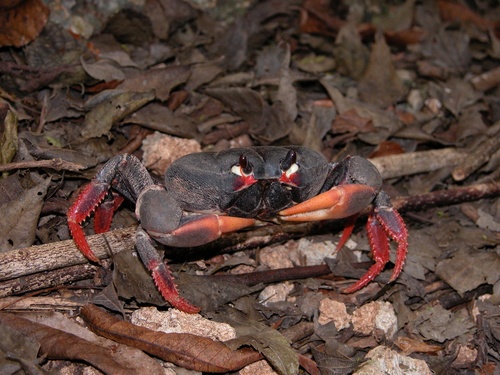
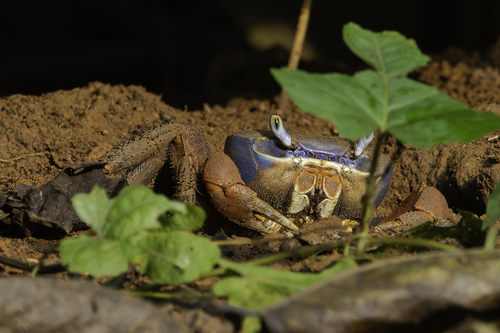
Description: When young, these crabs typically have a blueish or violet carapace, red-colored legs, and whitish claws. This coloration usually fades as the crab grows older. They can reach a carapace width of 20 cm across, though captive individuals rarely grow to this full size.
Distribution: C. armatum is native to coastal regions of western Africa. It also occurs inland along some deltas, such as the Volta River delta, and on islands including Cape Verde.
Ecology and life cycle: Their diet consists mainly of fruit, vegetation, and carrion. They are known to be cannibalistic, and will also consume smaller crabs, small reptiles, amphibians, molluscs, fish, and insects if they can catch these prey. While juvenile and adult crabs spend most of their time on dry land, females must return to the ocean to release their eggs. The eggs hatch into microscopic larvae that later develop into young crabs. If fully developed young crabs do not reach land, they will drown. This land crab cannot stay submerged for long periods.