About Carcina quercana Fabricius, 1775
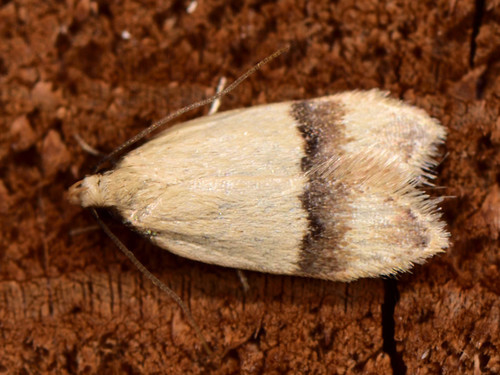
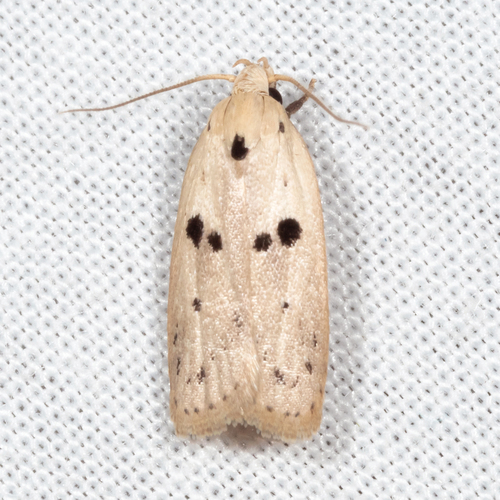
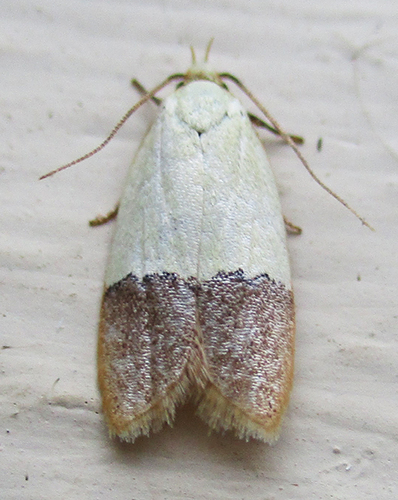
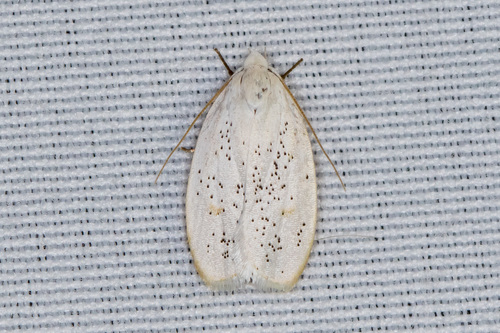
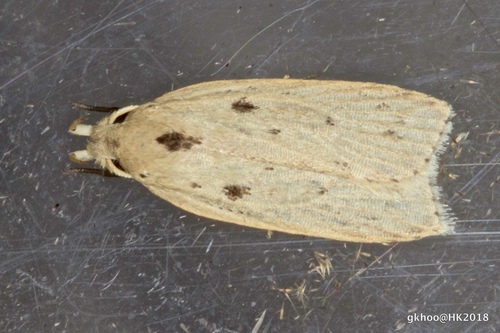
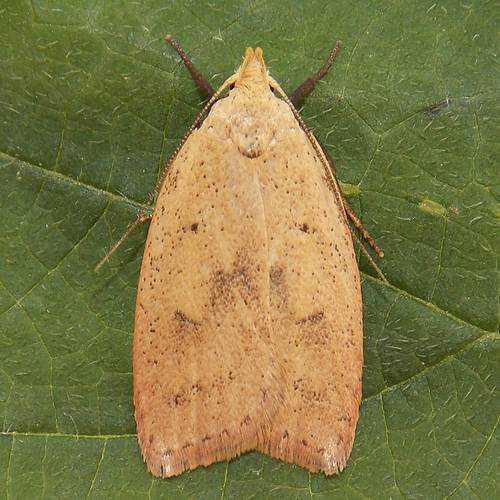
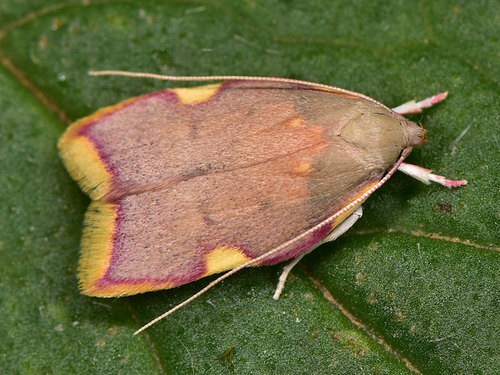
Carcina quercana is a species of moth in the Depressariidae family. It is native to Europe, and has been recently introduced to North America, specifically to British Columbia and western Washington. This species has several occasional common names: oak lantern, long-horned flat-body, and oak-skeletonizer moth, with the last being the most common name used in North America. The wingspan of this moth measures 16 to 20 mm. Its forewings are light ochreous, more or less tinged with purple, and sprinkled with dark fuscous. The costal edge of the forewing is purple. There is a yellow blotch along the costa near the base, and a second yellow blotch beyond the middle of the wing. A fuscous transverse line is located at one-quarter of the wing length, followed by yellowish suffusion towards the dorsum. The stigmata are dark grey, and the plical stigmata are usually faint. A terminal purple line runs along the edge of the wing, and the cilia are bright yellow except on the tornus. The hindwings are yellowish-white, with a rosy tinge on the apex. Mature larvae are pale green, with a darker dorsal line that has paler edges, and a yellowish-green head. Larvae of Carcina quercana feed on the foliage of various deciduous trees, including oak and beech.