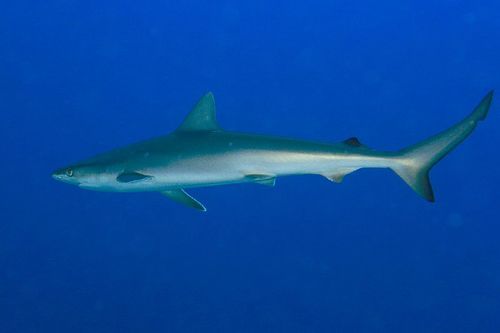
About Carcharhinus sorrah (Müller & Henle, 1839)
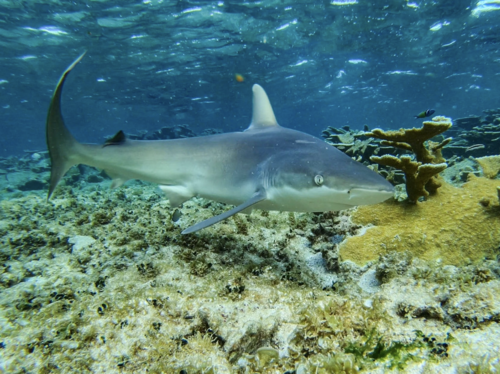
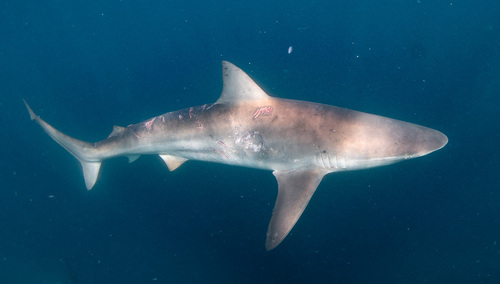
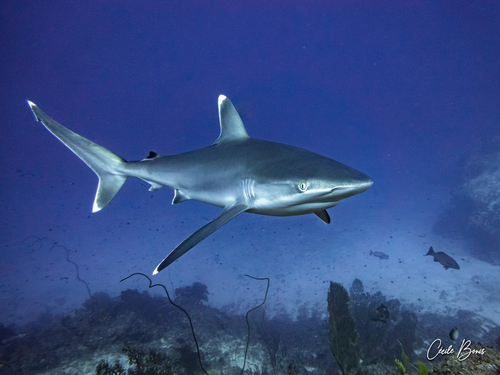
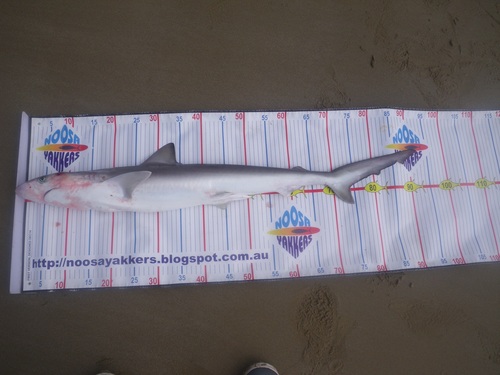
Spot-tail shark, scientifically known as Carcharhinus sorrah (Müller & Henle, 1839), has a spindle-shaped body and reaches roughly 1.6 m (5 ft 3 in) in length. It has a moderately long, pointed snout and moderately sized eyes. Its first dorsal fin is large and curved, while the second dorsal fin is small and positioned low. The back and sides of this shark are grey, with a white belly and a long white streak running along its flank. This species can be told apart from other requiem sharks living in tropical waters by its distinct black tips on the second dorsal fin, pectoral fins, and the lower lobe of the caudal fin. A ridge runs over the spine from the first dorsal fin to the second, and there is a pit located just in front of the upper lobe of the caudal fin. Its upper teeth are serrated, angled obliquely, and triangular. The Australian blacktip shark (C. tilstoni) shares a similar geographic range and also has black fin tips, but it differs in several key features: it has an additional black tip on its first dorsal fin, it lacks the ridge between its two dorsal fins, and its upper teeth are slender, upright, and pointed rather than serrated, oblique, and triangular. The spot-tail shark inhabits tropical Indo-Pacific continental and insular shelves. It is most commonly found down to around 73 m (240 ft) deep, and may occur as deep as 140 metres (460 ft). Its distribution range stretches from the East African coast, Madagascar, and the Red Sea eastward to India, Malaysia, China, the Philippines, and northern Australia.