About Carabus intricatus Linnaeus, 1760
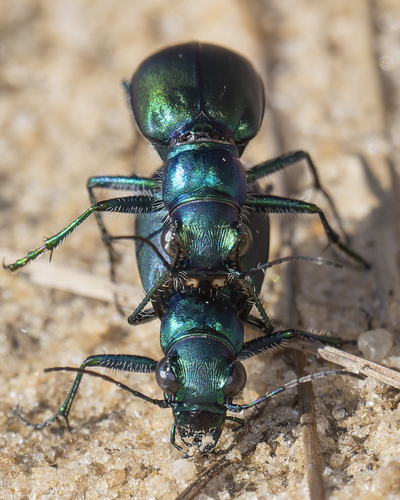
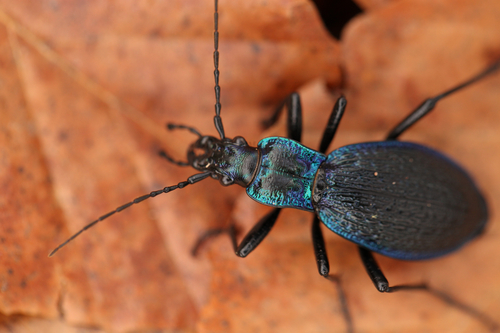
Carabus intricatus, commonly known as the blue ground beetle, is a species of ground beetle that lives in Europe. It is a large beetle, reaching 24–35 millimetres (0.9–1.4 inches) in length. Its elytra have a rough surface and a metallic purple or blue colouration. The second pair of flight wings located under the elytra are reduced in size. In Britain, only three records of this species existed in the twenty years leading up to 1993, and it was considered extinct in the country. In 1994, populations of the beetle were discovered at two sites near Dartmoor. Blue ground beetles are nocturnal carnivores that are most active during spring and early summer. Tests have shown that this species prefers slugs from the genus Limax, and especially favours Limax marginatus. Individuals have also been observed to accept liver, dog food, and crabsticks as food. In their natural wild habitat, adult blue ground beetles are found under the bark of dead wood, and under rocks. The species does not need ground vegetation to survive, and prefers damp, rotten, moss-covered wood. Beetles can be active throughout the year, and a fully-grown larva of the species was collected during summer. This larva ate slugs before entering the pupal stage, and emerged as an adult approximately three weeks after pupation. Researchers think the full life cycle of Carabus intricatus may take two years to complete. Adult blue ground beetles are very long-lived.