About Carabus auratus Linnaeus, 1760
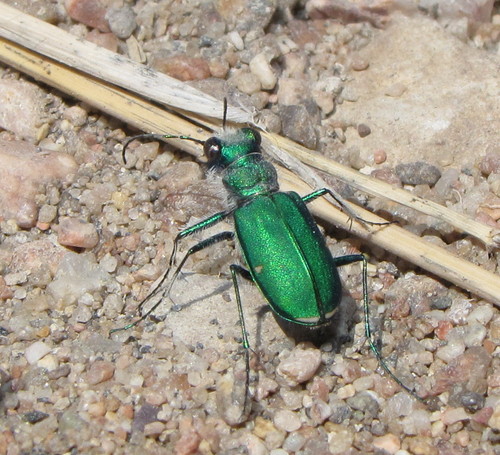
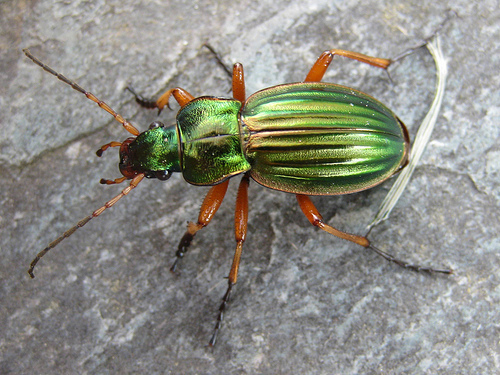
Carabus auratus Linnaeus, 1760 is a flightless beetle that reaches a body length between 1.7 and 2.0 centimeters. Its elytra, head, and thorax are an iridescent gold-green color, and each elytron is marked with three broad longitudinal grooves. The beetle's legs, antennae, and mouth parts are orange. This species is found in fields and among bushes, particularly on loamy soil, and will occasionally climb into trees. It is active during the day, and preys on insects, snails, and worms. It seizes prey with its mandibles and sprays the prey with digestive secretion before consuming it. Carabus auratus is often welcome to farmers and gardeners, because it feeds on crop and garden pests such as the Colorado potato beetle. The larvae of this species only hunt at dawn. They moult three times before pupating in the soil, then emerge as mature adults in the autumn. Adult beetles have a life expectancy of around two years, and overwinter under the shelter of stones or moss.