About Caprona ransonnettii (Felder, 1868)
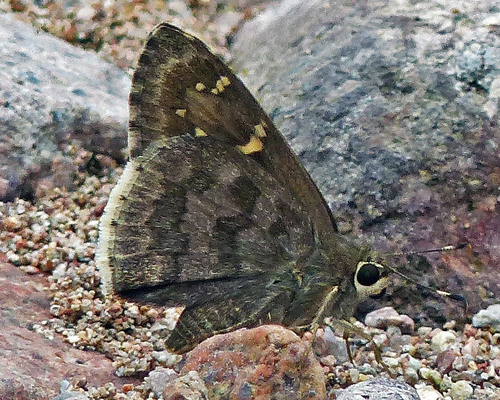
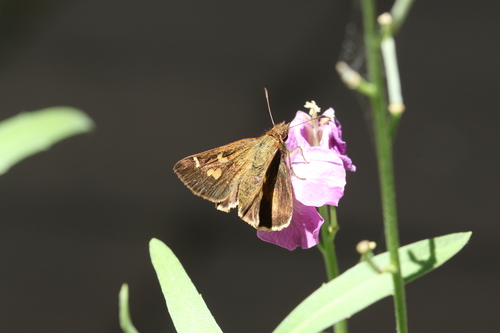
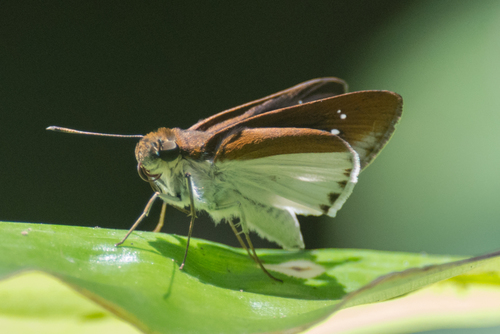
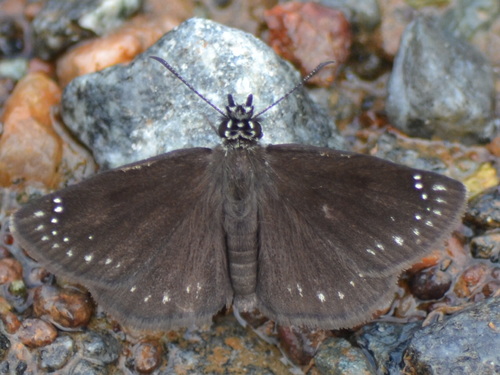
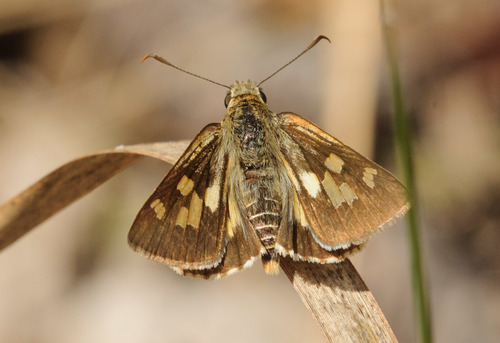
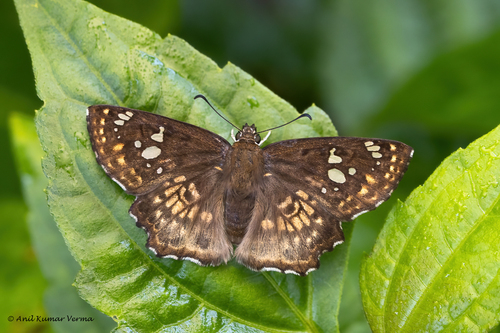
This species, Caprona ransonnettii, was first formally described in detail by Edward Yerbury Watson in 1891. The description is as follows: The upper side of the wings is fuliginous ochreous-brown. For males: the forewing has three small semi-transparent white spots before the apex, and sometimes one or two very small minute spots placed obliquely below these spots. It also has two spots within the end of the cell, a slender spot between the upper and middle median veins, a larger spot between the latter vein and the submedian, followed below it by two small spots arranged obliquely. A double marginal row of faint, indistinct small lunules runs along the edge. The hindwing has a broad medial discal patchy pale ochreous band, crossed by brown veins, plus a spot within the end of the cell; the outer discal area is suffused with grey-brown. The cilia alternate with white patches. For females: the spots and marginal lunules on the forewing, and the patchy band on the hindwing are more prominent, and the hindwing band also has a more distinct grey border. On the underside: the forewing is paler brown, with a greyish-white basal area, and the spots have cloudy black outer borders. The hindwing is greyish-white, with only the outer margin being brown, and is crossed by a curved discal series of small blackish spots. The dry-season form of this species, which was named A. taylorii by de Niceville, differs from the typical form by being ochreous rather than dark brown on the upper side, and having the disc of the hindwing marked with a group of ochreous spots and streaks instead of being unmarked. Mr. de Niceville noted a similar color variation in C. tissa, a not very distantly related species. In both species, the dry-season form is the paler variant. This species occurs in India (in the states of Gujarat, Jharkhand, Odisha, and extends southwards to Kerala) and in Sri Lanka.