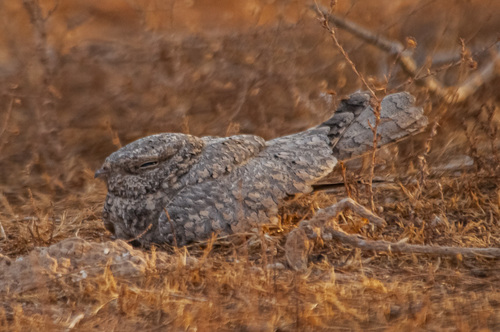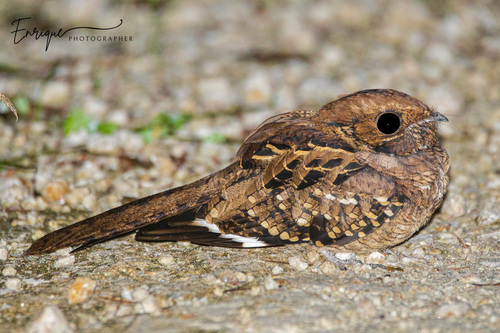
About Caprimulgus vexillarius (Gould, 1838)
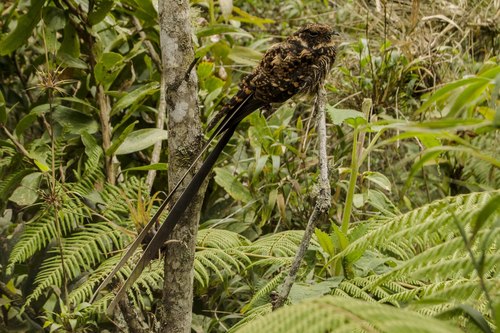
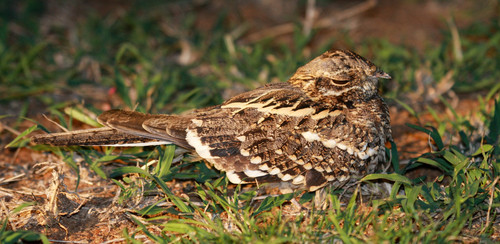
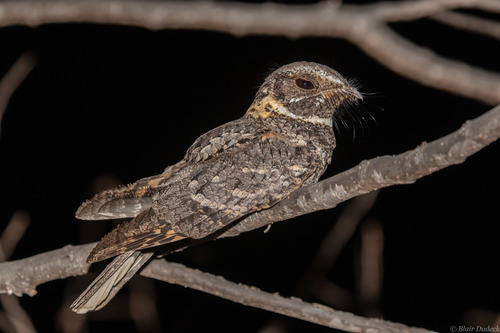
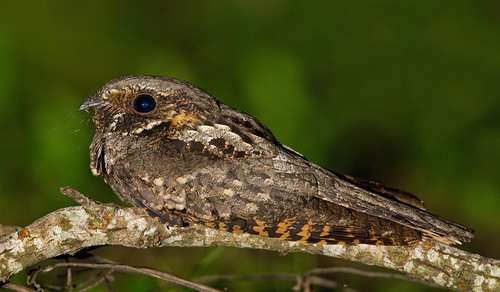
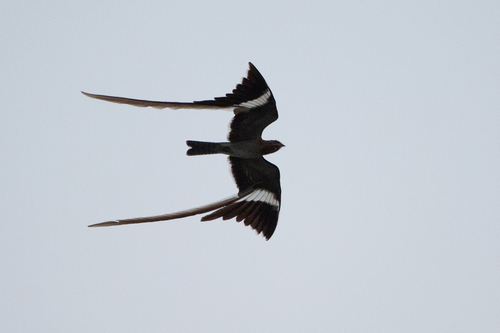
The male Pennant-winged nightjar, Caprimulgus vexillarius, can be recognized by a distinct broad white band that crosses its otherwise black primary wing feathers. During the breeding season, males grow a striking second primary feather known as a pennant feather. These pennant feathers increase in length as males age, eventually reaching up to twice the length of the bird’s entire body. After breeding finishes, the pennant feathers are quickly shed or broken off. Male wings have a distinctly angular shape, because the 9th distal primary and the 1st through 3rd proximal primaries are the longest feathers on the wing. South of the equator, this species prefers to live in plateau woodlands, particularly Miombo woodland, and favors stony or boulder-strewn hillsides within these habitats. Caprimulgus vexillarius is a social, bi-annual passage migrant that is regularly seen in Kenya’s Rift Valley and Lake Victoria regions. The species spends its non-breeding season in subtropical savanna habitat, across an area extending from Nigeria to Sudan.