About Caprimulgus atripennis Jerdon, 1845
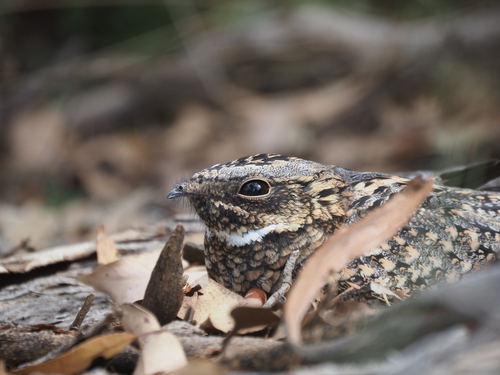
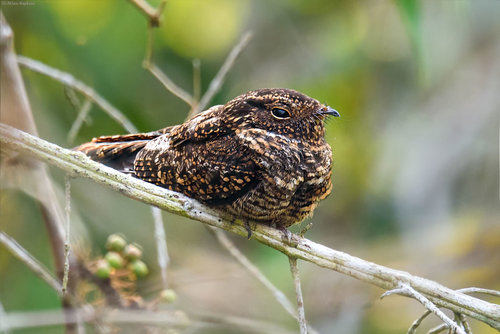
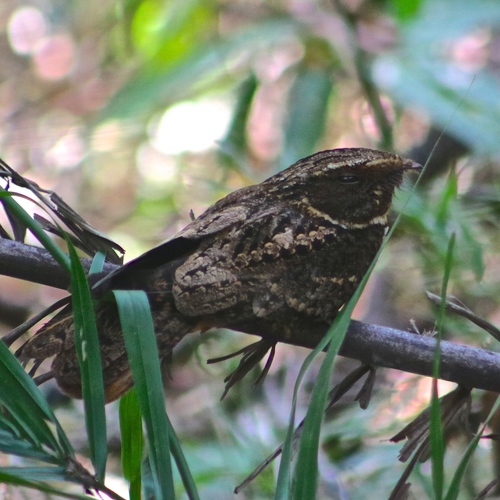
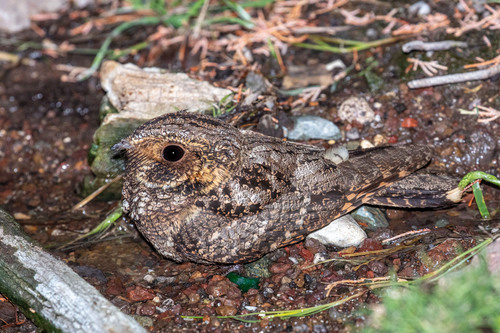
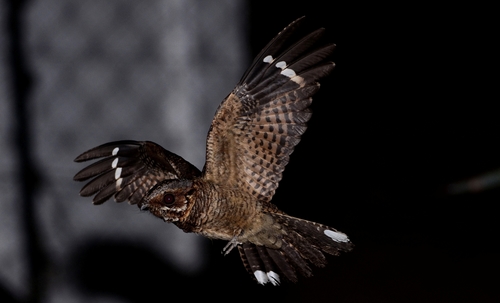
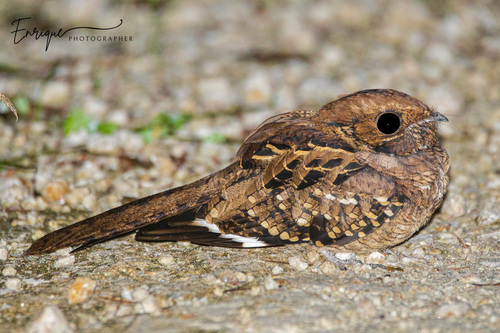
Like other nightjars, Caprimulgus atripennis has a wide gape, long wings, soft downy plumage, and is nocturnal in habits. It reaches an overall length of 26 cm, which is almost a full head length larger than the Indian nightjar (C. asiaticus). It can be distinguished from the Indian nightjar by its barred tail, rufous rear neck, and wing bars. Vermiculations on the crown are fine, giving the crown a nearly uniform shade, and the collar is blackish. Males have a white patch on each wing. Like other dark tropical woodland nightjars, this species has cryptic plumage that is mainly variegated buff and brown. It has an unbroken white gorget similar to the long-tailed nightjar, but its tail is shorter. The Sri Lankan subspecies aequabilis is slightly smaller and darker than the nominate form. Its typical call is a fast repetitive ch-woo-woo; a second, frog-like croaking call has also been reported. This nocturnal bird inhabits open woodland, scrub, and cultivated land. It flies after sundown with an easy, silent fluttering flight that can look like a large moth at a casual glance. During the day, Jerdon's nightjar rests silently on the ground, hidden by its camouflaged plumage, and is difficult to detect as it blends into the surrounding soil. It feeds on nocturnal insects such as moths. Unlike the Indian nightjar (C. asiaticus), this species rarely rests on roads at night, and prefers to alight on bushes, making it harder to spot in vehicle headlights. Despite this nocturnal preference for perching on bushes, it roosts on the ground, though it calls from trees. The breeding season runs from March to July in India, and from February to May in Sri Lanka. This species does not build a nest; instead, it lays two marbled eggs directly on bare ground. The brooding bird provides the best protection for the eggs by covering them closely with its camouflage plumage. Chicks are able to crawl away from the nesting site soon after hatching, and will hide among leaves when alarmed.