About Caprimulgus affinis Horsfield, 1821
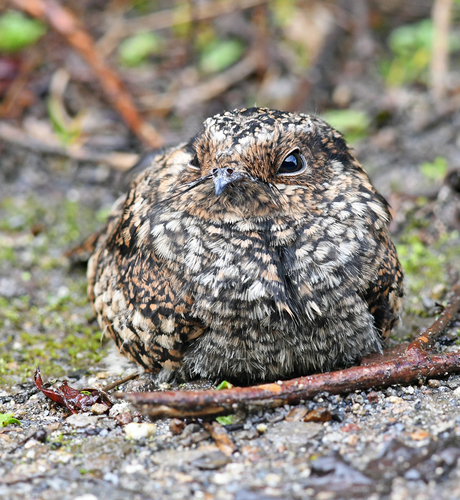
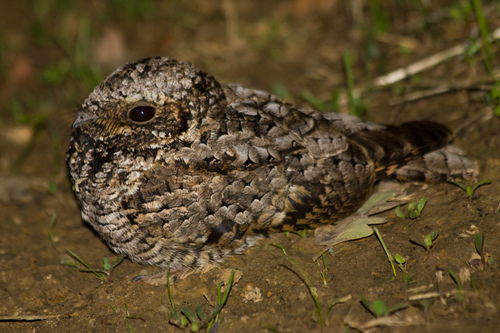
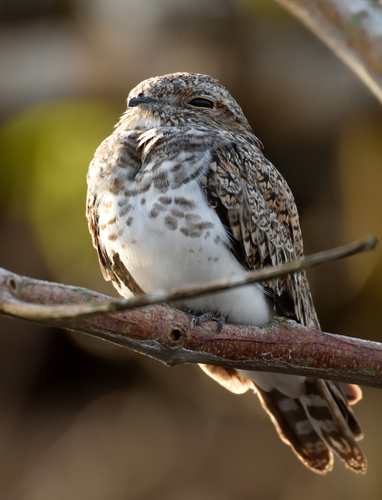
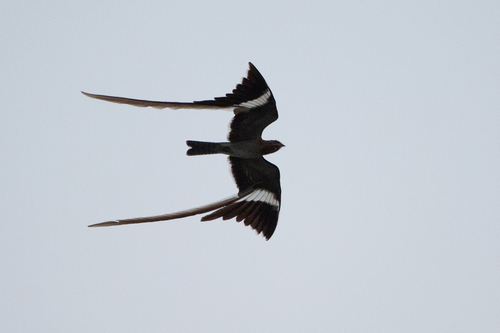
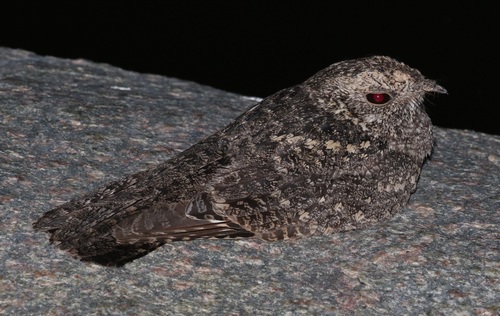
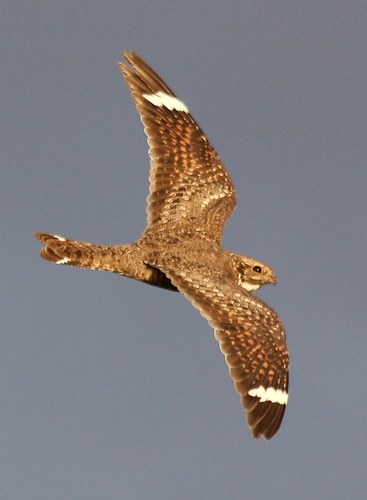
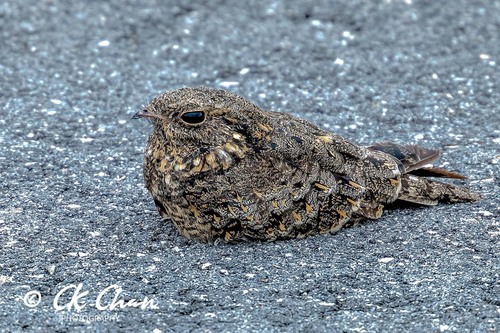
The savanna nightjar (Caprimulgus affinis Horsfield, 1821) measures 20 to 26 centimeters in length, weighs 54 to 110 grams, and has a wingspan of 64 centimeters. Its size varies across subspecies, ranging from small to medium-large. Like other nightjars, it has long pointed wings and small legs and feet, showing it relies more on flight than walking. It has a wide bill that opens to reveal a large gape, and the bill is surrounded by facial feathers called rictal bristles. Its vermiculated grey-brown plumage, a trait shared by all nightjars, makes it hard to distinguish from other species by sight alone. However, the species shows sexual dimorphism: males and females can be told apart by the presence of white throat patches. Male savanna nightjars have clear white patches on the throat, tail, and wings. By contrast, females have faint throat patches, a red tint to their feathers, and no white patches on the tail. Immature and juvenile savanna nightjars look similar to adult females; they lack white patches and have mottled colouration. The savanna nightjar has a widespread range that extends from northern Pakistan to Indonesia, with different subspecies living in different parts of this range. Populations are widely distributed across south China, Pakistan, India, Indonesia, and Taiwan, where the species lives in lowland open grasslands, sugar cane plantations, wheat fields, and rocky soils near rivers and streams. As urban development has increased across southern Asia, the roofs of tall buildings have become an ideal nesting site for savanna nightjars, a pattern that has been observed in Indonesia and Taiwan. Migration in this species is not well understood, because different subspecies have different migratory habits: some are nonmigratory, while others are locally migratory. The subspecies C. a. monticolus migrates through the Punjab plains to northeastern Pakistan to breed in the summer. The savanna nightjar's breeding season varies by subspecies: it occurs from March to August in the western part of the species' range, and from March to January in the eastern part. Like most nightjar species, the savanna nightjar nests in open, exposed locations. It does not build constructed nests; instead, it lays its eggs directly on the ground in low-elevation rocky soils or open spaces. It lays 1 to 2 pale pink, blotched eggs that camouflage against the surrounding stones. The female incubates the eggs, while the male guards the nest. Incubation length is not recorded. Savanna nightjar chicks are precocial, and become active and mobile just 4 days after hatching. Parent birds defend their eggs and young by feigning injury, a behaviour that benefits open-nesting birds, which are more vulnerable to predators than birds that nest in cavities. To draw predators away from the nest, savanna nightjar parents act injured or crippled, luring predators away at the risk of their own survival. Like adult savanna nightjars, the chicks have excellent camouflage for extra protection.