About Cantharellus enelensis Voitk, Thorn, Lebeuf & J.I.Kim
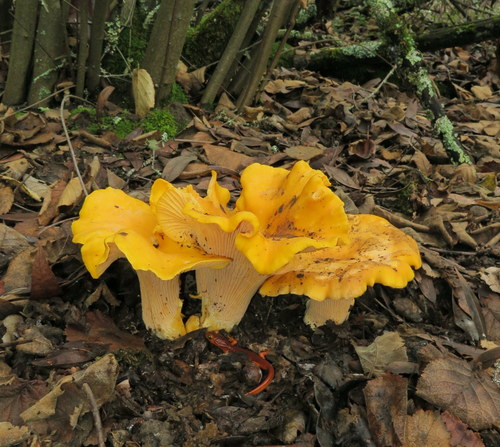
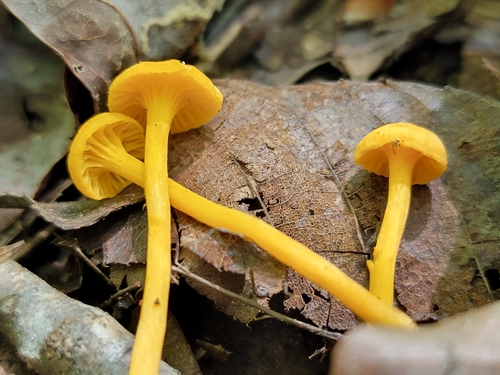
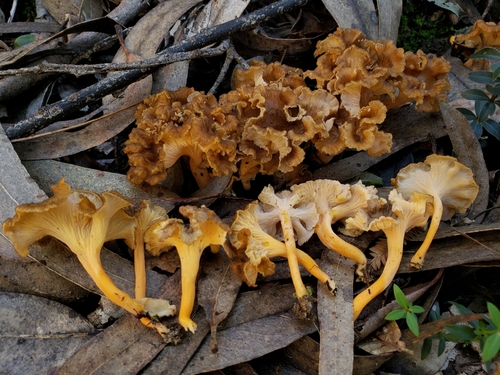
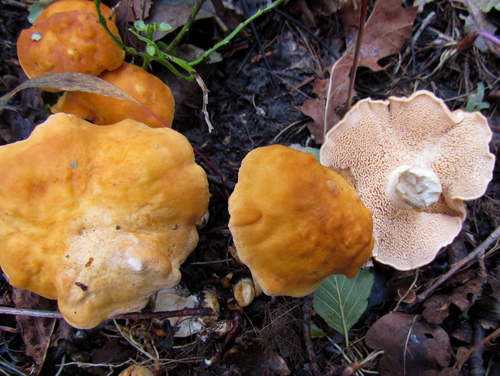
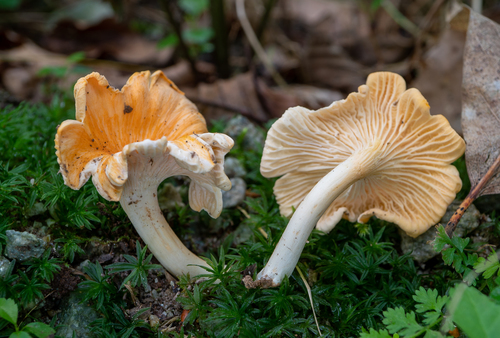
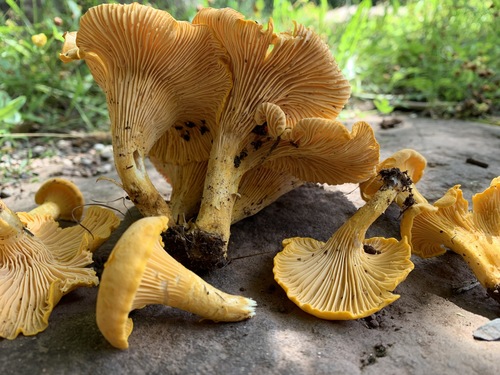
Cantharellus enelensis has forked, decurrent ridges. Its cap ranges from 2.5 to 11 centimetres (1 to 4+1⁄4 inches) in diameter, and older specimens can have an infundibuliform shape. The flesh is firm, white to pale yellow internally, and has a fruity odor most often described as similar to apricot. All tissues develop a somewhat brownish stain when injured. The stipe measures 5–25 mm by 30–75 mm, is solid, solitary, deep orange-yellow, and enlarges upward from a narrow base. This species is native to North America, and is one of 40 Cantharellus varieties that grow on the continent. Chanterelles confirmed as C. enelensis via DNA sequencing have been collected from Newfoundland, Quebec, Michigan, and Illinois, and evidence indicates the species is widespread across North American conifer forests. It is the most commonly encountered chanterelle in Newfoundland. Cantharellus enelensis forms mycorrhizal relationships, and grows in conifer forests, occurring more frequently under Picea than Abies, in well-drained, moist, sandy soil. It produces fruiting bodies between July and September, with the peak of fruiting occurring in August. Cantharellus enelensis is an edible mushroom.