About Cantareus apertus (Born, 1778)
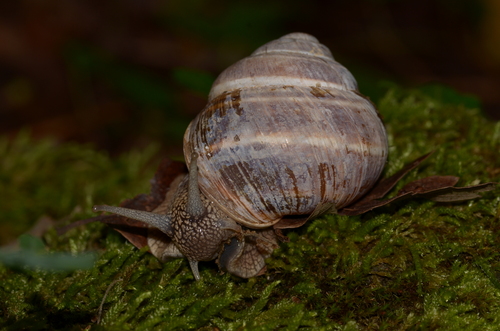
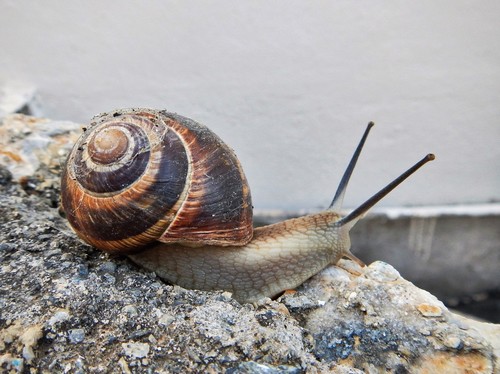
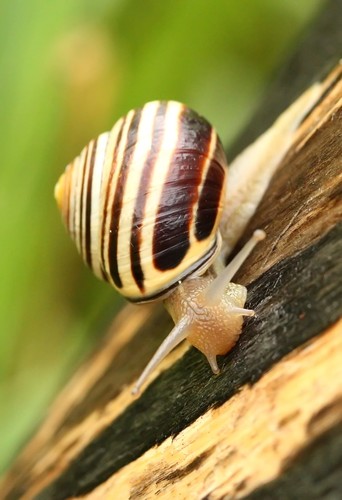
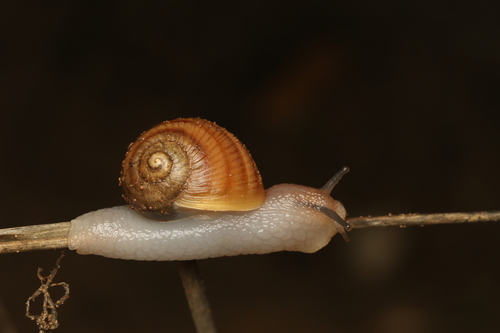
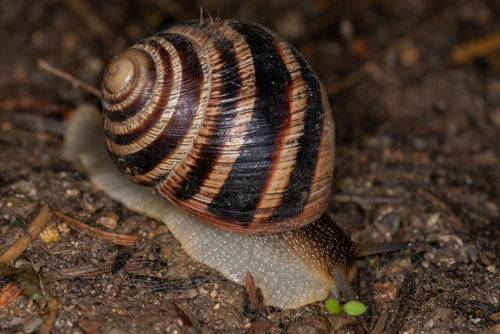
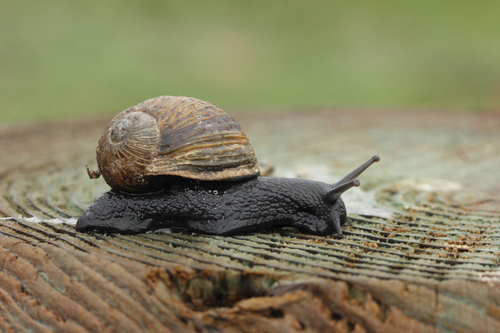
Cantareus apertus (Born, 1778) has an olive-green periostracum covering its shell, and its final whorl is much larger than all earlier whorls. Both the width and height of the shell measure between 22 and 28 millimeters. This species is native primarily to Mediterranean coastal regions of Europe, as well as North Africa. Its native distribution includes France west of the Rhône estuary, Tyrrhenian Sea islands, the Italian Peninsula (extending to Liguria and Romagna), Ionian Islands, Malta, mainland Central Greece, Aegean Islands, Cyprus (recorded at only one locality), and Mediterranean coastal North Africa. In Salento, it is called municeḍḍe, and in Sicily it is called attuppateḍḍu. It is protected in France, where commercial collection of the species is prohibited. Cantareus apertus has been introduced to other areas outside its native range, and has established populations in California, Louisiana, and Western Australia, where it is a non-native species. This established invasive species in the United States is considered a potentially serious pest that could harm agriculture, natural ecosystems, human health, and commerce, so it has been suggested that the species receive top national quarantine significance in the USA. Ecologically, Cantareus apertus lives in Mediterranean shrublands, near cultivated fields, and in gardens. On Gavdos, Greece, it also occurs in woodland growing on recently abandoned cultivated fields, and is only rarely found in undisturbed natural habitats. On Crete, this species is active for 3 to 4 months after the first October rainfalls. It aestivates buried relatively deep in the soil; during hot, dry weather, it burrows three to six inches underground and enters dormancy until rain softens the soil. It creates a white, convex epiphragm for this aestivation period. This snail species produces and uses love darts.