About Cancer irroratus Say, 1817
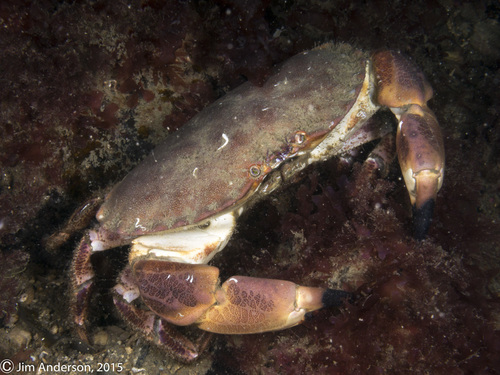
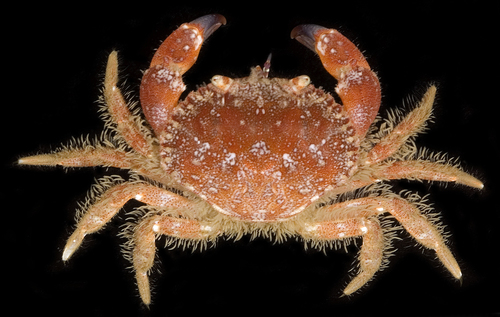
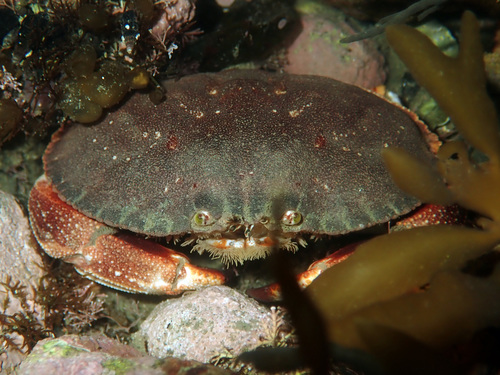
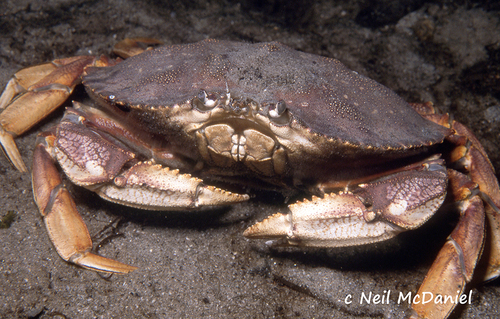
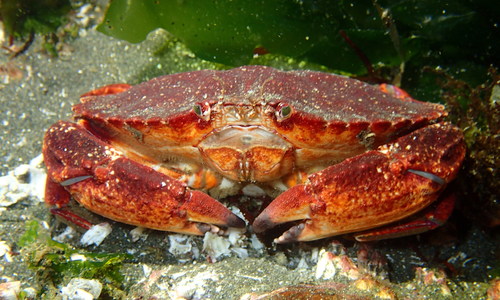
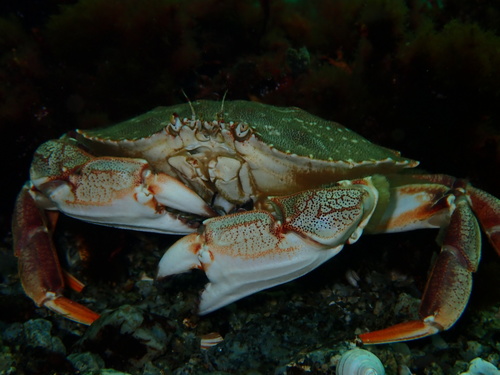
This crab species, Cancer irroratus, occurs on the eastern coast of North America, ranging from Labrador and Iceland to South Carolina. Rock crabs inhabit a large depth range, from well above the low tide line down to 2,600 feet (790 m). They can live up to 8 years. Cancer irroratus has nine marginal teeth on the front edge of the carapace beside each eye, and reaches a maximum carapace width of 5.25 inches (133 mm). Males have a maximum carapace width ranging from 8 mm to 127 mm, while females reach a maximum of 113 mm. This species is similar in color and overlaps in size with the Jonah crab, Cancer borealis. The two species can be distinguished by spot color and the texture of carapace teeth: C. irroratus has purplish-brown carapace spots, compared to the yellow spots of C. borealis, and the edges of its carapace edge teeth are smooth, while the teeth of C. borealis are denticulate. Rock crabs usually molt between the months of April and July. The crab’s two front claws are very important, as they are used to grab and hold prey while eating. For reproduction: in June, male crabs with carapace width larger than 101 mm have well developed, mature gonads, while males smaller than 50 mm have undeveloped or early-stage gonads. Females smaller than 70 mm have early-stage ovarian development. During the reproduction season, these crabs move into shallow waters such as tilted pools and rocky areas. After mating, females lay between 125,000 and 500,000 eggs. Eggs are laid between June and September, and larvae remain in the water column until hatching. After two months in the larval stage, they enter the juvenile crab stage and begin hunting for food.