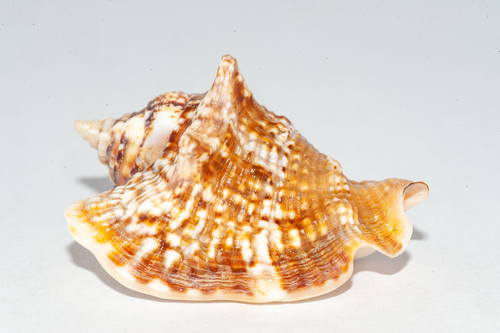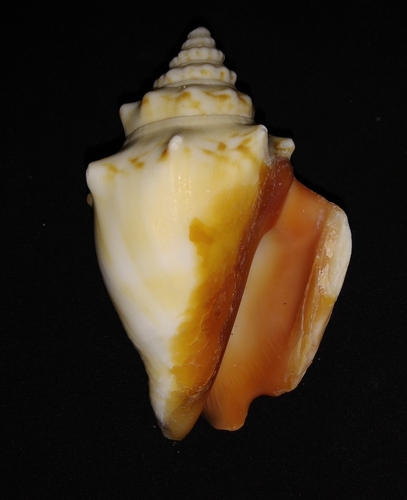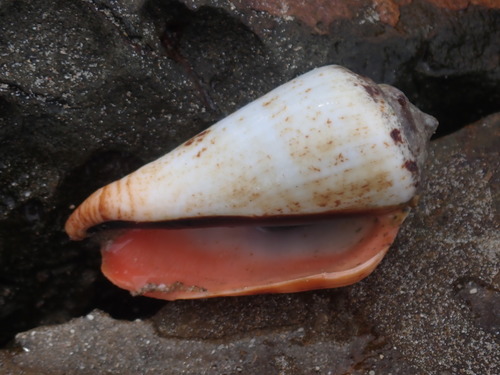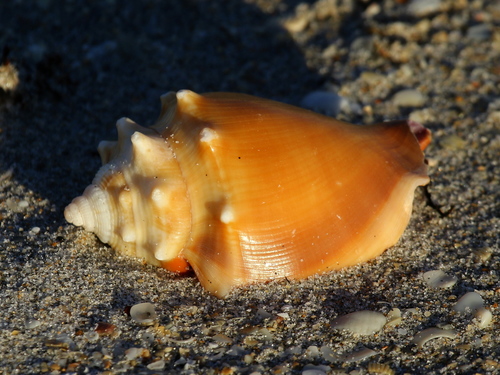
About Canarium urceus (Linnaeus, 1758)
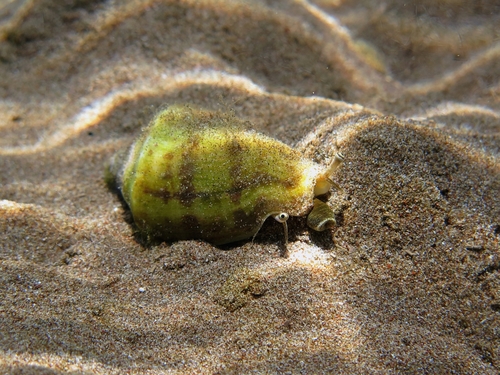
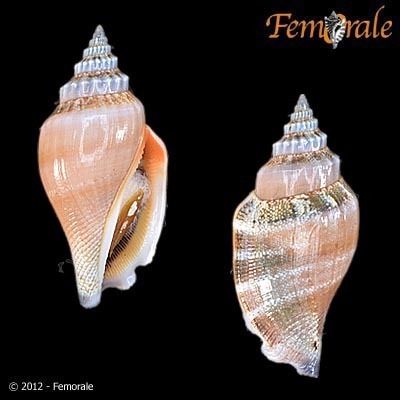
Canarium urceus was first described by Linnaeus in 1758. According to the 2020 description from Maxwell et al, the shell of this species is elongated, fusiform, and may look biconic. Both the spire and body whorl have a distinctive rounded nodulated shoulder. As the nodulation becomes finer, sharper, and denser toward the anterior of the shell, this shoulder may become acute. The anterior canal is typically well developed and acute in shape, and is slightly reflected toward the dorsal side. The posterior of the body whorl has dark staining that extends onto the dorsum, remaining along the marginal fold of the outer lip and continuing onto the dorsal whorl itself. The spire is always nodulated; the shape of the knobs varies between populations, ranging from acute in some to more rounded and less prominent in others. The aperture always has dark staining along its margin. The inner aperture features dark lirae over a rosy white base color. The columella is midnight black, and sometimes has faint deep plum-colored tinges that flush its posterior portion. Columellar lirae are present, but are indistinct. This species is restricted to Singapore and the South China Sea (Maxwell 2020).