About Campylorhynchus zonatus (Lesson, 1832)
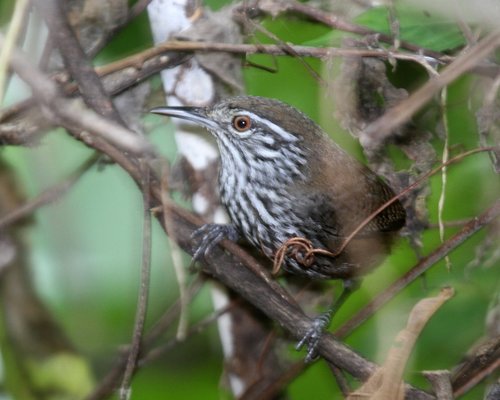
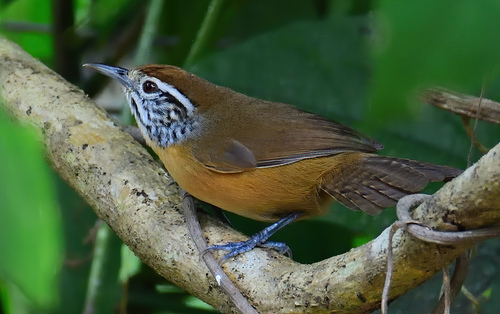
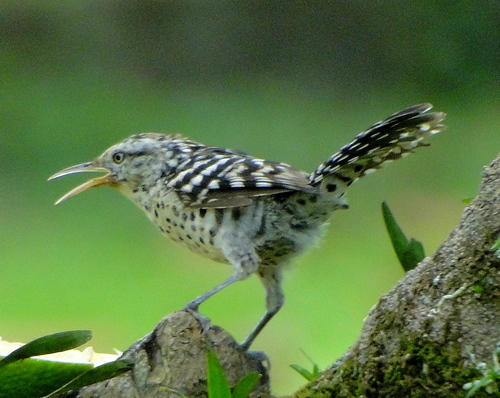
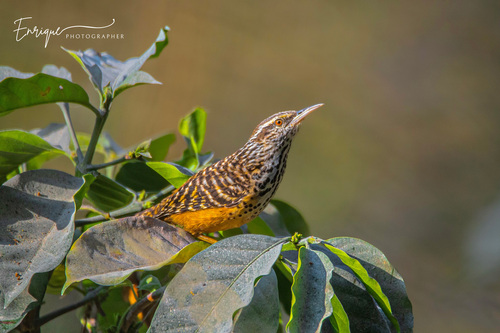
This large wren, the band-backed wren (Campylorhynchus zonatus), breeds in lowlands and foothills from sea level up to 1700 m altitude. Its breeding habitats include thinned forest, open woodland, scrub, second growth, and groves around houses. It mainly occurs on the Caribbean side of the Central American mountain ranges. It builds a large spherical nest with a wide side entrance, placed 2 to 30 meters high in a tree or shrub, and is often hidden among bromeliads. Only the female incubates its clutch of three to five white eggs, which are either unmarked or lightly spotted with brown. Incubation lasts approximately two weeks until hatching, and the young take around another two weeks to fledge. After the breeding season, family groups sleep together in dormitory nests identical in type to breeding nests, and this behavior occurs year-round. Adult band-backed wrens measure 16.5 cm long and weigh 29 g. They have a brown-grey crown, a black nape, and the rest of their upperparts and tail are heavily barred with black, tawny, and white. Their throat and breast are white and heavily spotted with black, while their belly is cinnamon. Juvenile birds have duller upperparts and off-white to buff underparts. This species produces a short, rasping zek call. Its song is a mixture of dry chatters, splutters, and gurgles. The band-backed wren forages actively in family groups of 4 to 12 individuals. Its diet consists mainly of insects, spiders, and other invertebrates.