About Campylorhynchus megalopterus Lafresnaye, 1845
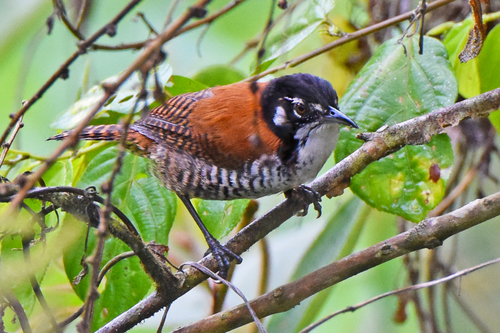
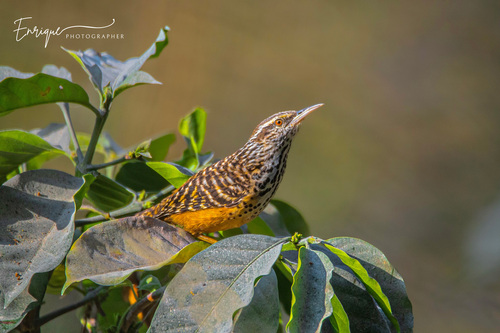
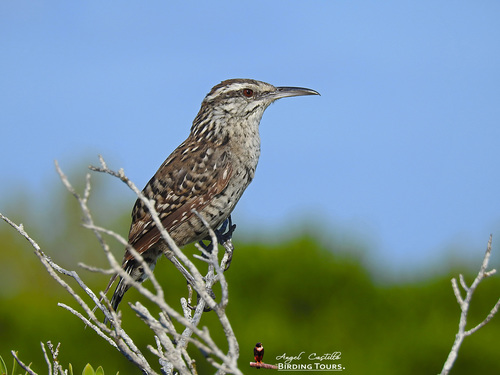
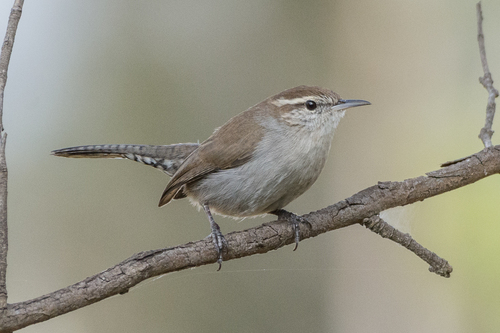
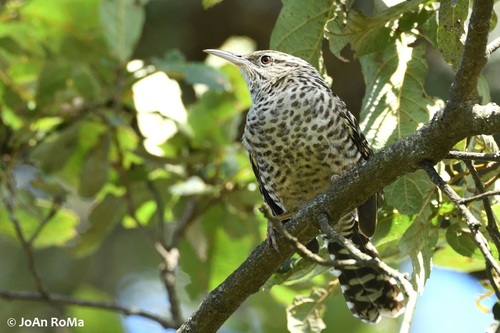
The gray-barred wren (Campylorhynchus megalopterus Lafresnaye, 1845) measures 17 to 19.5 cm (6.7 to 7.7 in) long and weighs 32.8 to 33.5 g (1.16 to 1.18 oz). For the nominate subspecies, both sexes have a grayish crown with a black center, a black and white striped nape, and black shoulders and back marked with white bars. Their throat and chest are white with black spots, and their flanks are buff with blackish bars. The subspecies C. m. nelsoni is smaller than the nominate, and the spots and bars on its underparts are grayish brown. Juvenile gray-barred wrens have a solid brown cap, are overall buff and brownish, and lack bars on the back and spots on the chest. The two subspecies of gray-barred wren have ranges that do not overlap. The nominate subspecies occurs in the Trans-Mexican Volcanic Belt, extending from Jalisco and Michoacán east to western Puebla. C. m. nelsoni occurs in the southern Sierra Madre Oriental, ranging from west-central Veracruz through eastern Puebla into northern Oaxaca. The species lives in multiple types of montane forest, including humid pine-oak forest and stands of Abies fir. It can be found in both primary and secondary forest, and occurs at elevations between 2,100 and 3,150 m (6,890 and 10,330 ft).