About Campylorhynchus chiapensis Salvin & Godman, 1891
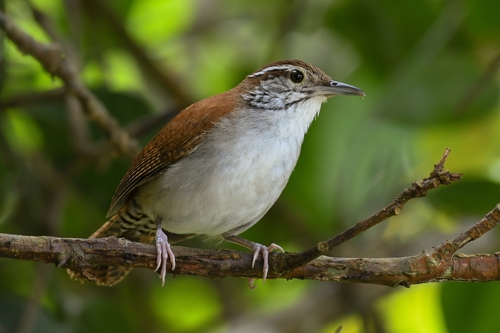
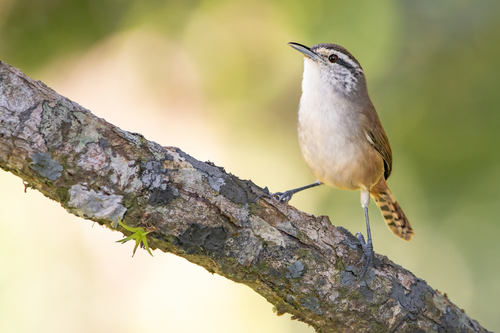
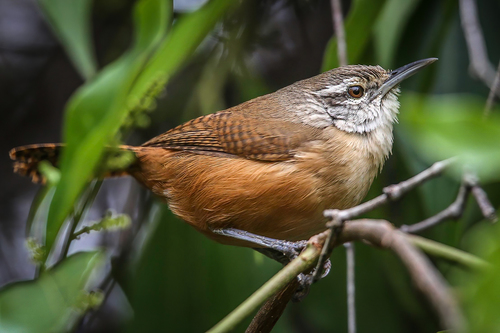
The giant wren (scientific name: Campylorhynchus chiapensis Salvin & Godman, 1891) is the largest member of its wren family, as its common name suggests. It measures 20 to 22 cm (7.9 to 8.7 in) in length and weighs 43.4 to 57 g (1.53 to 2.01 oz). Males and females have similar appearance. Adult giant wrens have black crowns, napes, and shoulders. A white supercilium separates the black stripe running through the eye from the crown, and the rest of the face is also white. Their upperparts are bright chestnut, while their tail is dark chestnut. All tail feathers except the middle pair have a white band near the tip. Their underparts from the chin to the belly are white, and the belly and vent area are buff. Juveniles look similar to adults, but their underparts are whitish rather than pure white.
The giant wren was formerly classified as endemic to the state of Chiapas, Mexico, ranging from Puerto Arista south to near the Guatemalan border. Since around 2010, however, many sightings of the species have been recorded in far northwestern Guatemala. It lives in bushland habitats, including areas heavily modified by human activity such as farmyards, hedgerows, and fruit orchards. This species is only found within 50 km (31 mi) of the coast, at elevations ranging from sea level to 300 m (980 ft).