About Campylorhynchus capistratus (Lesson, 1842)
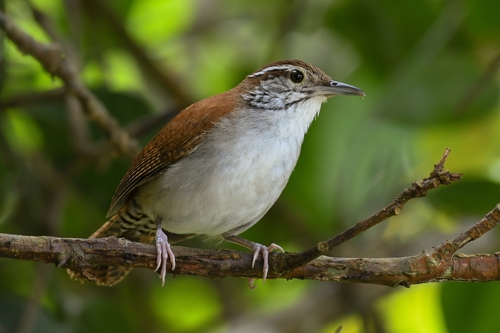
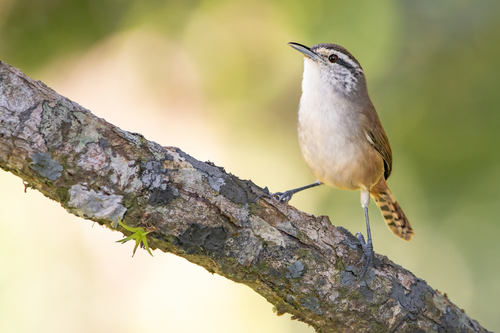
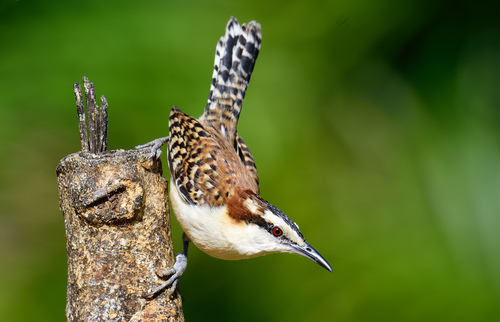
The rufous-backed wren, Campylorhynchus capistratus, has the following physical description. Adult rufous-backed wrens measure 17 cm (6.7 in) long, and weigh between 29 and 42 g (1.0 to 1.5 oz). Subspecies show some plumage variation, but the typical plumage pattern includes a black crown, a black eyestripe, a white supercilium separating these two features, a rufous nape, and cinnamon to chestnut upperparts streaked with black and white (the streaking is especially prominent on the rump). The wings and tail are barred with black and grayish-white, and the underparts are white. Young birds have duller upperparts and buff-colored underparts.
Six subspecies of rufous-backed wren are distributed across different regions of Central America. C. c. nigricaudatus is found on the Pacific coastal plain from southwestern Chiapas, Mexico into Guatemala. C. c. capistratus is found on the Pacific coastal plain from Guatemala south into El Salvador. C. c. xerophilus is found in the Motagua Valley of Guatemala. C. c. castaneus ranges from interior Guatemala east to Honduras and Nicaragua. C. c. nicaraguae lives in the interior of western Nicaragua. C. c. nicoyae is found on the Nicoya Peninsula of northwestern Costa Rica.
This large wren inhabits lowlands and foothills. Its elevation range reaches from sea level up to 800 m (2,600 ft) in Costa Rica, and up to 1,400 m (4,600 ft) in El Salvador. It occurs in dry forest, open woodland, scrub, second growth, and savanna, and is found mainly on the Pacific side of the region's central mountain ranges.