About Campylopus introflexus (Hedw.) Brid.
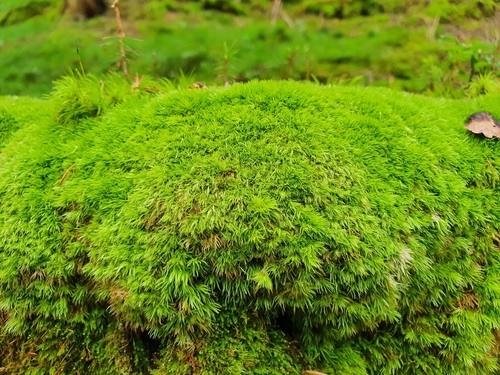
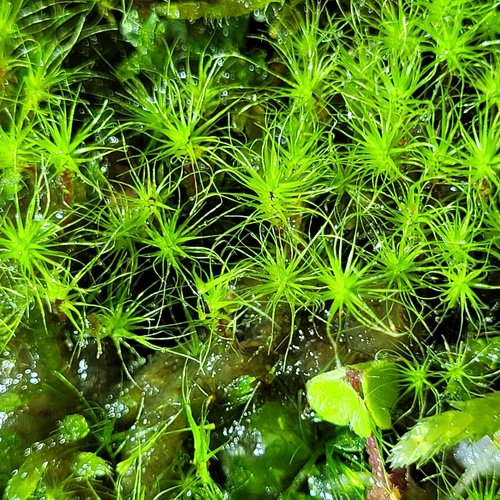
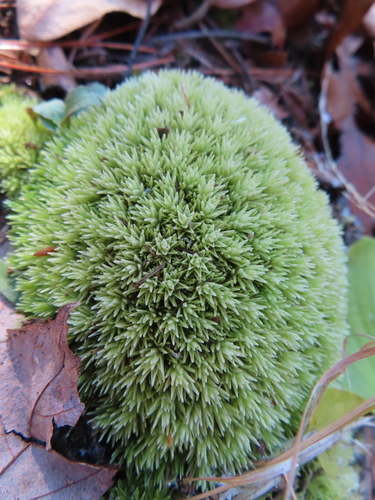
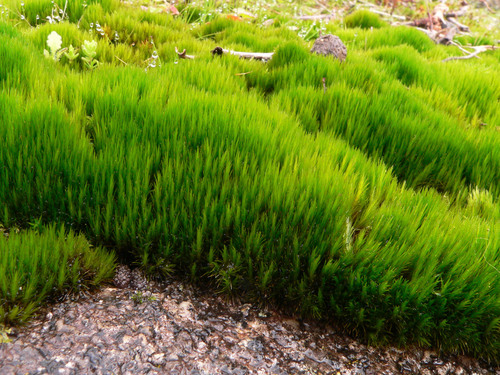
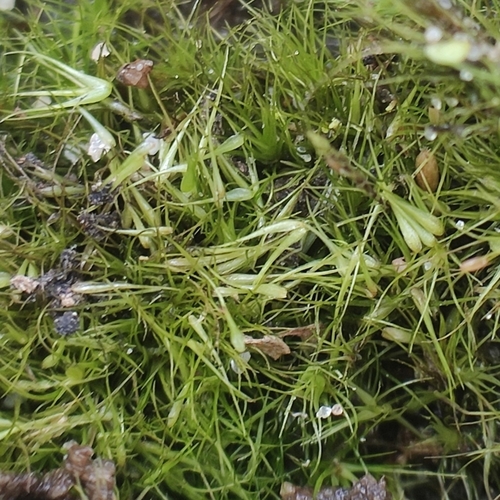
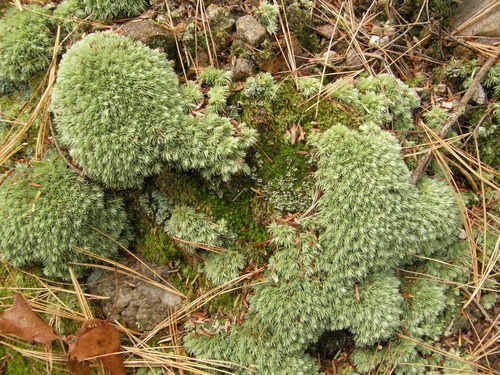
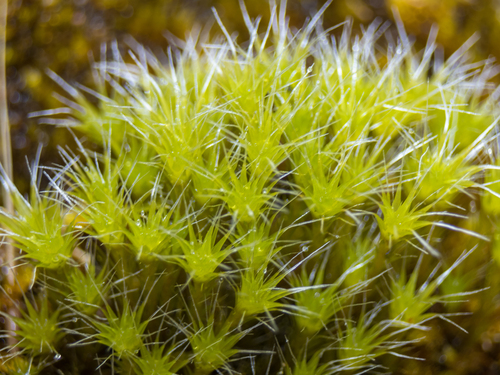
This moss species, Campylopus introflexus (Hedw.) Brid., is a perennial acrocarpous moss. Individual plants grow 0.5 to 5 centimetres long, with lanceolate leaves that measure 4 to 6 mm. The costa is wide, taking up roughly half of the leaf’s width. Plants form dense mats and large, extensive carpets, and their color ranges from yellowish to olive green. Multiple sporophytes often grow on a single individual. The seta are 7 to 12 millimeters long, and colored yellowish brown to brownish. Brown capsules measure 1.5 millimeters long, and this species produces spores that are 12 to 14 μm in size. Campylopus introflexus sometimes reproduces asexually: stem tips can break off and be dispersed by wind. Even entire plant cushions can be moved by wind, animals, and humans to colonize new isolated or remote locations. Once established, colonies can cover several hundred square meters within a decade. In the Netherlands and Belgium, this species is called tankmos, or tank moss, because it was likely spread by military tanks during the Second World War. Campylopus introflexus is native to the Southern Hemisphere, where it occurs in southern South America, southern Africa, southern and eastern Australia, and Atlantic and Pacific islands including New Zealand, New Caledonia, and the South Sandwich Islands. It is a neophyte in Europe and coastal western North America. In some areas of Europe and North America, it has become mildly invasive, as it can cause a temporary negative local impact on species diversity. It was first recorded in Britain in 1941, and its spread has been well documented ever since. Over 70 years, the species spread across a range of more than a thousand miles just in Europe, which equals around a 14-mile expansion of its territory each year since it was first discovered there. This spread calculation does not include separate introductions to the Faroe Islands in 1973, the United States in 1975, and British Columbia in 1994. Today, its introduced range lies between approximately 35°N in California and 66°N in Iceland. This moss grows in a wide variety of settings, most often in decalcified habitats such as bogs and dunes. It is a pioneer species that colonizes bare peat after peat-cutting, and bare soils after burning or ploughing. It can also grow on rotting logs, old fence posts, roadsides, mining deposits, and roof shingles.