About Campylopus bicolor (Hornsch. ex Müll.Hal.) Wilson
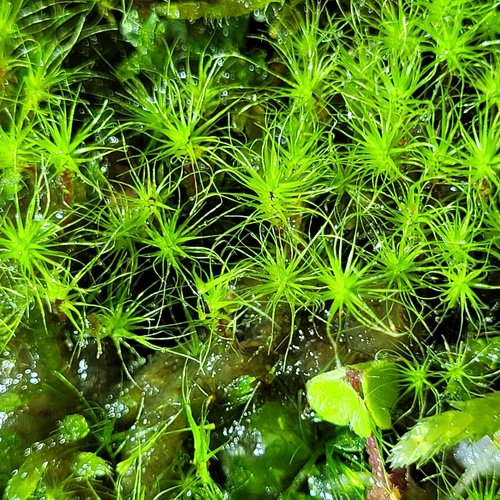
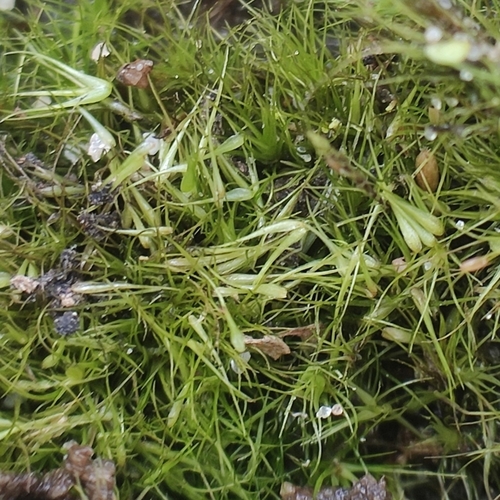
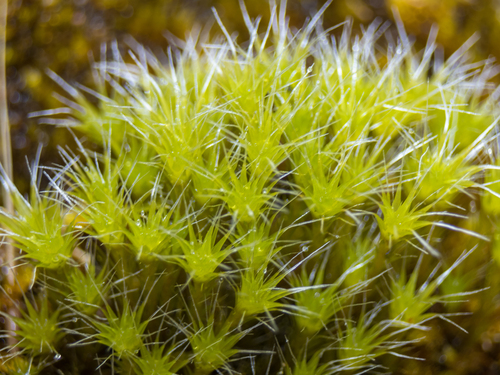
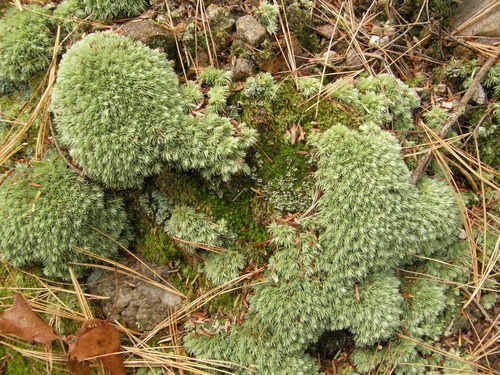
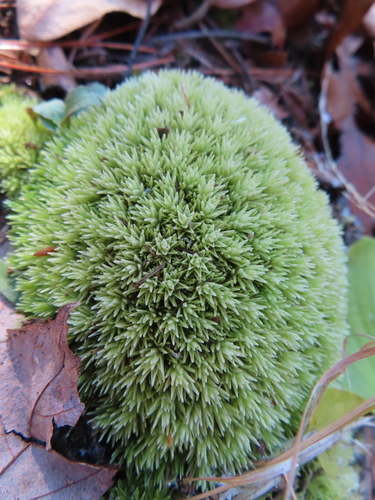
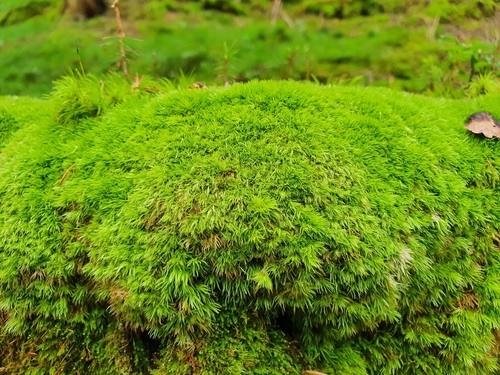
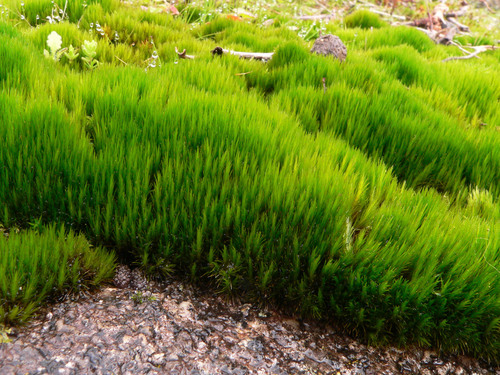
Campylopus bicolor is a species of moss defined by multiple distinctive traits. Individual plants are blackish in color, and grow upright to around 2 centimeters tall. Leaves are arranged around the stem, and end in blunt, hood-like (cucullate) tips, unlike the pointed tips seen in many related species. These hood-like tips are usually short and broad, but may sometimes be very long and narrow, making the hood shape far less distinct. A prominent anatomical trait of this moss is its very broad central strand (costa), which takes up between two-thirds and four-fifths of the full leaf width. This thickened central band running up the center of each leaf does not have the extra side nerves that appear in some other Campylopus species. Microscopic examination reveals diagnostic features in the leaf cells: the basal cells are notably thickened (incrassate), while the upper cells are roughly rectangular to oval in shape. Spore-bearing capsules (sporophytes) occur occasionally, and reach approximately 1.5 millimeters in length. A less common variant of this moss, classified as variety ericeticola, differs from the typical form by having leaves that end in hair-like points instead of hood-like tips. While this variety has been observed growing alongside the typical form, which has led to suggestions it may be genetically distinct, some specimens have been found that carry both types of leaf tip on a single plant. This apparent mixture of forms can be explained by a feature of the typical variety: its male reproductive structures (perichaetia) are surrounded by leaves with translucent (hyaline) tips, even though the moss's regular vegetative leaves are hooded. Cultivation experiments with var. ericeticola have shown that its hair-pointed leaves retain this shape even when grown in very wet laboratory conditions, which supports that the trait has some genetic basis. Campylopus bicolor occurs across several Australian states: Western Australia, South Australia, Victoria, New South Wales, and Tasmania. Outside of Australia, the species is only found in South Africa, specifically restricted to the Table Mountain area. Across its range, this moss grows on open soil, and especially favors wet sand or earth-covered rocks. It can grow on both sandstone and granite substrates. Historical collections confirm the species has been present in Australia for over a century, including specimens collected from Waverley Cemetery, Sydney, that date back to 1899. The species plays an important role in colonizing rocks, forming moss "aprons" or mats on rock faces that can grow on slopes of up to 20 degrees. These mats are often anchored in place by the roots of surrounding shrubs. Moss cushions accumulate 1–2 centimeters of humus, sand, and gravel, and exist in a continuous cycle of buildup and breakdown, with flat and domed forms representing different stages of development. While these moss mats can store substantial amounts of moisture, the water is lost very quickly through evaporation. During drought periods, the upper layers of the mats are often close to wilting point. The mats provide important microhabitats for annual plants and geophytes, which grow within the mats during winter and spring. Variety ericeticola is considerably rarer than the typical form, and has only been recorded from South Australia and Victoria. On at least one occasion, both varieties have been found growing together at the same site: near Nerriga, New South Wales.