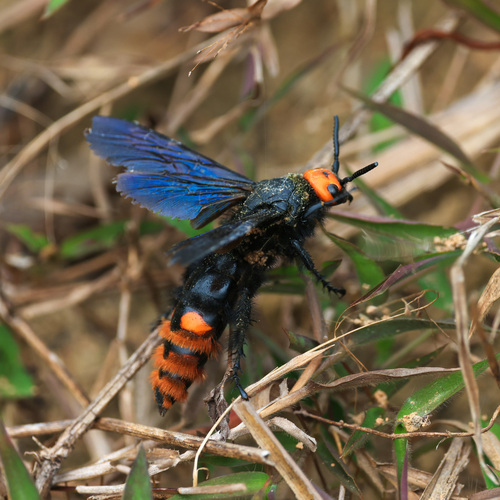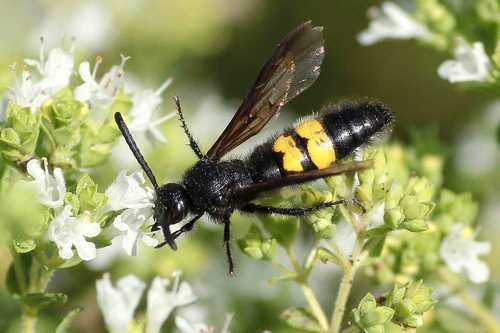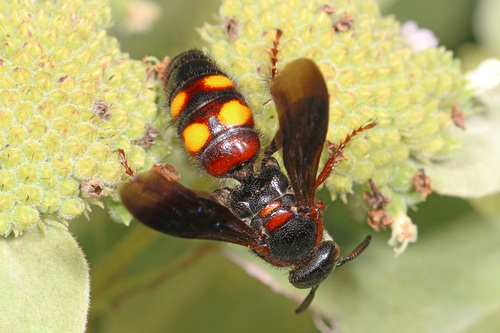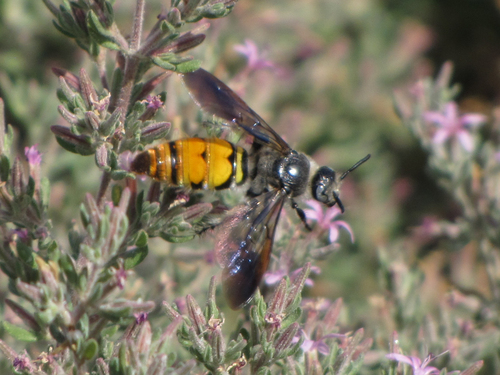
About Campsomeriella thoracica (Fabricius, 1787)
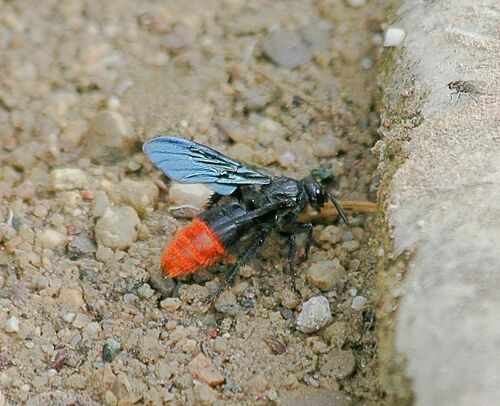
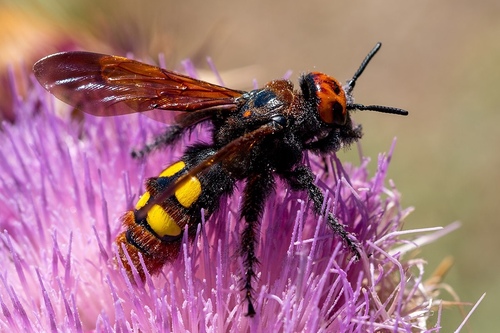
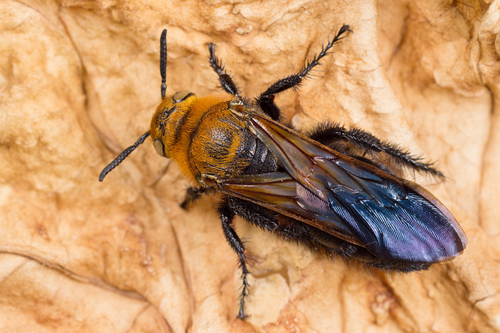
Campsomeriella thoracica, described by Fabricius in 1787, is a species of scarab parasitoid wasp. It has been recorded in the Middle East, the Mediterranean region, and Sub-Saharan Africa. Like other members of its wasp family, the female C. thoracica searches for a beetle larva to attack. She can dig a burrow to reach the larva, or encounter the target beetle larva above ground. Using her large mandibles and strong legs, the female wasp subdues the beetle grub. She injects her eggs into the beetle with her sharp stinger, then flies away. The wasp larva hatches after a few days. It is white, segmented, and mostly featureless, tapering at both ends, and resembles a fly larva. The larva stays attached to the host beetle larva, and feeds on the beetle larva as it grows. In the final stage of development, the wasp larva consumes all of the grub's internal organs, killing the host. After killing the host, it spins a cocoon, and eventually emerges as an adult wasp.