About Campanula alpestris All.
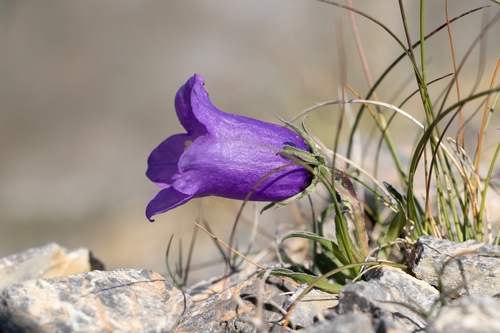
Campanula alpestris All., commonly known as the alpine bellflower, is a flowering plant species belonging to the Campanulaceae family. It is native to the southwestern European Alps. The generic name Campanula derives from Latin, and refers to the bell shape of the plant's flowers, meaning "small bell". Records show that Belgian naturalist Rembert Dodoens, who lived from 1517 to 1585, was the first to use the botanical name "Bellflower". This modified name remained in use across many European languages for a long time. Archaic French called these plants Campanelles; in modern French they are called Campanules or Clochettes. In German they are known as Glockenblumen, in English they are called Bell-flower or Blue-bell, and in Italian they are called bells. All these name forms originate from Latin. The specific epithet alpestris refers to the species' typical habitat: it specifically refers to lower mountain areas where vegetation is influenced by the foothills. The scientific name of this species was first published and defined by Italian botanist and physician Carlo Allioni, first in Auctarium ad Synopsim Methodicam Stirpium Horti Reg. Taurinensis - 11, and later in Flora Pedemontana sive Enumeratio Methodica Stirpium Indigenarum Pedemontii - 113. t. 6. f. 3.