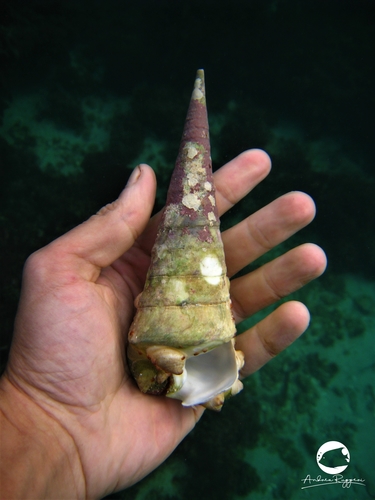
About Campanile symbolicum Iredale, 1917
This species, Campanile symbolicum Iredale, 1917, has a large, elongate, conical shell that ranges in length from 60 mm to 244 mm. A thick, chalky periostracum covers the shell. The axis of its triangular-fusiform aperture forms a 45° angle with the shell. The shell has a sinuous outer lip and a central siphonal canal. Its brown, paucispiral operculum has a subcentral nucleus. The diameter of the operculum is slightly smaller than the diameter of the aperture, which lets the animal retract further inside the shell. The short, concave columella is twisted a little to the left at the anterior canal. A taenioglossate radula and thick jaws, both characteristic of herbivores, are present in this species. This is a marine species that occurs off the coast of southwest Australia, where it lives in shallow, sandy habitats in the subtidal zone.

