About Camelus dromedarius Linnaeus, 1758
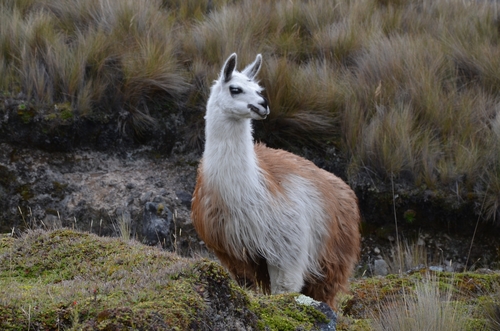
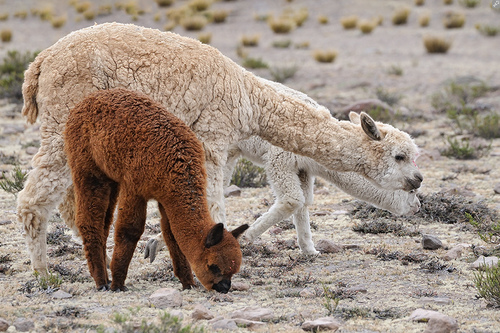
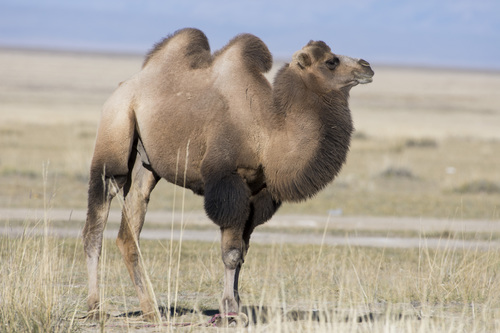
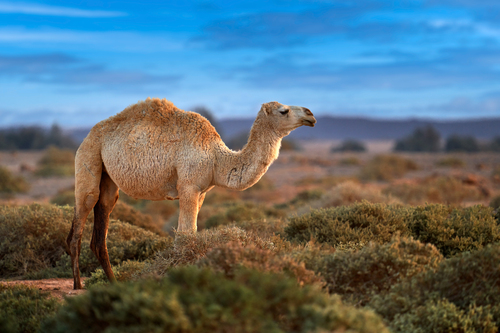
Camelus dromedarius, commonly called the dromedary, is the tallest of the three living camel species. Adult males stand 1.8 to 2.4 m (5.9 to 7.9 ft) tall at the shoulder, while adult females stand 1.7 to 1.9 m (5 ft 7 in to 6 ft 3 in) tall. Males typically weigh 400 to 690 kg (880 to 1,520 lb), and females weigh 300 to 540 kg (660 to 1,190 lb). Its distinctive features include a long curved neck, narrow chest, single hump (Bactrian camels have two), thick double-layered eyelashes, and bushy eyebrows. Dromedaries have sharp vision and a good sense of smell. Males have a nearly 18 cm (7.1 in) long soft palate called a dulaa in Arabic, which they inflate to form a dangling deep pink sac that often mistaken for a tongue. This structure is used to attract females during the mating season. The dromedary's coat is generally brown, but can range from black to nearly white. Leese reported piebald dromedaries in Kordofan and Darfur, Sudan. Piebald coloration in some camels is thought to be caused by the KITW1 allele of the KIT gene, though at least one other mutation likely also causes white spotting. The dromedary's hair is long and concentrated on the throat, shoulders, and hump. Its large eyes are protected by prominent supraorbital ridges, and its ears are small and rounded. The dromedary's hump is at least 20 cm (7.9 in) high. It has long powerful legs, with two toes on each foot that form flat, leathery pads. Like giraffes, dromedaries move both legs on the same side of their body at the same time. Compared to the Bactrian camel, the dromedary has a lighter build, longer limbs, shorter hairs, a harder palate, and an insignificant or absent ethmoidal fissure. Unlike camelids in the genus Lama, the dromedary has a hump; it also has a longer tail, smaller ears, squarer feet, and greater shoulder height than Lama species, and has four teats instead of the two found in Lama species. Historically, the dromedary's native range covered hot, arid regions of northern Africa, Ethiopia, the Near East, and western and central Asia. It typically thrives in areas with a long dry season and a short wet season, and is sensitive to cold and humidity, though some breeds can survive in humid conditions. The dromedary was first domesticated in the southern Arabian Peninsula around 4000–3000 BC. It became widespread in the Near East in the 9th or 10th century BC. The Persian invasion of Egypt under Cambyses in 525 BC brought domesticated camels to the region, but these Persian camels were not well-suited for trade or travel across the Sahara, where desert journeys were previously made with horse-drawn chariots. Dromedaries were later introduced to Egypt from south-western Asia (Arabia and Persia). Their popularity increased after the Islamic conquest of North Africa: while the conquest itself was done primarily on horseback, new trade links to the Middle East allowed mass importation of camels. These camels were well-suited for long desert journeys and could carry large amounts of cargo, enabling substantial trans-Saharan trade for the first time. In Libya, dromedaries were used for transport, and their milk and meat formed a core part of the local diet. Dromedaries were also shipped from south-western Asia to Spain, Italy, Turkey, France, the Canary Islands, the Americas, and Australia. They were introduced to Spain in 1020 AD and to Sicily in 1059 AD. Camels were exported to the Canary Islands in 1405 during European colonization of the area, and still exist there today, especially in Lanzarote and southern Fuerteventura. Attempts to introduce dromedaries to the Caribbean, Colombia, Peru, Bolivia, and Brazil were made between the 17th and 19th centuries; some were imported to the western United States in the 1850s and some to Namibia in the early 1900s, but today they exist in small numbers or are absent from these areas. In 1840, around six camels were shipped from Tenerife to Adelaide, Australia, but only one male named Harry survived the journey, arriving on 12 October that year. Harry was owned by explorer John Ainsworth Horrocks; he was ill-tempered, but was included in an expedition the following year because he could carry heavy loads. The next major group of camels was imported into Australia in 1860, and between 1860 and 1907 10 to 12 thousand dromedaries were imported, used mainly for riding and transport. In the early 21st century, domesticated dromedaries are found in semi-arid to arid regions of the Old World. Dromedaries are diurnal, meaning they are active mainly during the day. Free-ranging herds feed and roam throughout the day, though they rest during the hottest midday hours, and spend most of the night resting. Dromedaries form cohesive groups of around 20 individuals, made up of several females led by a dominant male; females may also take turns leading. Some males form bachelor groups or roam alone. During migrations caused by natural disasters, herds may gather to form associations of hundreds of camels. Herd males prevent their females from interacting with bachelor males by standing or walking between them, and sometimes drive the bachelors away. In Australia, feral dromedaries have short-term home ranges of 50 to 150 km2 (19 to 58 sq mi), while their annual home ranges can cover several thousand square kilometres. Special common behaviors of the dromedary include snapping at other individuals without biting, and stamping feet to show displeasure. They are generally non-aggressive, except for rutting males. They appear to remember their home ranges; in particular, females remember the places where they first gave birth or suckled their offspring. Males become aggressive during the mating season, and sometimes wrestle. A 1980 study found that androgen levels in males influence their behavior. Between January and April, when androgen levels are high during rut, males become difficult to manage, extrude their inflatable palate from the mouth, vocalize, and splash urine over their backs. Camels scratch parts of their bodies with their legs or lower incisors, and may also rub against tree bark and roll in sand. Free-ranging dromedaries are preyed on by large predators native to their ranges, including wolves, lions, and tigers. Dromedaries have a slow growth rate and reach sexual maturity more slowly than sheep or goats. The age of sexual maturity and the reproductive period vary geographically and between individuals. Both sexes can reach maturity by three to five years of age, though successful breeding may take longer. Dromedaries are considered atypical seasonal breeders: they produce sperm throughout the entire year, though sperm production decreases during the nonbreeding season compared to the breeding season, per Zayed et al., 1995. In Egypt, the breeding season occurs during spring. Mating happens once a year, and peaks in the rainy season. The mating season lasts three to five months, but may last a full year for older animals. During the reproductive season, males splash urine on their tails and lower bodies. To attract females, they extrude their inflatable soft palate, a trait unique to the dromedary. As the male gurgles, large amounts of saliva become foam and cover his mouth. Males compete for dominance over females by trying to stand taller than one another, making low noises, and performing a series of head movements including lowering, lifting, and bending their necks backward. Males attempt to defeat rivals by biting the opponent's legs and holding the opponent's head between their jaws. Copulation begins with foreplay: the male smells the female's genitalia and often bites that area or the area around her hump. The male forces the female to sit, then grasps her with his forelegs. Camel handlers often help the male insert his penis into the female's vulva; the male dromedary's ability to complete penetration on his own is disputed, though feral populations in Australia reproduce naturally. Copulation lasts 7 to 35 minutes, averaging 11 to 15 minutes, and normally includes three to four ejaculations. The semen of a Bikaneri dromedary is white and viscous, with a pH of around 7.8. A single calf is born after a 15-month gestation period. Calves can move freely by the end of their first day. Nursing and maternal care continue for one to two years. In one study testing whether young camels could survive on milk substitutes, two one-month-old male camels were separated from their mothers and fed commercial milk substitutes made for lambs, and grew to normal weights for male calves after 30 days. Lactation yield varies by species, breed, individual, region, diet, management conditions, and lactation stage; the largest amount of milk is produced during the early period of lactation. The lactation period can last between nine and eighteen months. Dromedaries are induced ovulators. Oestrus may be triggered by the camel's nutritional status and day length. If mating does not occur, the follicle that grows during oestrus usually regresses within a few days. In one study, 35 complete oestrous cycles were observed in five nonpregnant females over 15 months. The cycles were about 28 days long; follicles matured in six days, maintained their size for 13 days, and returned to their original size in eight days. Another study found that ovulation is most reliably induced when the follicle reaches 0.9–1.9 cm (0.35–0.75 in) in size. In another study, pregnancy in females could be detected as early as 40 to 45 days of gestation by the swelling of the left uterine horn, where 99.5% of all dromedary pregnancies are located.