About Camelina sativa (L.) Crantz
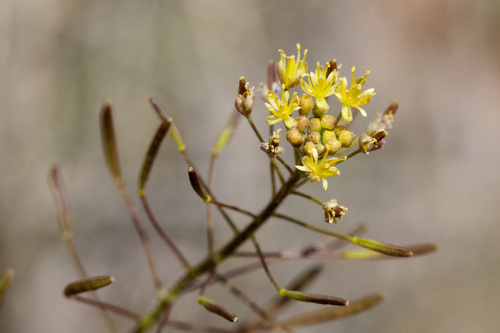
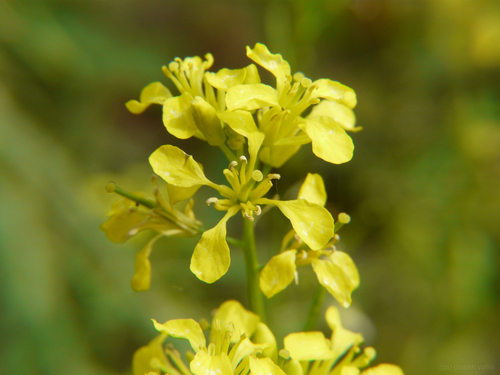
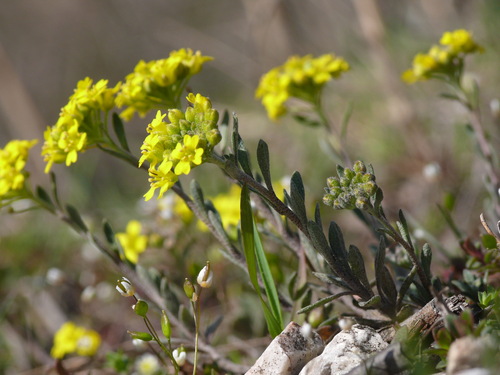
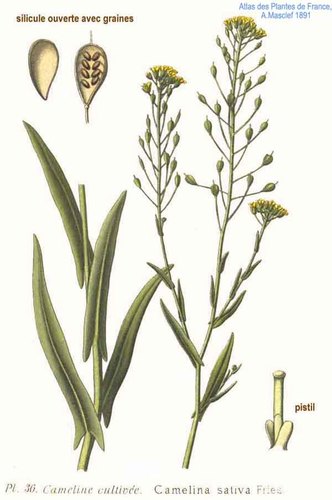
Camelina sativa is an annual plant that can grow as either a summer or winter annual. It reaches 30–120 cm (12–47 in) in height, with branching stems that become woody when the plant reaches maturity. Its leaves grow alternately along the stem, are lanceolate in shape, 2–8 cm (0.79–3.15 in) long, and 2–10 mm (0.079–0.394 in) wide. Both leaves and stems may be partially covered in fine hairs. In the United Kingdom, it blooms between June and July. It produces abundant pale yellow, four-petaled cross-shaped flowers. After flowering, it forms pear-shaped fruits with a short beak. Its seeds are brown or orange, 2–3 mm (0.079–0.118 in) long; the weight of 1000 camelina seeds ranges from 0.8–2.0 g (0.028–0.071 oz).
Today, camelina grows wild or is cultivated across almost all regions of Europe, Asia, and North America, and also occurs in South America, Australia, and New Zealand. It is particularly adapted to cold semiarid climate zones including steppes and prairies.
Historically, camelina seed oil was used for cooking or burned as fuel in lamps. Currently, the crop is under research for human food use due to its exceptionally high omega-3 fatty acid content, which reaches up to 45% — an uncommon trait among vegetable oil sources. Camelina seeds contain 38 to 43% oil and 27 to 32% protein. Over 50% of the fatty acids in cold-pressed camelina oil are polyunsaturated. The oil is also very high in natural antioxidants such as tocopherols, which makes it highly stable and resistant to oxidation and rancidity. It naturally contains 1–3% erucic acid, but several new low-erucic and zero-erucic varieties with erucic acid content below 1% have been introduced recently. Camelina oil has a vitamin E content of approximately 110 mg per 100 g. It is well suited for use as a cooking oil, with an almond-like flavor and aroma.
In Canada, approximately 50,000 acres of camelina are currently cultivated. The Camelina Association of Canada projects that 1 to 3 million acres could be planted in the future. Several factors limit the expansion of camelina cultivation in Canada: it lacks official government crop classification, and camelina meal is not approved for use as livestock feed. In early 2010, Health Canada approved camelina oil for use as a food in Canada. In 2014, camelina was included for the first time in Canada's Advance Payments Program (APP), commonly called the cash advance program.
Camelina is a short-season crop that matures in 85–100 days. It grows well in temperate climates in light or medium-textured soils. It is generally seeded in spring between March and May, but can also be seeded in fall in mild climates. A seeding rate of 3–4 kg per hectare is recommended, with row spacing of 12 to 20 cm. Seeding depth should not exceed 1 cm. At high seeding rates, density makes these naturally noncompetitive seedlings competitive against weeds. Seedlings emerge early and can tolerate mild spring frosts. Minimal seedbed preparation is required to establish camelina. It usually needs no additional field interventions, though perennial weeds can be difficult to control, and some specialized oilseed herbicides can be used on the crop. Camelina is highly resistant to black leg and Alternaria brassicae, but may be susceptible to sclerotinia stem rot. No insect pest has been recorded causing economic damage to camelina crops.
Camelina requires little water or nitrogen to grow well, and can be cultivated on marginal agricultural lands. Its fertilization requirements depend on soil conditions, but are generally low. It can be used as a rotation crop with wheat and other cereals to improve soil health. It may show some allelopathic traits, and can be grown as a mixed crop with cereals or legumes. It can be planted and harvested with standard conventional farming equipment, which makes adding it to existing rotations relatively easy for new growers. Seed yields vary based on growing conditions, and can reach up to 2700 kg per hectare (2400 lb per acre).