About Camassia leichtlinii (Baker) S.Watson
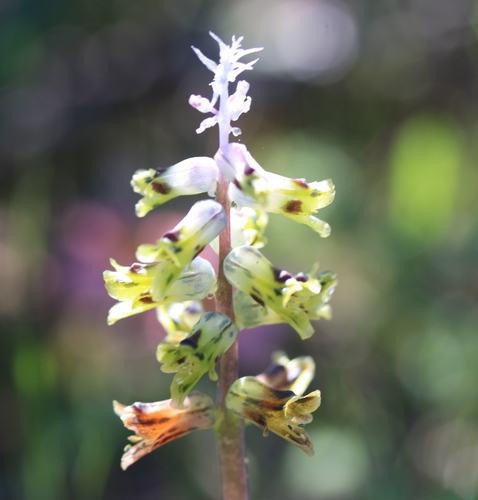
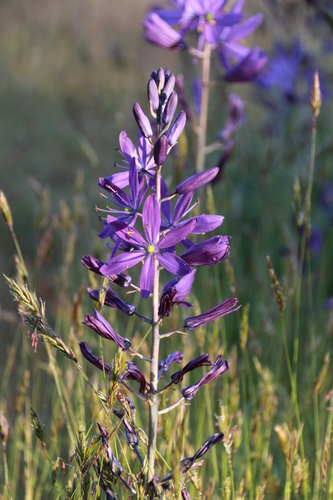
Great camas, scientifically named Camassia leichtlinii (Baker) S.Watson, is a perennial herbaceous plant that grows from a bulb. It reaches heights of 24–48 inches, or 61–122 cm. Its long, narrow leaves emerge from a basal rosette. The inflorescence forms a spike-like cluster on a leafless stem held above the leaves. This species can be mistaken for the more common Camassia quamash, which has an overlapping range with great camas. Ecologically, it requires consistent spring moisture, but seasonal drought does not harm it once seed capsules mature and leaves dry out. Stands of great camas benefit from seasonal fires, which support regeneration and reduce competition from brush and weeds. The bulbs are edible but must be baked for a long time. Traditionally, they were cooked in fire pits for at least three hours, and ideally between one and three days. Harvesters must be careful not to confuse this species with the deadly meadow death-camas.