About Calybites phasianipennella (Hübner, 1813)
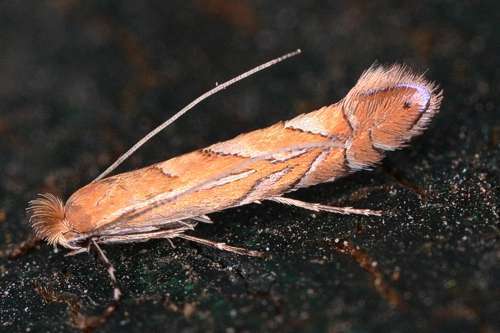
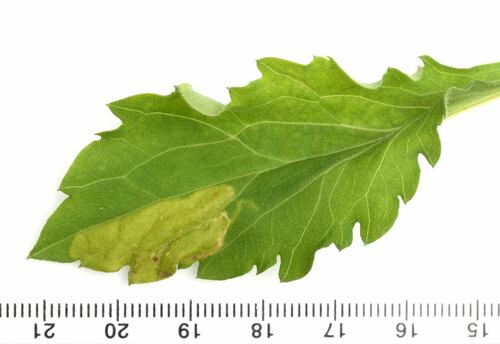
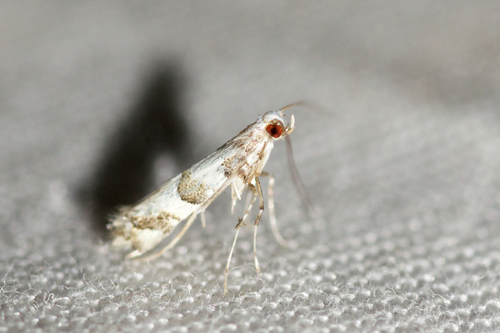
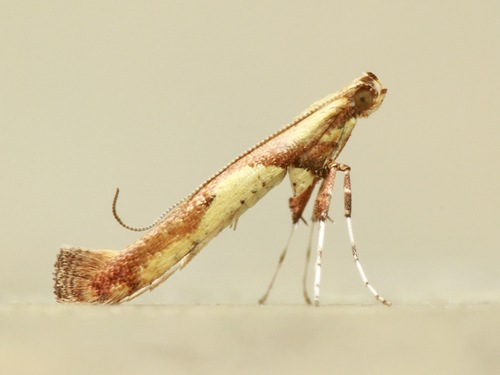
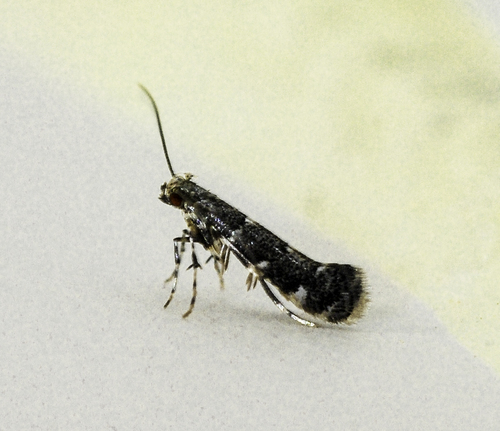
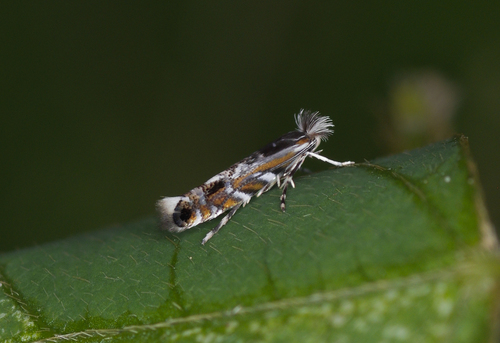
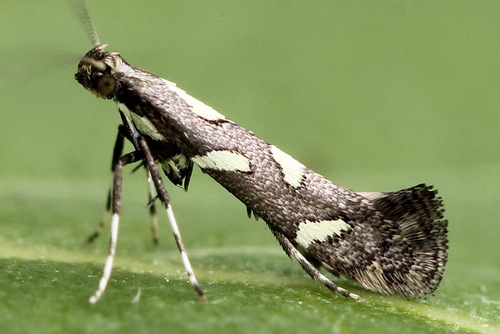
Calybites phasianipennella is a moth species in the family Gracillariidae. This species is found throughout all of Europe and across most of Asia. Adults have a wingspan of 10 to 11 millimeters. Their forewings are dark fuscous, marked with three ochreous-whitish costal spots located at 1/3 and 3/4 before the apex, and two ochreous-whitish dorsal spots located at 1/4 and 1/2. These spots are more or less dark-margined and often very indistinct. The hindwings are a rather dark grey. The larvae are greenish-grey, with a darker dorsal line. They have yellowish heads marked with black spots, and the second body segment has a yellowish plate marked with four black spots. Adult moths become active in September. They overwinter as adults, and can still be found from April to May after overwintering. The larvae feed on a wide range of host plants: Chenopodium hybridum, Fallopia aubertii, Fallopia convolvulus, Lysimachia vulgaris, Lythrum salicaria, Oxyria digyna, Persicaria amphibia, Persicaria hydropiper, Persicaria lapathifolia, Persicaria maculosa, Rumex acetosa (common sorrel), Rumex acetosella (sheep's sorrel), Rumex aquaticus, Rumex hydrolapathum, and Rumex obtusifolius. The larvae mine the leaves of their host plants. The mine begins as an epidermal corridor, and later becomes pale, then turns brown.