About Calvatia gigantea (Batsch) Lloyd
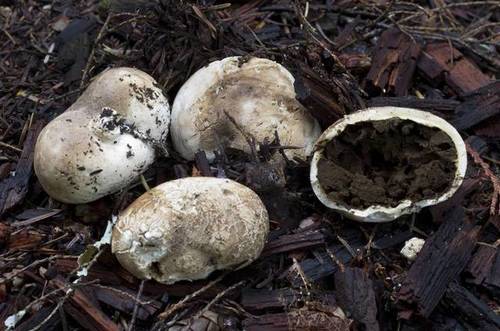
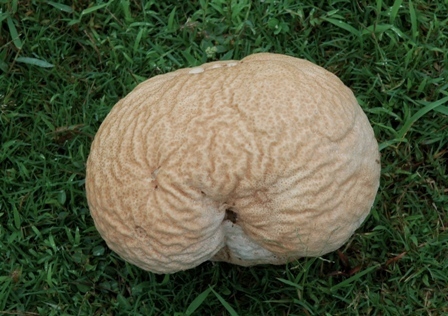
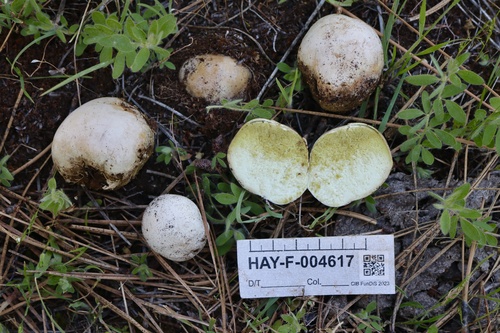
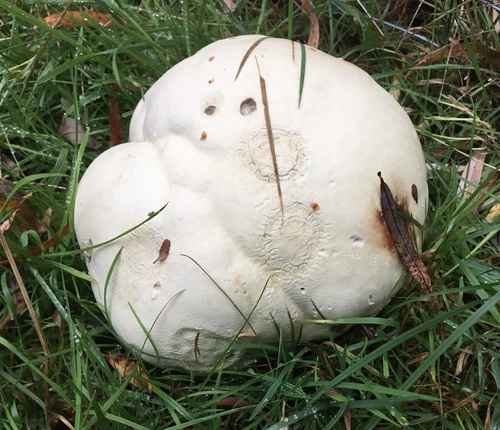
Calvatia gigantea, commonly called the giant puffball, typically reaches 10 to 50 centimeters wide and tall. It can grow up to 80 centimeters in diameter and weigh several kilograms; one recorded specimen from Thunder Bay, Ontario, Canada, weighed more than 23 kilograms (51 pounds). Immature giant puffballs have solid white interior flesh, while mature specimens have greenish-brown interior flesh. The puffball's fruiting body develops over just a few weeks, and it quickly begins to decompose and rot once mature, at which stage it becomes dangerous to eat. Unlike most mushroom species, all spores of the giant puffball develop inside its fruiting body. Large giant puffball specimens can easily hold several trillion spores. The spores themselves are yellowish, smooth, and measure 3 to 6 micrometers. Young giant puffballs produce a white spore print; aged specimens produce an olive spore print and give off an unpleasant odor. Professor John Lindley calculated that C. gigantea grows at a rate of sixty million new cells per minute while developing up to seven quintillion (7,000,000,000,000,000,000) spores total. Giant puffballs are commonly found growing in meadows, fields, and deciduous forests during late summer and autumn. They occur in temperate regions across the globe. Puffballs are known to be styptic, and have long been used as wound dressing in either powdered form or as 3-centimeter thick slices. Authors Hui-Yeng Y. Yap, Mohammad Farhan Ariffeen Rosli, and colleagues found evidence that C. gigantea was traditionally used as a styptic wound dressing by American Indians, Nigerian folk healers, and German folk healers. The authors did not specify whether these groups preferred powdered or sliced puffball for this use. Māori people of New Zealand have used C. gigantea both as food and to stop bleeding and treat burns.