About Calvatia cyathiformis (Bosc) Morgan
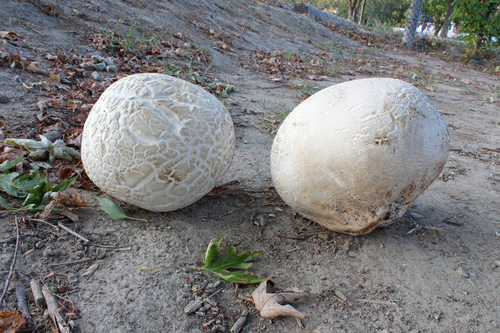
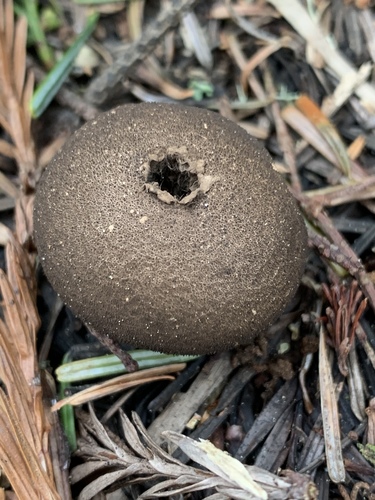
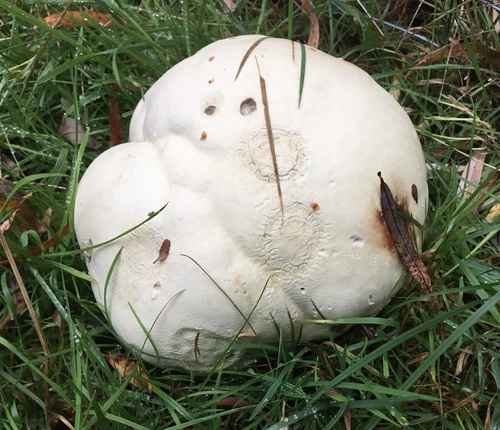
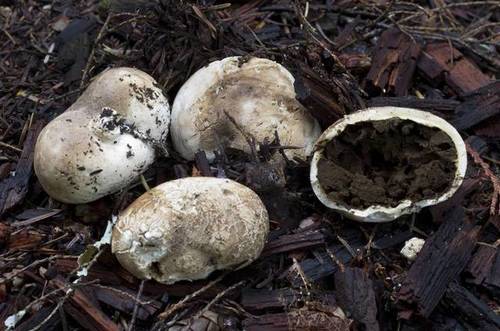
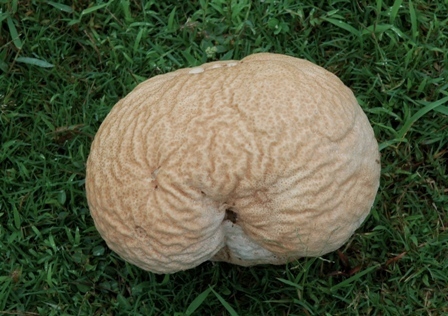
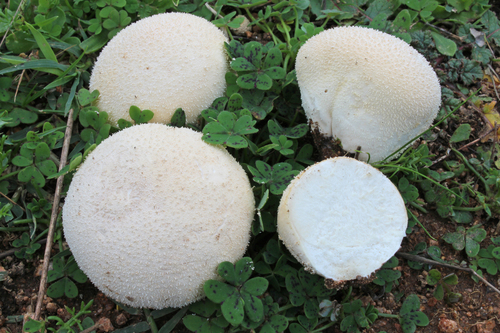
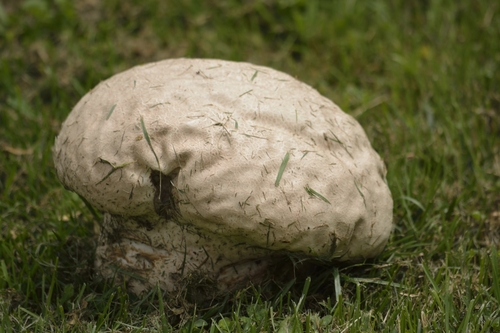
The fruiting body of Calvatia cyathiformis measures 5–20 cm (2–8 in) in both height and width. When young, it is relatively smooth, shaped spherical or slightly flattened, and can be colored white, purplish, or brownish. It has a chocolate-brown or purple gleba, and a smooth exoperidium. As it matures, it often develops a pear or top shape, and its outer exterior skin darkens or takes on a silvery color. As it ages, the exterior dries and cracks, and the fleshy spore-bearing interior breaks away to be distributed by wind and rain. After all spores are dispersed, a soft, leathery cup-shaped sterile base remains behind on the ground. The spores are 3.5–7.5 μm in diameter, round, and range from spiny or warty to nearly smooth. Capillitial threads are 3–7.5 μm wide, thick-walled, and minutely pitted. The spore mass changes color from white to yellow, then to dull purple or purple-brown when it reaches maturity. Calvatia cyathiformis is commonly found in grazing paddocks and grassed areas around wet regions of Australia. Its distribution includes southwestern Western Australia, the area from Adelaide in South Australia to Cooktown on Cape York Peninsula, and Darwin in the Northern Territory. This species is reported to be edible until its flesh begins to turn tan. It has not been recorded to have a distinctive odor or taste.