About Calotropis procera (Aiton) W.T.Aiton
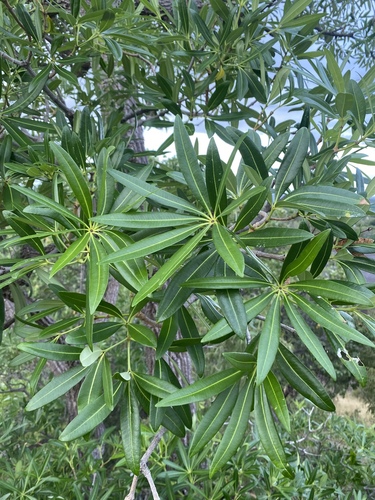
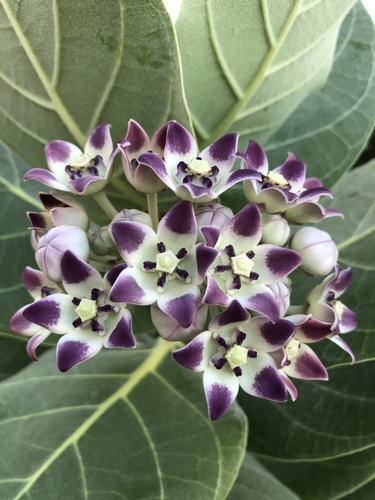
Calotropis procera (Aiton) W.T.Aiton is a species of flowering plant in the family Apocynaceae, native to Northern and Tropical Africa, Western Asia, South Asia, and Indochina (mainland Southeast Asia). It usually grows between 1.8 m (6 feet) and 2.4 m (8 feet) tall, and rarely reaches up to 4.6 m (15 feet). It grows in sunny to partly-shaded habitats, including disturbed and overgrazed lands, rangeland, roadsides, river flats, and coastal dunes. Its green fruits hold a toxic, extremely bitter milky sap that turns into a latex-like substance resistant to soap. Common names for this plant include apple of Sodom, Sodom apple, roostertree, king's crown, small crownflower, giant milkweed, rubber bush, and rubber tree. The names "Apple of Sodom" and "Dead Sea Apple" originate from ancient authors Josephus and Tacitus, who recorded the plant growing in the area of biblical Sodom. It is called al-ashkhar in Arabic. While it is not native to the New World, Calotropis procera and related milkweed species have been cultivated in regions including California, Hawaii, and the island of Puerto Rico, where it provides food for monarch butterfly caterpillars. The milky sap of Calotropis procera contains a complex mixture of chemicals, including steroidal heart poisons called cardiac aglycones. These compounds belong to the same chemical family as the similar compounds found in foxgloves (Digitalis purpurea). The plant's steroidal components are what cause its toxicity. The specific toxic Calotropis glycosides found in the plant are calotropin, calotoxin, calactin, uscharidin, and voruscharin.