About Calotomus carolinus (Valenciennes, 1840)
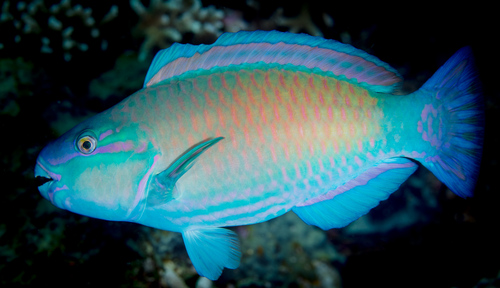
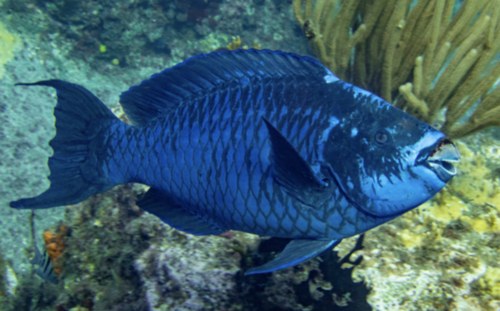
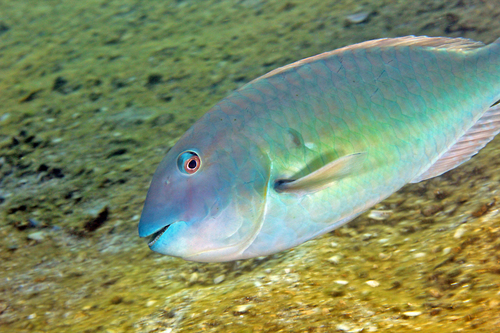
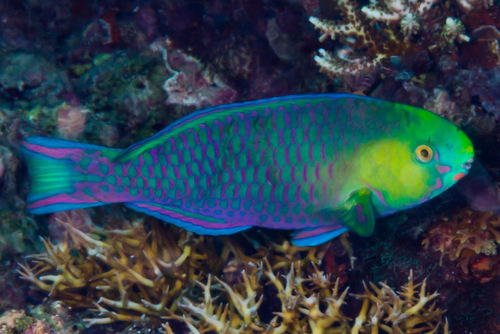
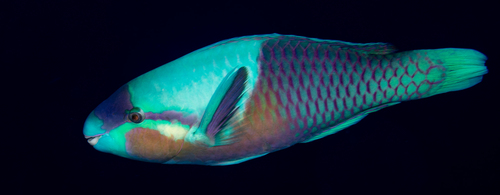
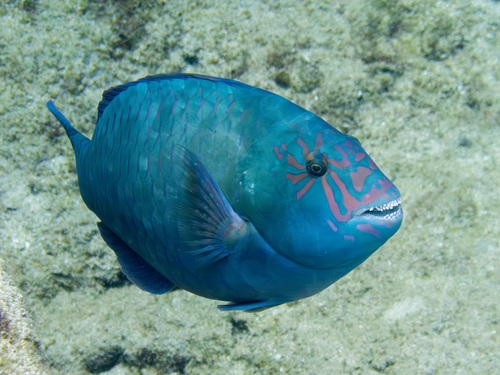
Calotomus carolinus (Valenciennes, 1840) reaches approximately 50 centimetres (20 inches) in total length. This species changes its appearance dramatically as it matures into adulthood. Juvenile individuals are typically mottled orangish-brown with some pink shading. Adult males, referred to as the terminal stage, are blue or green in varying shades, and have pink lines that radiate from their eyes. Adult females, called the initial phase, are mottled brown and have slightly bulging eyes. The jaws of this species are made up of pebble-like teeth fused together to form a beak that is adapted for eating seaweed; in juveniles, the teeth are not yet fully fused and are visible on the outside of the dental plate. Calotomus carolinus has a wide distribution across the Indo-Pacific region, ranging from the coast of East Africa (it is not present in the Red Sea, where it is replaced by Calotomus viridescens) through the Indian Ocean to the eastern Pacific Ocean around the Revillagigedo Islands and the Galápagos Islands. This species is typically found either alone or in small groups, in shallow reefs or lagoons. It occurs on subtidal reef flats, in lagoons, and on seaward reefs down to depths of at least 27 metres (89 feet), and can be found deeper. Within these habitats, it occurs in areas with coral, rubble, seagrass, and algae. It feeds on a variety of benthic encrusting algae, the brown algae genus Padina, and seagrasses. Calotomus carolinus is a protogynous hermaphrodite, and like many other parrotfish species, it undergoes a sex change. Along with many of its relatives, it feeds on seaweed and algae that grow on coral, which benefits reef ecosystems because most algae restrict coral growth and prevent corals from maturing fully.