About Calotes emma Gray, 1845
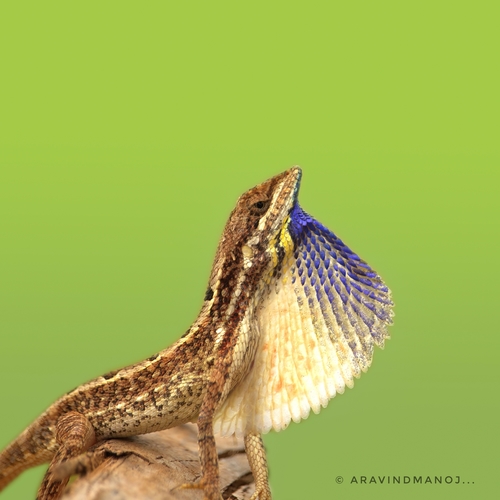
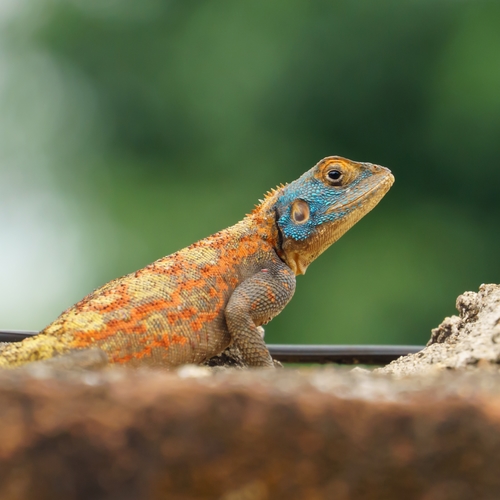
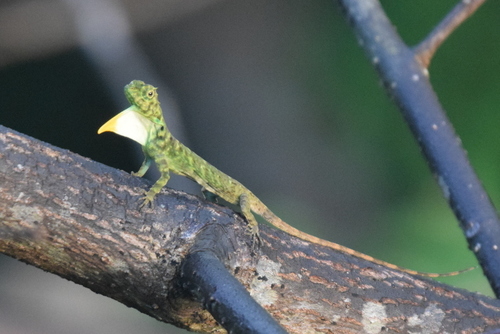
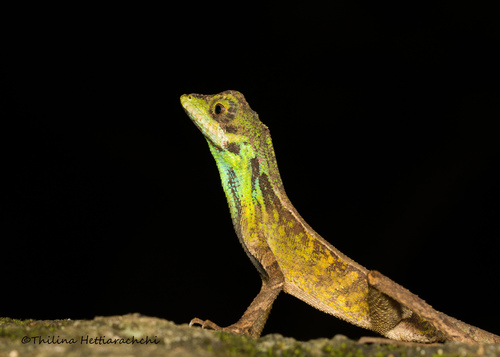
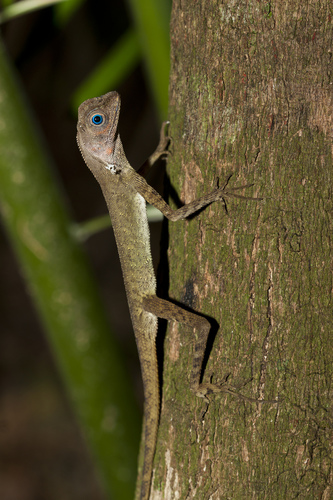
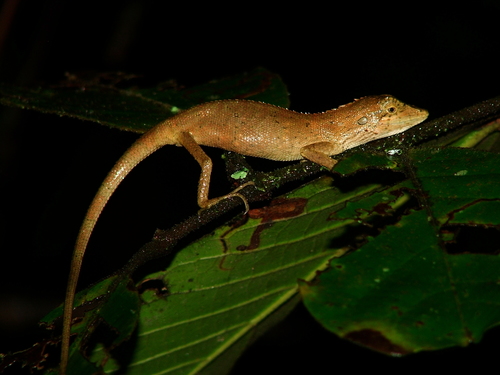
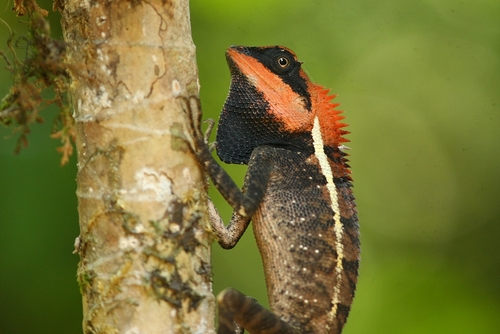
Calotes emma Gray, 1845, has distinct morphological features. On each side of its head, there are three completely separate small groups of spines: one behind the superciliary margin, and two above each tympanum. Its dorsal crest is well developed on the neck and anterior part of the trunk, and gradually disappears toward the rear. A transverse fold sits in front of each shoulder, and its gular sac is only minimally developed. The tail is laterally compressed, and there are approximately 51 scale series around the middle of the trunk. Its dorsal surface is brownish olive, with brown bands running across the back. These brown bands are lighter in their center and interrupted by a white stripe running along each side of the back. The eyelids have short, radiating brown streaks. A brown band stretches from behind the eye to the area above the tympanum. The pre-shoulder fold is black, with an irregular white edge. Its legs and tail have faint, indistinct dark crossbands. This species reaches a maximum total length of 40 cm (16 in) including the tail; the typical total length is 28 cm (11 in), and the typical snout-to-vent length (SVL) is 7.5 cm (3.0 in). This species is confirmed to occur in Bangladesh (Satchari National Park, Bandarban Hill District), Cambodia, China (Guangdong, Yunnan), India (Assam), Laos, Peninsular Malaysia, Myanmar, Thailand (including Phuket), and Vietnam (including the Pulo Condore Islands). It may also occur in Bhutan. Original records note it was collected from Mergui, sent by Professor Oldham, and may range north as far as the Khasya Hills. Its presence in Afghanistan is considered extremely doubtful. Mr. Blyth documented it in a collection made by Captain Bedmore at Schwe Gyen on the Sitang River in Pegu. Calotes emma is terrestrial, arboreal, and diurnal. It lives in a range of forest habitats, including dry deciduous, coastal, and moist evergreen forests. It is oviparous. Adult females lay 10 to 12 eggs between May and June, with an incubation period of approximately 60 to 70 days. This species is kept in the pet trade. Within its ecosystem, it feeds on various types of insects.