About Calostemma purpureum R.Br.
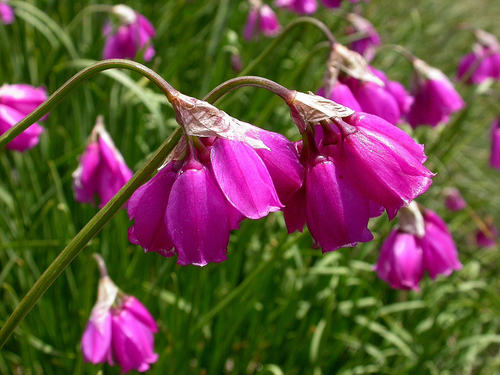
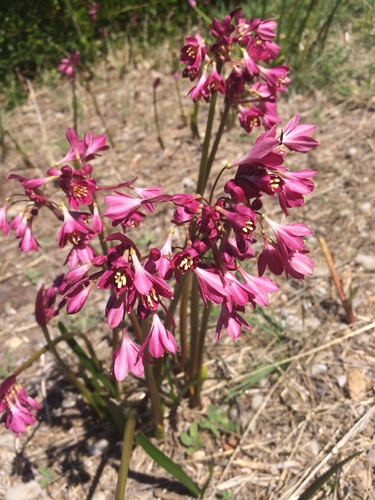
Calostemma purpureum, commonly known as the garland lily, is a long-lived perennial flowering plant native to South Australia, Victoria and New South Wales. Its flowers can be cream, yellow, pink or purple, most commonly purple-pink, and are arranged in an umbel of 5 to 10 showy blooms. The flowers grow on a stalk approximately 30 centimetres long. It is related to the common daffodil. Garland lilies were once widespread, growing in large colonies in grassy areas, particularly on the plain where the city of Adelaide now stands. As a result of urbanisation and grazing, the species is now rare, and only grows in small isolated pockets in parks on Adelaide's urban outskirts. Leaves grow from the plant's bulb during winter, and die back in spring. The plant flowers during the Australian summer, when it has no remaining leaves, blooming in the middle of the Australian summer heat when most other plants do not flower. After flowering, clusters of large, berry-like seeds form in autumn. These seeds may germinate while they are still attached to the parent plant, and they germinate very easily. However, it can take three to four years before a new plant produces its first flowers.