About Caloptilia azaleella (Brants, 1913)
This species has the scientific name Caloptilia azaleella (Brants, 1913). Its type locality is Boskoop, Netherlands, and it was first described in 1913. The specimens used for the original description were moths reared on Azalea indica, a cultivar of Rhododendron indicum that had been imported from Japan.
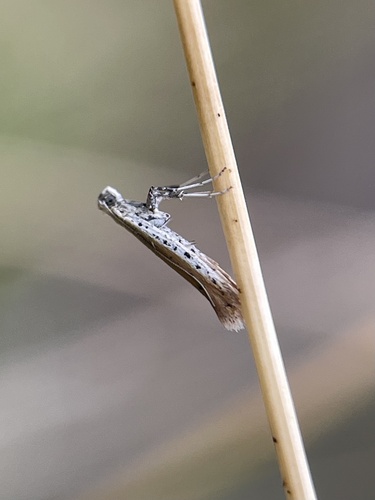
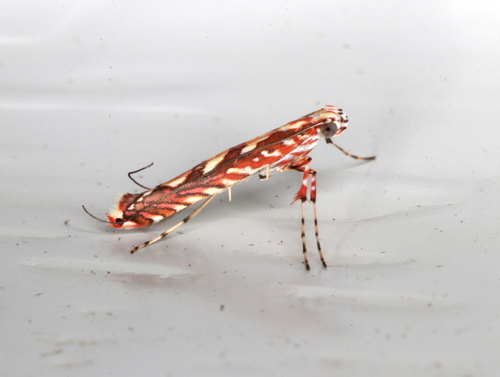
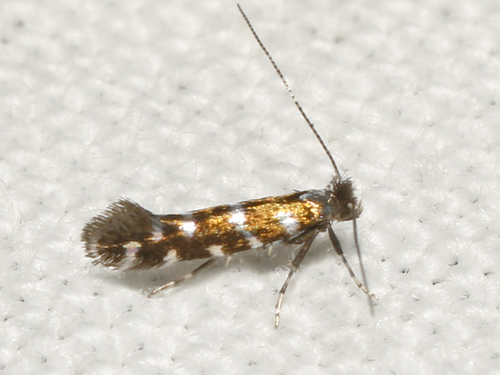
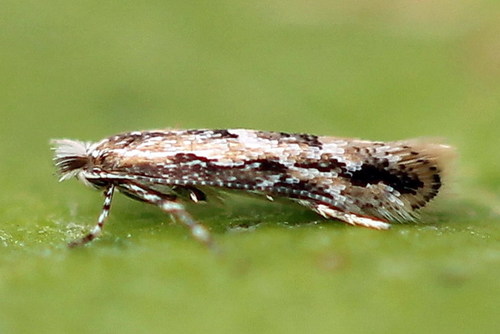
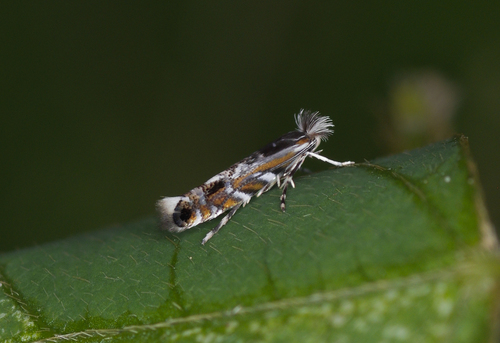
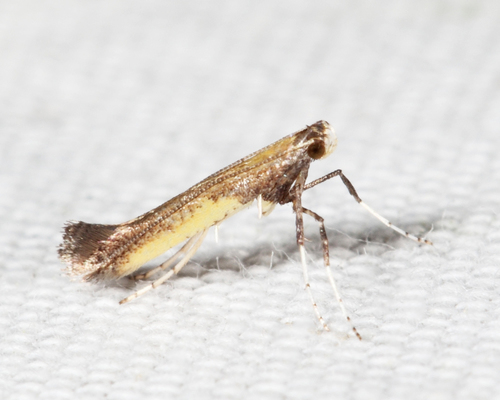
Adult moths have forewings that are primarily dark brown, with a yellow band running along the costal margin. Their wingspan measures 10–11 millimetres (0.39–0.43 in). Adults fly from May to October, with flight timing varying by location. In Britain, this species is double-brooded, and sometimes produces a partial third brood.
Although it was initially described from specimens collected in the Netherlands on imported Japanese plants, this species is now found across all of Europe. It has also been introduced to New Zealand and eastern Australia. In southern Britain, it occurs in sheltered gardens, including the gardens at Buckingham Palace, the Royal Botanic Gardens Kew, and the Royal Horticultural Society Gardens Wisley. It is widely reported to occur in greenhouses.
In the United States, this species is found from Florida to Texas, and ranges north as far as Long Island, West Virginia, and the Ohio Valley. On the western coast of North America, it occurs in California, Washington, and British Columbia, Canada.
Caloptilia azaleella lays its eggs on azalea (Rhododendron spp) plants, placing the eggs under leaves near the leaf midrib. Rhododendron species are the only host plants recorded for this species to date. After hatching, the larva first creates a leaf mine, and later rolls the leaf downward starting from the leaf tip to form a cone. When the larva reaches maturity, it forms a pale-brown pupa inside a white, membranous silken cocoon that it spins beneath a leaf. Adult moths are able to mate one week after emergence from the pupa.