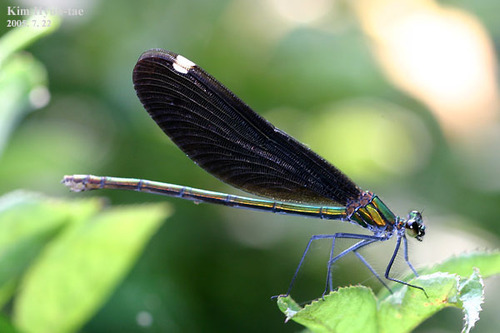
About Calopteryx maculata (Palisot de Beauvois, 1807)
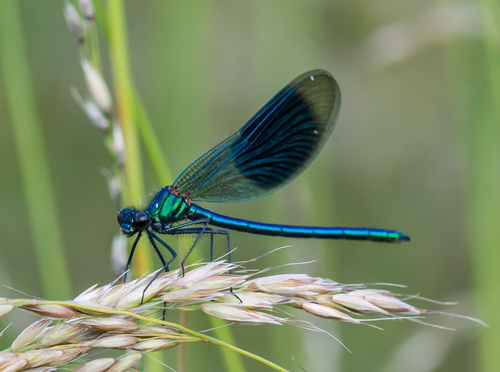
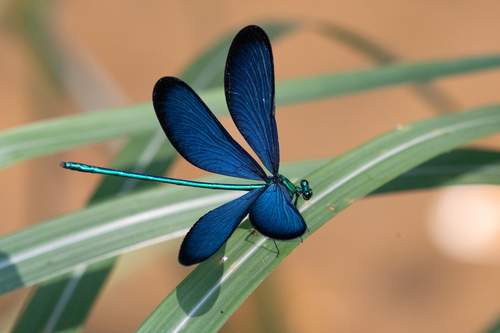
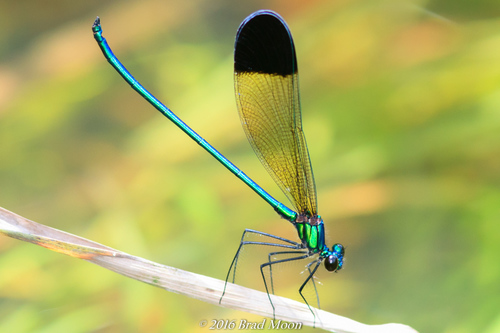
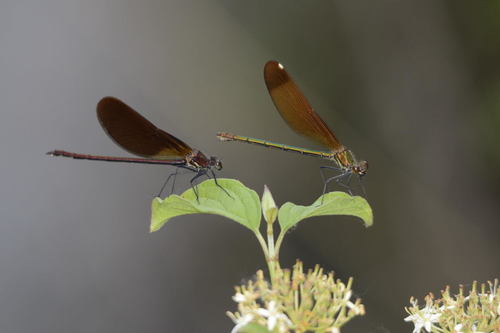
Calopteryx maculata, commonly known as the ebony jewelwing damselfly, has a total body length ranging from 39 to 57 mm (1.5 to 2.2 inches). Mature males have a metallic blue-green body and solid black wings. Mature females are duller brown overall, with smoky-colored wings that feature small white spots called pseudopterostigmas near the wing tips. Aquatic naiads of this species are pale brown with darker body markings, and their wings also bear spots. This damselfly typically inhabits areas near wooded streams and rivers, though individuals can travel significant distances away from water. Known prey of Calopteryx maculata includes tiger mosquitoes, giant willow aphids, fungus gnats, crane flies, large diving beetles, eastern dobsonflies, water fleas, green darners, aquatic oligochaetes, caddisflies, rotifers, copepods, amphipods, dogwood borers, six-spotted tiger beetles, freshwater triclads, and green hydra. Documented predators of this damselfly span multiple animal groups: birds include great crested flycatchers, American robins, mallards, red-winged blackbirds, and blue jays; reptiles and amphibians include eastern painted turtles, common snapping turtles, and southern leopard frogs; fish include bluegill, largemouth bass, yellow perch, creek chub, channel catfish, common carp, and northern hogsuckers; the only documented mammalian predator is the big brown bat; predatory insects include green darners, large diving beetles, eastern dobsonflies, and common water striders. Individuals of this species take shelter among a wide range of plants and algae in their habitat, including green algae, yellow water lilies, hydrilla, lizard's tail, pickerelweed, common cattail, upright sedge, common bladderwort, common duckweed, black willow, orange jewelweed, spotted Joe-pye weed, poison ivy, wild grape, sassafras, common greenbrier, and buttonbush.