About Calocybe gambosa (Fr.) Donk
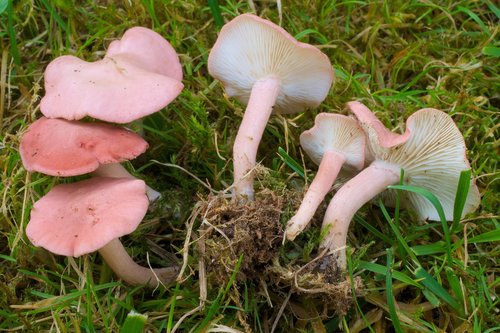
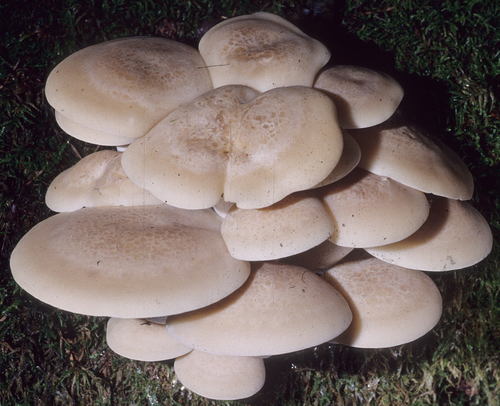
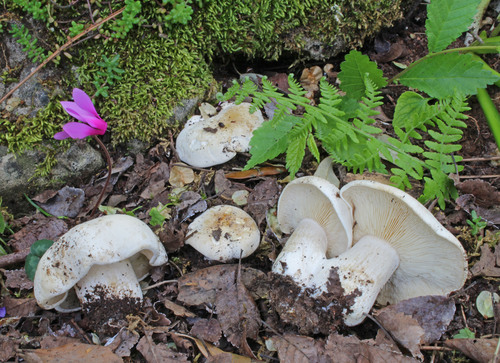
The cap of Calocybe gambosa measures 5–15 cm (2 to 6 inches) in diameter, with a smooth texture and distinct ridges. The cap, stipe (stem), and flesh all range in colour from white to creamy. The sinuate gills are white and tightly crowded together. The stipe is stubby, with a bulkier base. The dense, soft flesh has a mealy or cucumber-like scent, and the spore print is white. Calocybe gambosa is a common mushroom that grows in grasslands across Europe, particularly in limestone-rich areas. It is especially common on the Baltic Sea islands of Öland and Gotland in Sweden. On the South Downs in southern England, it forms huge fairy rings that are estimated to be several hundred years old. In the United Kingdom, it can be found from April to June; it appears earlier in warmer countries and later in cooler ones. In Italy, it appears in March, which is the origin of its regional Italian name marzolino, where it is also known as prugnolo. This mushroom is best harvested in dry weather. While it resembles some poisonous species, it can be eaten cooked, pickled, or raw. It is commercially imported in large quantities from Romania, Hungary, and Turkey. Calocybe gambosa was highly valued in medieval Italy. In 1569, Costanzo Felici recorded it as the most expensive and most highly regarded mushroom in the central Italian regions of Umbria and Marches. In 1777, Giovanni Targioni Tozzetti also noted it was held in high esteem in the Apennine Mountain regions of Liguria, Tuscany, and Emilia-Romagna. It is still eaten locally in Emilia-Romagna and Tuscany today. Commonly called St. George's mushroom, it is highly prized in the Basque Country of northern Spain, where it commands very high prices. In Álava, it is traditionally eaten alongside snails on the feast of Saint Prudentius, held 28 April. It is also a core part of Bilbao's traditional gastronomy, where it is most often served in an omelette. Demand is so high in the Basque Country that the mushroom must be imported from Eastern Europe.